CIMAC engine users highlight NOx challenges
The choice of after treatment – selective catalytic reduction (SCR) or exhaust gas recirculation (EGR) – has far-reaching cost and operational implications, according to a paper by Jörg Erdtmann of ship owner NSB Niederelbe Schiffahrtsgesellschaft and Keith Wilson of marine engineering consultancy Keith Wilson & Associates.
The expense and operational uncertainty is compounded by the fact that after-treatment systems have yet to be standardised or type approved – although the authors noted that type approval is expected soon for after treatment systems available for four-stroke engines. But the lack of standardisation to date means that systems need to be tested on the shop test bed before installation, adding to cost.
“It was almost impossible for owners to get a quotation or dimensional drawing for EGR and SCR solutions for two-stroke engines in 2014 and 2015,” the authors noted.
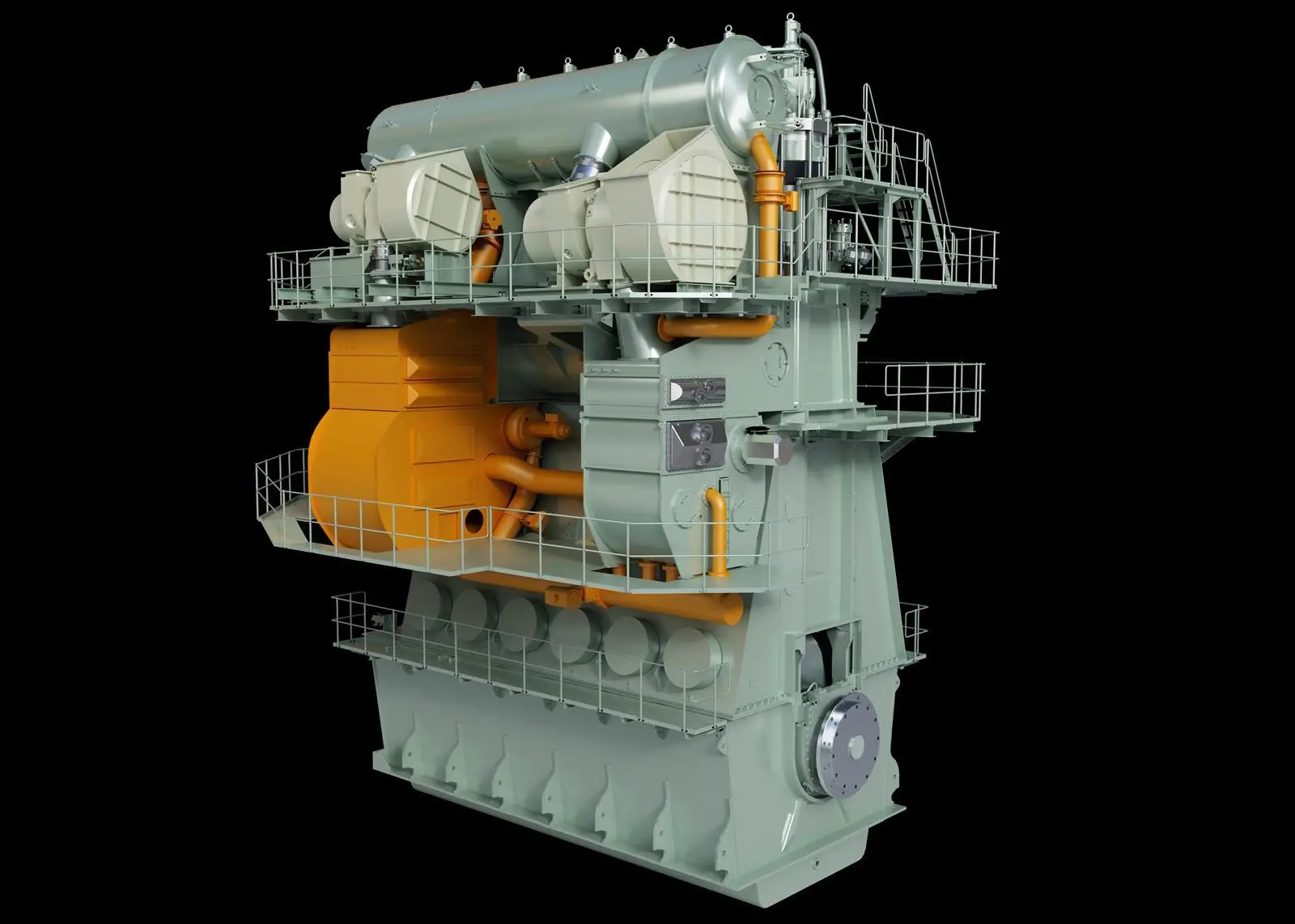
For a standard tanker engine, the MAN 6S60 ME-C 8.5, both SCR and EGR will cost in the region of US$1 million. For SCR, the cost of urea, handling and water treatment is a significant operational expense – with urea at US41.77 per tonne in July and around 1.2 tonnes a day needed for a 10MW engine, potentially doubling if auxiliaries are supplying power for refrigerated containers. For both systems, the authors note the burden of crew education in terms of maintenance and monitoring systems.
OPERATIONAL FACTORS
For SCR, contamination from lubricating oils or vanadium from HFO can hinder operation, while the ceramic honeycomb blocks need to be exchanged by crew, with a spare set needed on board. These blocks can also be damaged by certain vibration frequencies, meaning that regular inspections are required. The online exhaust gas sampling systems needed for these inspections require regular recalibration and place a further demand on crew in terms of training and time.
The engine users noted that waste gates, diverting exhaust gases away from the turbocharger, had been a weak point for several engines, and “were simply simply put out of operation after a certain time, while engine licensors gave up supporting warranty repairs”. SCR demands effective waste gates, and crew need to ensure that they remain operational.
The effectiveness of SCR can also be limited by low quality HFO, the authors reported.
For EGR, there are also potential issues with waste gate valves: specially designed flaps with flame spray coating need to be applied to prevent abrasion and false operation caused by deposits. There are also challenges for operation with high-sulphur fuel: a scrubber may also be needed to prevent the build-up of sulphuric acid from highly sulphuric exhaust gases, while sulphuric gases also pose a challenge for water washing components – stainless steel coolers, washers and pipe ducts need to be installed to prevent damage from fuel sulphur.
The authors noted: “If the fuel is free of sulphur, EGR might be the preferred solution. But if the size of the engine increases [beyond] 10MW, SCR seems to be the only offered solution.”
The decision of the IMO on the implementation of a global sulphur cap is likely to have a major impact on the future fuel market, and consequently on the uptake of SCR or EGR, the engine users noted. If lower sulphur fuels become more widely available, EGR operation would be simplified, while SCR operation could be more challenging with diverse fuels.
However, the engine users concluded that there had been little demand for Tier III systems to date, partly because keels for many newbuild vessels were laid last year, before Tier III limits were in place. The paper concluded: “In general prototypes have a certain higher risk. Field experience will show the initial problems to be overcome… [but] until the newbuilding market picks up again, these operational problems might be solved by prototype plant experiences.”
Readers interested in viewing the full paper can find details through CIMAC’s technical paper database.