Ship owners adapt waste heat recovery strategies
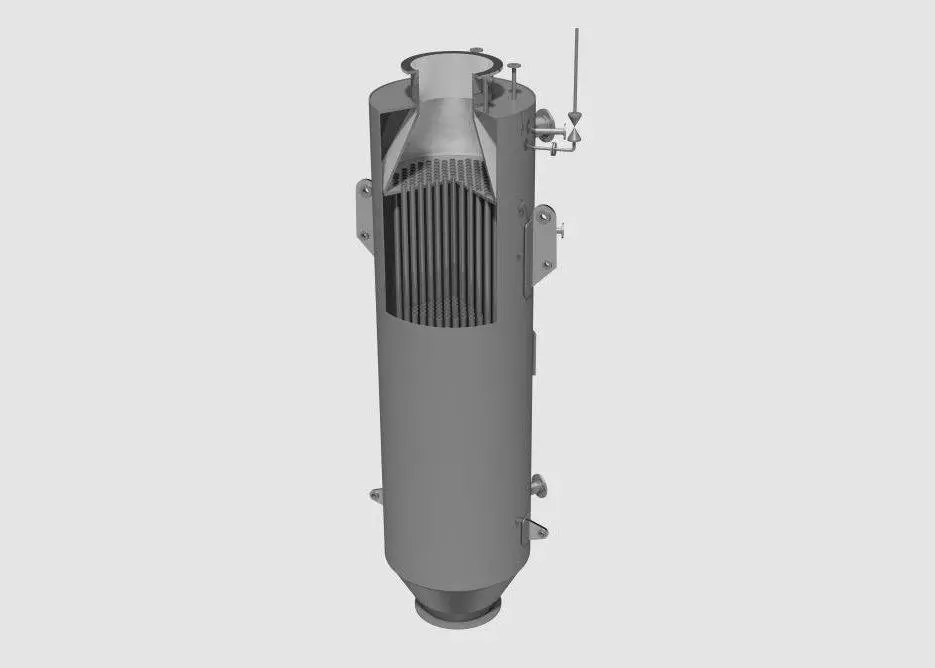
Drawing on experience with more than 10 ship owners and shipyards – on vessels including FSRUs, gas carriers, container ships, bulk carriers and tankers – the company noted the challenges posed by conventional main engine waste heat recovery.
Chris David, chief technical officer, said: “Vessel managers are increasingly operating their vessels in situations where slow steaming, or long periods at anchor result in reduced recovery of heat from the main engine exhaust. This can result in an increase in the cost incurred in firing the auxiliary boiler. Use of the waste heat from other systems, especially from the auxiliary engine exhaust gas, can significantly reduce this additional fuel cost, and in some cases, prevent the auxiliary boiler from having to be fired.”
Waste heat recovery steam generators can also provide extra redundancy to many marine systems, ensuring that steam generating capacity for essential services can be made available even when the primary steam generating plant is out of service or under maintenance.
In one case, Harris Pye is examining whether auxiliary engine cooling water can be used to heat main engine jacket water for 25 Aframax tankers, at anchor for 120 days in an emission control area. The current spend on low sulphur diesel oil for the auxiliary boilers is in the region US$60,000-90,000 per year.
“Essential services such as lube oil purifiers, hot water calorifiers and bunker heating are still required,” said David. “We are undertaking evaluation and cost comparison between using electrical heating, or generating steam from the auxiliary generator engines. The payback time is then calculated from the cost of the various modifications against the consumption of low sulphur diesel oil.”
Slow steaming impact
In another example, the in-port energy consumption of slow-steaming container vessels was considered. As slow steaming reduces the heat available from the main engine, the operator was evaluating the potential for waste heat recovery on the vessels’ four auxiliary generators. Harris Pye performed an analysis of trading patterns to ascertain consumption, power available from the generators and payback time for a heat recovery unit. The balance of engine hours for maintenance cycles was also considered.
David noted: “Economically it is not always sound to put a waste heat recovery unit on each engine. A load plan analysis was carried out to use these engines only when the main engine was unable to produce the required demand.”
Other scenarios have included powering ballast water treatment systems, with the installation of waste heat recovery from auxiliary engines offset against the power consumption, purchase and installation costs of ballast water treatment plant. A similar waste heat recovery set up was also considered against the cost of hiring and delivering temporary heating equipment during maintenance on an FPSO.
“In working on all of these scenarios we, and our clients, are increasingly convinced that waste heat recovery systems have a vital part to play in effective energy management on a wide variety of vessels,” David concluded.