‘Something’s changed’: LNG projects gather momentum
While the low oil prices of the last two years have derailed some of the wilder projections for uptake of LNG, new regulatory drivers are offering an incentive for ship owners to look more closely at gas. Chief among those drivers are the MEPC decision to impose a global sulphur cap in 2020 – leaving ship owners to choose between low-sulphur fuel, scrubbers or alternative fuels like LNG – and the consensus to reduce emissions embodied by the Paris Agreement.
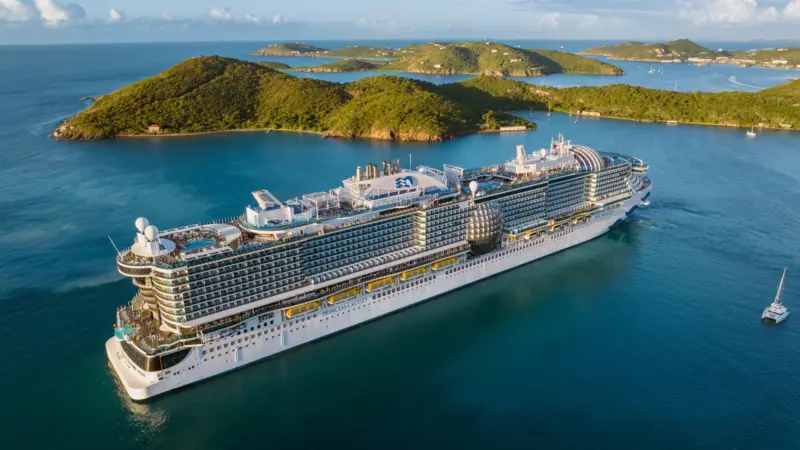
Opening the first day of the conference, Lars Robert Pedersen, deputy secretary general of BIMCO, pondered whether those factors would be enough to accelerate the uptake of LNG, or whether financial and regulatory obstacles would continue to hinder development. DNV GL’s Torsten Schramm argued that the spread of LNG into new sectors – notably the cruise market, with 11 LNG-fuelled vessels ordered in the past 18 months – was an important sign of progress.
But small to medium-sized ship owners will still require government incentives if they are to cover the costs of environmental compliance under tough market conditions, explained Michael Ippich, managing director of Hartmann Reederei and chair of the nautical-technical committee of German ship owner association VDR. Ippich looked at some of the impending regulatory measures that would encourage further uptake of alternative fuels – including a plan for clean energy that could require ships at German ports to be emission free by 2050 – and touched upon Hartmann’s own exploration of low-flashpoint fuels, with the recent delivery of an ethane-powered gas carrier.
Development of bunker infrastructure in Europe, and the growing strengths of Chinese companies in building LNG-fuelled ships, are two important indicators of the emerging maturity of the gas sector. Ling Deng, vessel type expert LNG ships at DNV GL provided an in-depth look at some of the many projects in China. While the country’s yards and designers may not be among the first to build LNG vessels, “when it comes to modern, large LNG-fuelled projects, everyone is starting from the same place,” said Deng.
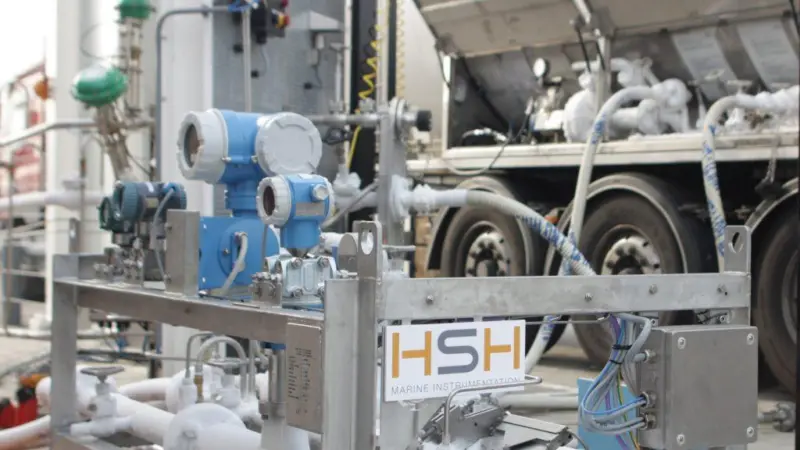
Jan Schubert, sales and business development manager Bomin Linde gave an overview of some major bunkering projects in Europe, highlighting that, while bunkering may not exist everywhere yet, options for establishing fuel supply are not necessarily far away. By 2018 there will be five LNG bunker barges operating in northern Europe, said “Where there LNG import terminals there are ways to get gas,” he said – even where bunkering direct from terminals is not available, fuel supply by truck or by barge is increasingly widely available.
Alexander Marczewski, LNG business development manager marine, Shell Shipping and Maritime Technology offered the perspective of an oil major – or, as Marczewski said Shell now sees itself, a gas major – on the key enablers and opportunities for LNG as a marine fuel. The company is not only supplying LNG across a global network, but is now investing in gas-fuelled technology, said Marczewski. “There has been a board decision to use gas in our own fleet as well. We have converted one of our chartered fleet, the Nakilat Rasheeda, and the decision has been taken to use it wherever possible in future.”
A live interview with Peter Keller, executive vice president of Tote Inc and chairman of the SEA\LNG consortium, explored the role that the new group will play in driving the uptake of gas as a marine fuel. Drawing on experiences from Tote’s own LNG projects – including the construction of the first newbuild gas-fuelled containerships to employ dual-fuel engines – Keller explained how SEA\LNG hoped to prove the commercial case for LNG.
Jasper Faber of CE Delft – lead author of the study that underpinned the IMO decision to implement the global sulphur cap in 2020 – presented a summary of that research, which included several assumptions on the uptake of scrubbers and LNG as alternatives to low-sulphur fuel. Part of the assumptions was a forecast demand of around 13 million tonnes of LNG for shipping by 2020, with gas fuel doubling its share of the marine fuel market between 2012 and 2020. That uptake would no doubt be greater still if bunkering infrastructure development was assured and the cost of retrofitting for LNG reduced, Faber noted.
A panel discussion between ship owners (represented by Vladimir Shnurkov of Rickmers Shipmanagement and Stefan Bülow of Hamburg Bulk Carriers), Faber, Malte Seigert of German environmental lobby group NABU and François Cahagne of Engie Global LNG considered the fuel choices facing owners in light of environmental regulations. In a heated debate, two key points emerged. First, that ship owners will go for the choices that offer the best combination or price, availability and safety. Second, that enforcement of regulations will need to be consistent and global to ensure that unscrupulous owners do not benefit unfairly from flouting the rules.
REFERENCES MULTIPLYING
The growing uptake of LNG across sectors and regions was evidenced by a wide range of presentations of new projects either completed or well underway. Among the vessels already in service, Damen’s inland waterway tanker Ecoliner was presented by Simon Provoost, product director, Inland Waterway Transport, Damen Shipyards. And the world’s first LNG-fuelled icebreaker, Polaris, was discussed by Markku Kajosaari, senior vice president sales, Arctech Helsinki Shipyard and Mika Hovilainen, Aker Arctic Technology.
Projects under construction included two new ferry projects – the first dual-fuelled vessel in the UK for CalMac, presented by Mike Simpson, director, Marine Design Consultancy, Houlder and Liam Campbell, managing director, Ferguson Marine; and a new catamaran ferry for the Wadenzee that will employ a high-speed, pure gas engine, presented by Paul Melles, managing director Rederij Doeksen, Mark Schiller, CEO, Strategic Marine and Peter Friedl, senior expert product management mobile gas engines, Rolls-Royce Powersystems.
Looking further into the future, two key partners behind the Project Forward plan to design an economical and retrofittable LNG solution for ocean going vessels presented a project update. Konstantinos Fakiolas of Deltamarin and Antonis Trakakis, technical director, Arista Shipping provided an explanation of the equipment selection process for the project – including an assessment of available LNG engine technology – and reported that they had now invited further ship owners to join the project.
Technology suppliers drew on experience from several LNG-fuelled ship projects to present their new applications and examples of best practice. High on the agenda were fuel gas supply systems and fuel tanks. Björn Munko, sales manager, TGE Marine Gas Engineering, used installations on several vessels to highlight the challenges of commissioning such systems, while Stefano D’elia, sales support engineer, Wärtsilä, announced the introduction of a multilobe LNG tank that makes more effective use of installation space.
A combined engine and fuel gas handling system designed specifically for cruise lines was presented by Jochen Schmidt-Luessmann, senior cryogenic engineer, Marine Service and Finn Vogler, senior engineer development, Caterpillar Motoren. The companies, which will install the configuration on four ships under construction at Meyer Werft, also detailed advances in engine technology that would enable similar performance in gas and diesel modes, as well as start-up and low-load operation on gas.
Advances in LNG engine technology were discussed in more detail during a dedicated engine technology panel, featuring the major two-stroke engine designers MAN Diesel & Turbos and WinGD, gas turbine supplier GE Marine and Kawasaki Heavy Industries representing the four-stroke sector. René Sejer Laursen presented an update on technical developments in MAN Diesel & Turbo’s ME-GI and ME-LGI range of engines, while Rudolf Wettstein, general manager, WinGD explained some of the innovative features of the company’s X-DF technology. Mark Lipton, director of commercial applications, GE Marine Solutions, explored some of the advantages offered by using gas turbines for applications traditionally relying on piston engines. And Yosuke Nonaka, manager four stroke diesel engine section, Kawasaki Heavy Industries, explained the development process behind the company’s marine gas engine, based on the KG stationary engine.
BEYOND LNG
Methanol and other low-flashpoint fuels were also considered in two dedicated session. The recent delivery of the first methanol-fuelled two-stroke driven vessels, seven methanol carriers chartered to Methanex subsidiary Waterfront Shipping Co, was used as a valuable case study. René Sejer Laursen and Michel Hamrouni, Methanex explained the rational for methanol as a marine fuel and presented how the fuel was employed on the recently completed methanol carriers.
Gabor Szemler of the Swedish Transport Agency provided delegates with an update of developments under the IGF Code, which will be mandatory from next year. The code is based on requirements for LNG as a marine fuel but is being expanded to incorporate other low-flashpoint fuels, with the Swedish Transport Agency leading developments for methanol-fuelled vessels. Henning Pewe, principle specialist gas technology, DNV GL, looked at the development and uptake of other alternative fuels including ethane and bio-fuels.
An important safety session explored new research and developments. Paul Davies, technical manager, Lloyd’s Register, presented findings of research into the dispersal of gas leaks which shows that dispersal distances under ISO modelling are too simplistic. A tool to improve bunkering safety is being developed by SSPA Sweden. Axel Andersson explained the development and potential uses of the new tool.
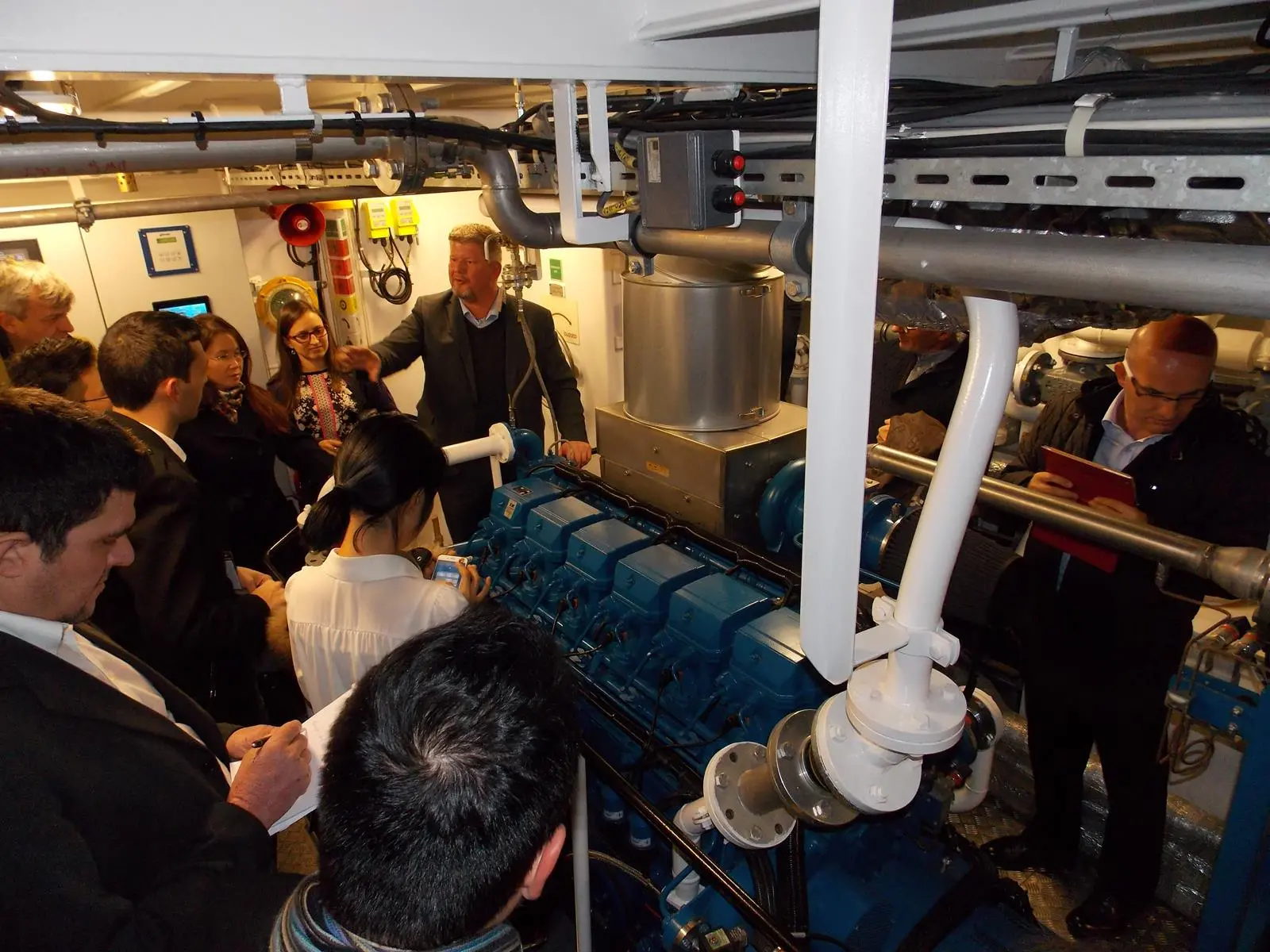
The conference programme was complemented by two technical visits, sponsored by Wärtsilä. On Thursday evening delegates were taken for a tour of the AG Ems LNG-fuelled ferry Ostfriesland, the first German ship to be converted for LNG fuel. And on Friday a visit to Meyer Werft gave delegates an insight into operations at one of the world’s leading cruise ship builders, with seven LNG-fuelled vessels on order for Carnival Corp brands.
Two enjoyable evening events offered delegates a further opportunity to meet colleagues and share ideas. Hamburg-based shipyard group Blohm+Voss, recently acquired by Lürssen Group, welcomed guests to the Hafen Club for a welcome cocktail reception, while the traditional GE Marine conference dinner saw guests treated to a splendid meal in the Parlament restaurant under Hamburg Rathaus.