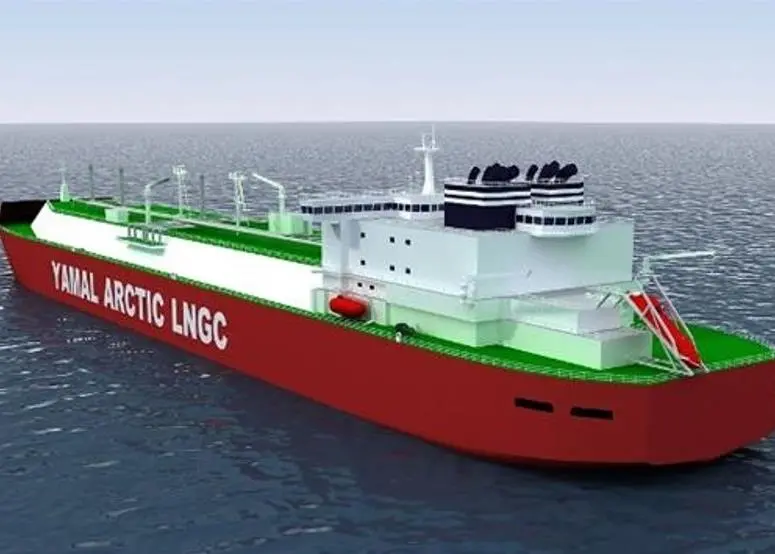
ABB’s scope of supply includes turbochargers, generators, switchboards, transformers, electric drives, propulsion control and the Azipod propulsion units that will power the vessels through the arctic conditions. The company says with these Azipod propulsion units, the vessels will become the most powerful LNG carriers to date.
“Operating LNG carriers in ice-locked waters year-round requires the highest standards in safety and efficiency. ABB is very proud to have had its technology selected for such a project,” said Veli-Matti Reinikkala, head, of ABB’s Process Automation division.
The design of the Azipod systems enable ship operations to continue in temperature as low as -50 degrees Celsius. By using Azipod propulsion units, the vessel will move ahead in open water and in moderate ice conditions, and astern to cut through heavy ice and can be carried out predominantly without ice breaker escort.
The LNG will be shipped out of Sabetta port using the new 170,000m³ LNG carriers built to ice-breaking capability of ARC 7, an ice-class scale that goes up to nine. Shipment will be made to Asia via the Northern Sea route in summer months, resulting in significantly reduced delivery times when compared to transit via traditional routes, as well as cutting fuel consumption and ship fuel emissions.
This latest contract includes options to equip 15 further vessels, which are being built by South Korea’s Daewoo Shipbuilding and Marine Engineering (DSME).