Addressing the human fatigue question
The New York Times of 29 April 1910 quoted a letter from an anonymous officer on a trans-Atlantic liner: “I have been left in charge of a liner carrying a crew of 500, 2,200 steerage passengers, 300 second class and about 300 first, in all about 3,300 souls. These in addition to the valuable ship and freight have been under my charge at a time when I have been from 30 to 40 hours on my feet without sleep or rest. The safety of all depended upon my vigilance at a time when soul, mind and body have long been worn out. To keep awake at such times is torture; one much walk, walk, walk and get through it somehow and all this in waters crowded with shipping and where vessels are subjected to the whims of the tide. At no other time in their lives perhaps are passengers put in such jeopardy.”
With fatigue highlighted as a major factor in safety at sea today, it seems that over the past 100 years little has changed. Cases of ships grounding and being in collision due to fatigue of the watch keepers are regularly reported. Most authorities concerned with safety at sea recognise that fatigue has now become one of the major causes of accidents.
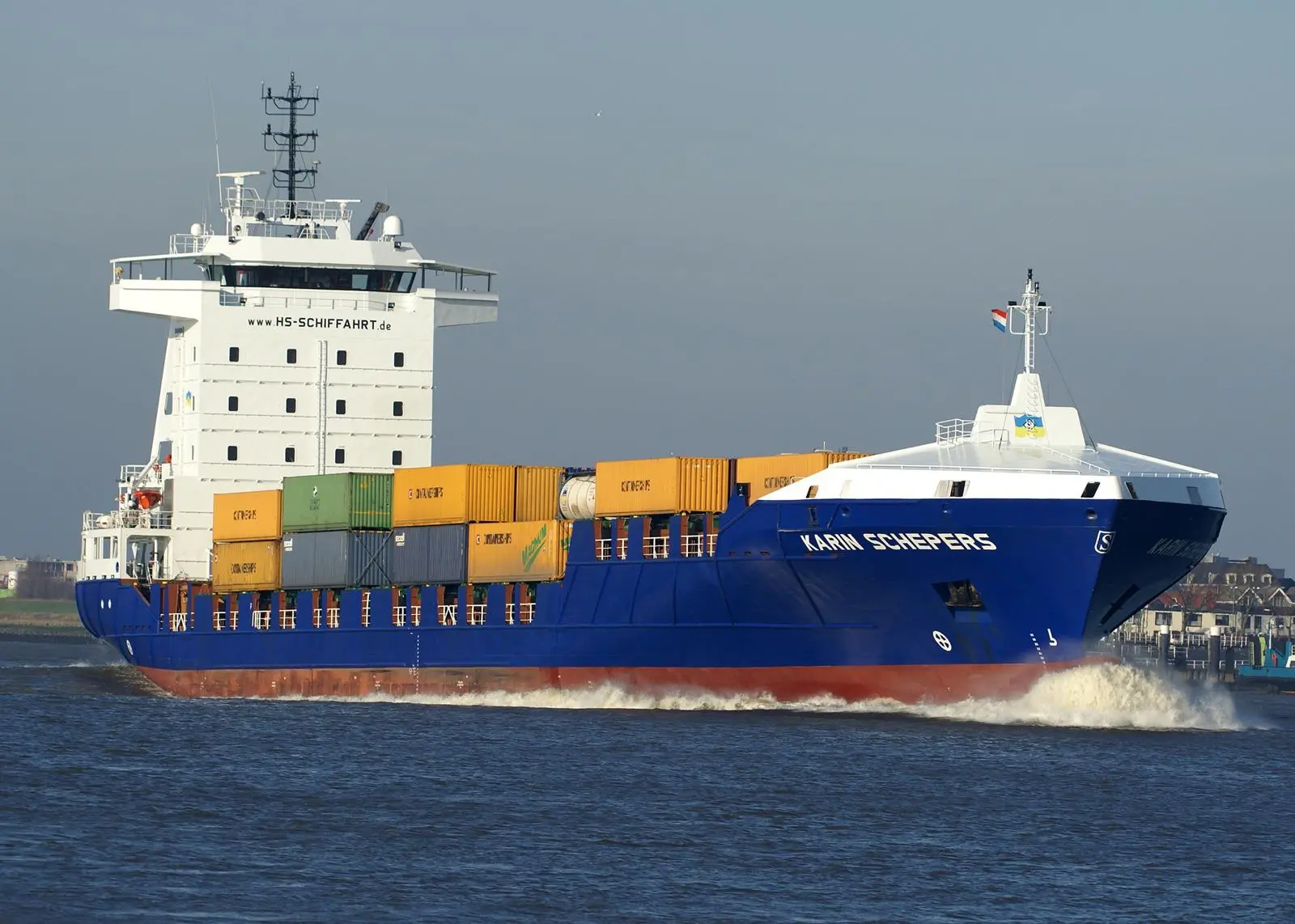
The New York Times extract suggests that fatigue is not a new problem. Perhaps it is the modern regime of investigating marine accidents on a regular basis that has highlighted what has been a continuing problem at sea. Fatigue is often associated with alcohol abuse, and again it is modern investigation of accidents that has brought this problem to the surface. The grounding of the container ship Karin Schepers off the Danish coast was blamed on a combination of fatigue and alcohol, and this ship was aground for two hours before it was boarded by a pilot who had to wake up the crew. The same ship later grounded on the UK Cornish coast after deviating from the traffic separation zones and not responding to Coast Guard calls.
More recently, in 2010, the bulk carrier Shen Neng II grounded off the Australian coast, and the investigation reported that: “There was no effective fatigue management system in place”.
It was events like these that prompted IMO to make the fitting of bridge navigation watch alarm systems (BNWAS) mandatory. But as always with new IMO concepts there is a long time lag between making the rules and implementing them. IMO made the BNWAS requirement in 2009 and it was only at the beginning of 2011 that it became mandatory for BNWAS to be fitted to newbuilds. 2012 sees the requirement being extended to larger existing vessels, but it will be 2014 before all vessels over 150gt have to have the equipment fitted.
BNWAS is a simple alarm system that in most cases first gives, at 10 minute intervals, a visual alarm which has to be acknowledged. An audio alarm follows if no acknowledgement is forthcoming, and then an alarm is sounded in the master’s or officer’s cabins. One ship’s captain spoken to said that he had experienced the alarm going off in his cabin twice only to find the watch-keeper asleep on the bridge. So it can be said that the system works.
However some experts are now questioning the effectiveness of an alarm system that can be switched off by the crew. When the French trawler Jack Abry II went aground off the West Coast of Scotland last year the MAIB investigation found that the BNWAS had been switched off and that the skipper was asleep when the vessel grounded. Extreme fatigue was given as the cause of the grounding. It is not hard to understand the irritation that is caused by having to acknowledge the alarm system at frequent intervals, leading to it being disabled. There is also the question that having to constantly acknowledge the alarm distracts the officer from his navigation and lookout duties, thus reducing his effectiveness.
Paul Luen, CEO of BNWAS manufacturer Martek Marine commented: “Everyone knows that crews have a tendency to switch off systems that can disturb them, even if the systems are for their own protection. That’s why it’s critical that BNWAS should keep a record of its continuous operation and be difficult for the crew to switch it off. With high profile accidents being found to be caused by BNWAS being switched off with its key switch (grounding of Karen Schepers), why would any owner fit a system that didn’t give the highest degree of protection against being switched off. It’s not a risk worth taking and defeats the whole purpose of fitting BNWAS.”
The Martek system can only be accessed by using a password, which limits access to the control panel.
There are reports that owners are delaying the fitting of BNWAS because of confusion about the different capabilities of competing systems. Some can be integrated with the navigation electronics, so that the alarm is automatically acknowledged if the navigation electronics are used. Others have motion sensors so that any movement on the bridge again automatically acknowledges the alarm. As always, with new mandatory systems, owners are reluctant to fit the equipment until the legislation demands it. But ship owners are being warned that the installation of BNWAS is not simple and is best done during a refit or docking rather than waiting for the deadline. As one equipment manufacturer said: “As with most mandatory equipment the choice usually comes down to price, but with BNWAS much of the price is in the installation costs, which can vary enormously from ship to ship.”
It has taken over 100 years for fatigue at sea to move from being a hidden problem to one that is recognised, and to have something done about it. Now the solution is being questioned – BNWAS aims only to tackle the symptoms of the problem of fatigue, and not the basic cause of the problem.