AiP for OSV-based LNG bunker vessel design
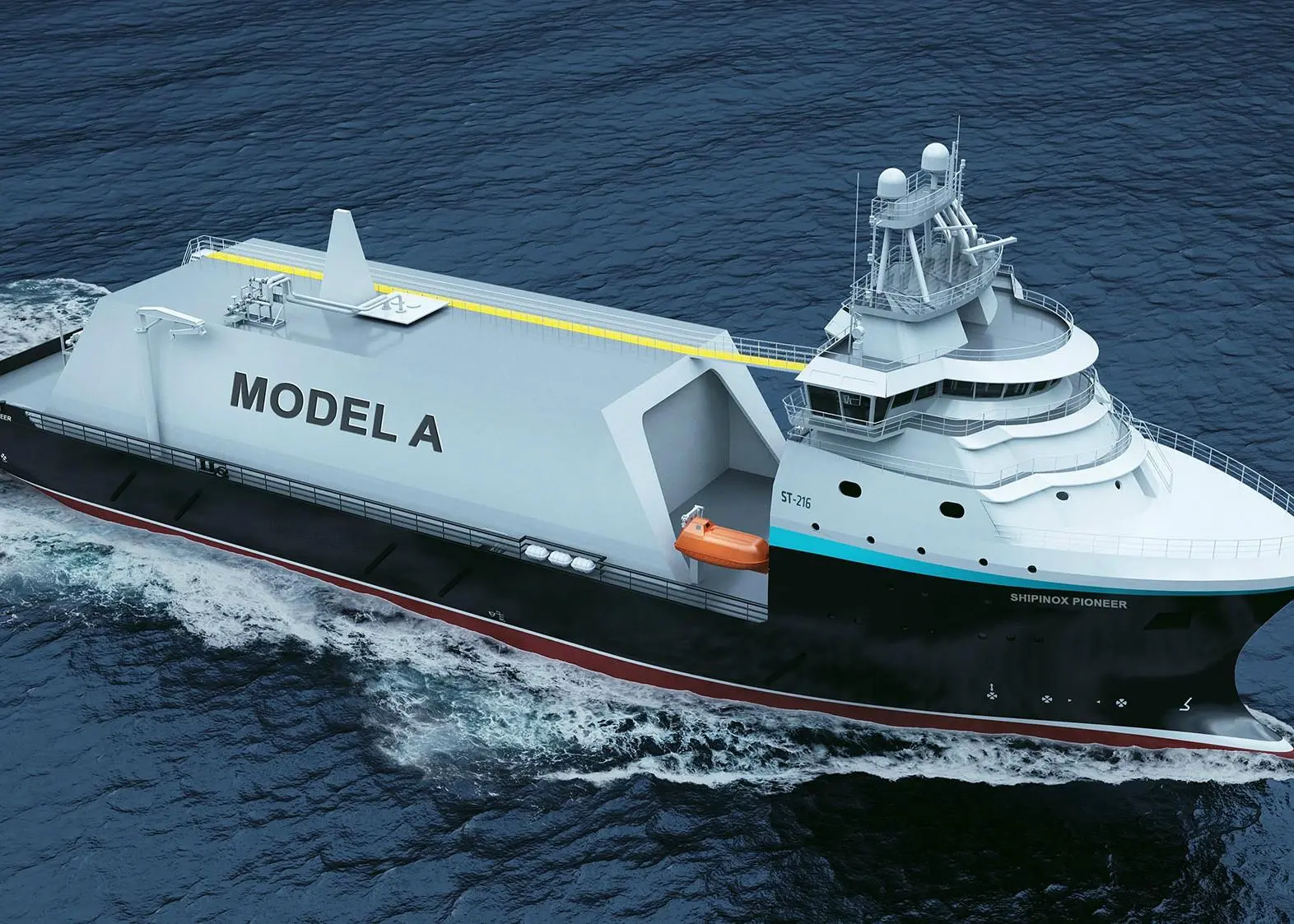
DNV GL presented Norway-based LNG-focused start-up ShipInox with an AiP for its new small-scale 92-metre long, 6,000 cbm capacity LNG carrier/bunker vessel design.
“We are very proud that ShipInox asked us to be part of this interesting and innovative project,” says Trond Hodne, Senior Vice President at DNV GL – Maritime. “This design could be a viable option for owners looking to move into different segments in a challenging market, especially as the gas segment continues to gain importance in shipping.”
Interest in liquefied natural gas as a marine fuel is on the rise in the shipping industry. DNV GL’s most recent forecast predicts that by 2050 over 20 per cent of total shipping energy will be provided by LNG. In the shorter term, with the Sulphur cap on fuel entering into force in January 2020, the combination of technical maturity, efficiency, availability, and emissions reduction means that LNG is a viable option for many vessels, especially for newbuilding projects.
“The enthusiastic support we have received throughout the challenging development of this design makes us feel very humble,” says Rune Østbøe, CEO of ShipInox. “Not only DNV GL and the Norwegian Maritime Authority (NMA), but a diverse range of companies spanning Innovation Norway, to the LNG-specialists at Torgy, and Fearnleys have all enabled us to deliver on this design. We are now in a position where we can help to accelerate entries into small-scale LNG with this fast-to-market and low-cost LNG carrier.”
An Approval in Principle is an independent assessment of a concept within an agreed framework, confirming that the design is feasible and no significant obstacles exist to prevent the concept from being realized. The AiP is typically carried out at an early stage of a project to confirm its feasibility towards the project team itself, company management, external investors or future regulators.