Alfa Laval LNG heat exchanger
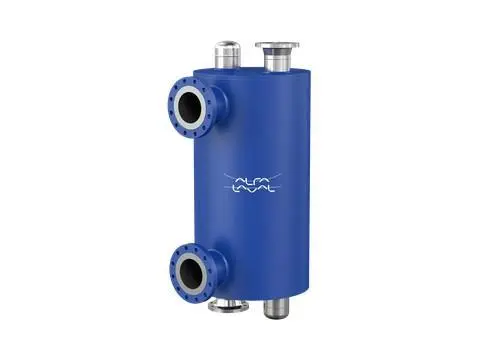
Optimised for use as an LNG vaporiser, the DuroShell is said to provide higher thermal efficiency than conventional plate-and-shell designs and can now be used in more compact installations thanks to new research into glycol freezing.
“The continued rise in the number of vessels sailing with LNG is one of the most significant trends in today’s marine industry,” said Jonny Hult, head of marine heat transfer equipment at Alfa Laval.
“With more and more ships relying on LNG as fuel, we are seeing greater demand for vaporiser technology that can dependably resist freezing and the fatigue caused by pressure and temperature. DuroShell is exceptional in this regard.”
With its 100% stainless steel design, DuroShell can resist LNG entry temperatures that approach -170°C or lower.
“Extreme low temperatures are not an issue for DuroShell, but a glycol mix with a freezing point of around -50°C has the potential to freeze when it meets plate surfaces as cold as -90°C,” Mr Hult explained.
“Solving this problem with a higher glycol flow is a very expensive solution for our customers, so Alfa Laval has worked with SINTEF Energy Research to find the correlation of flows on both sides and thereby avoid freezing of fluid on the hot side.”
Mr Hult concluded that this will let shipbuilders use a more compact plate-and-shell design with smaller pumps and pipes, which, in turn, will mean CAPEX and OPEX savings for the ship owner.