Alfa Laval training centre expansion for LNG
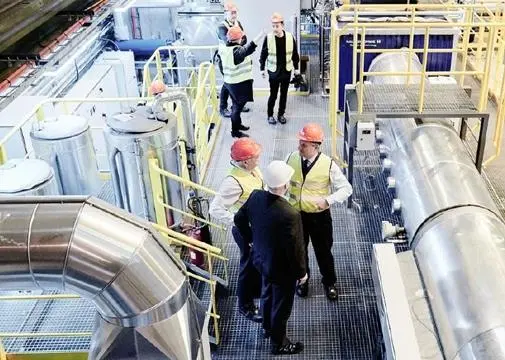
The LNG focused development will address new challenges and possibilities for maritime customers who are aiming to meet environmental and energy targets.
Peter Leifland, head of Alfa Laval’s Marine and Diesel Division, said: “LNG and other fuel alternatives will play a key role in meeting the marine industry’s environmental and energy challenges.”
“Through the expansion of the Alfa Laval Test and Training centre we will be able to support this shift with cutting-edge technology development.”
The centre opened nearly two years ago and already boasts 250m2 of testing space with a 2MW diesel engine and equipment from all of Alfa Laval’s marine product groups create the closest possible simulation of a full-sized commercial vessel.
Its expansion is in line with the new direction taken by many ship owners, as it is expected that 7000 vessels will be sailing with LNG in just 15 years, compared to the current 500.
“This is a remarkable change, driven in part by the successive tightening of NOx and SOx regulations by IMO,” said Bodil Nielsen, Test and Training Centre manager.
He continued: “LNG is an attractive solution because it reduces NOx by 85-90% and virtually eliminated SOx.”
There are of course challenges involved with LNG, such as additional environmental difficulties due to the methane and other greenhouse gases that evaporate from it.
At the centre, existing solutions to these challenges will be refine and new solutions will be developed.
Lars Skytte Jørgensen, from Alfa Laval, explained: “While the gases have to be burned to minimise environmental impact, we will develop the best technology for doing it safely – and for using the energy to provide heat and propulsion.”
He concluded: “By looking not only at the environment, but also at energy efficiency and economy, the Alfa Laval Test and Training Centre will ensure that Alfa Laval is the clear choice for customers who make the transition to gas-powered ships.”
The expansion is supported by the Danish Maritime Fund and will also provide new opportunities to collaborate with customers and cooperation partners.