Alternative fuels hold ground
While overall ordering activity slowed markedly, alternative-fuelled vessels still accounted for 38% of total gross tonnage (GT), with container shipping providing the backbone of demand.
“While indicative of a turbulent year where strategic choices were harder to make, the slowdown in 2025 also reflects a natural reduction after several years of extraordinary ordering activity,” said Knut Ørbeck-Nilssen, chief executive, Maritime at DNV. “Still, in select segments the momentum toward use of alternative fuels remains.”
In total, 275 alternative-fuelled vessels were ordered during the year, representing a 47% decline from 2024 and reflecting a broader contraction in the global newbuild market. Overall ship orders fell to 2,403 from 4,405 the previous year. Despite this downturn, the share of alternative fuels remained unchanged, underlining the sector’s relative resilience amid regulatory uncertainty.
That resilience was driven primarily by container shipping. Containership orders rose year-on-year to 547 vessels, accounting for nearly half of total GT and 68% of all alternative-fuel newbuild orders. Within the segment, alternative fuels dominated contracting, with LNG representing around 58% of contracted tonnage, followed by conventional fuels at 36% and methanol at 6%.
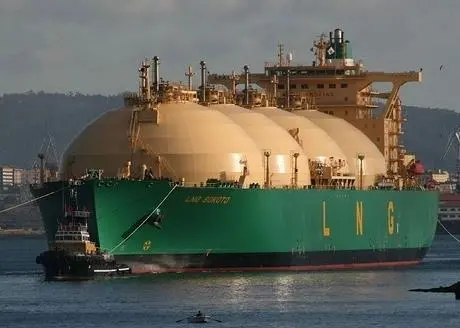
Across all ship types, LNG was the leading alternative fuel in 2025, with 188 orders, while methanol orders fell sharply from 149 to 61 vessels. In contrast, bulkers, tankers and car carriers saw pronounced declines as owners prioritised cost efficiency amid weaker markets and limited regulatory incentives.
“The resilience of the alternative fuels orderbook in 2025 is mainly driven by cargo owners who have set their own emissions reduction goals despite market slow-down and regulatory uncertainty,” said Jason Stefanatos, global decarbonisation director at DNV.