



Ampereship completes fully electric propulsion conversion
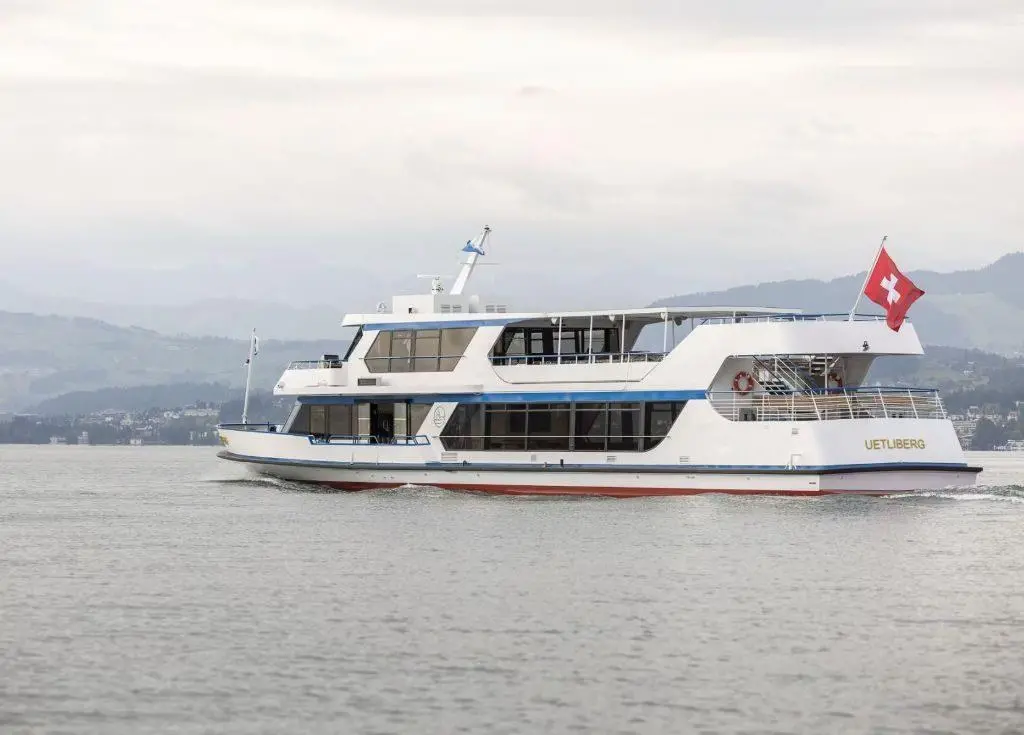
Now operating on Lake Zurich, the vessel is the largest battery-powered passenger ship in Switzerland and, with its 3.6 MWh battery system, is projected to save approximately 113,000 litres of diesel and 300 tonnes of CO₂ annually. The project demonstrates the feasibility of operating even large, existing passenger ships in a future-proof and emission-free manner, representing a decisive step towards greener operations on lakes and rivers.
Built in 1999, the 42.4-metre Uetliberg has undergone a complete retrofit by Stralsund-based shipbuilding specialists Ampereship, replacing its conventional diesel propulsion with a fully electric system. At the core of this upgrade is a 3.6 MWh battery pack comprising 7,200 cells. Technological advances have enabled the battery’s weight to be reduced to 22 tonnes, a considerable improvement compared with the 40 tonnes that a comparable capacity would have required only a few years ago. The vessel now accommodates up to 300 passengers with the benefits of quiet, vibration-free operation and zero local emissions.
“This maiden voyage of the Uetliberg shows that we can future-proof even large passenger ships,” commented Ingo Schillinger, business unit manager at Ampereship. The Uetliberg is the first of three identical vessels in the Lake Zurich Shipping Company’s (ZSG) fleet scheduled for full electrification, with sister ships Albis and Pfannenstiel to follow by 2027. The partnership between ZSG and Ampereship extends back to 2021, when three electric-solar passenger ships were commissioned for service on the River Limmat. Ampereship is also engaged in similar projects in Germany, including the conversion of the Warnow ferries in Warnemünde and the Wittower ferry on the island of Rügen.
For Ampereship, the Uetliberg conversion is both a technological achievement and a strategic statement, underlining the considerable potential of retrofitting existing vessels to reduce emissions dramatically. The company views the project as evidence that the shift to sustainable shipping on inland waters is no longer a distant ambition but a practical reality already under way
Related Articles
 ELECTRIFICATION AND BATTERY HYBRIDS
 ELECTRIFICATION AND BATTERY HYBRIDS
 ELECTRIFICATION AND BATTERY HYBRIDS