BOG re-liquefaction economic performance depends on refrigerant process
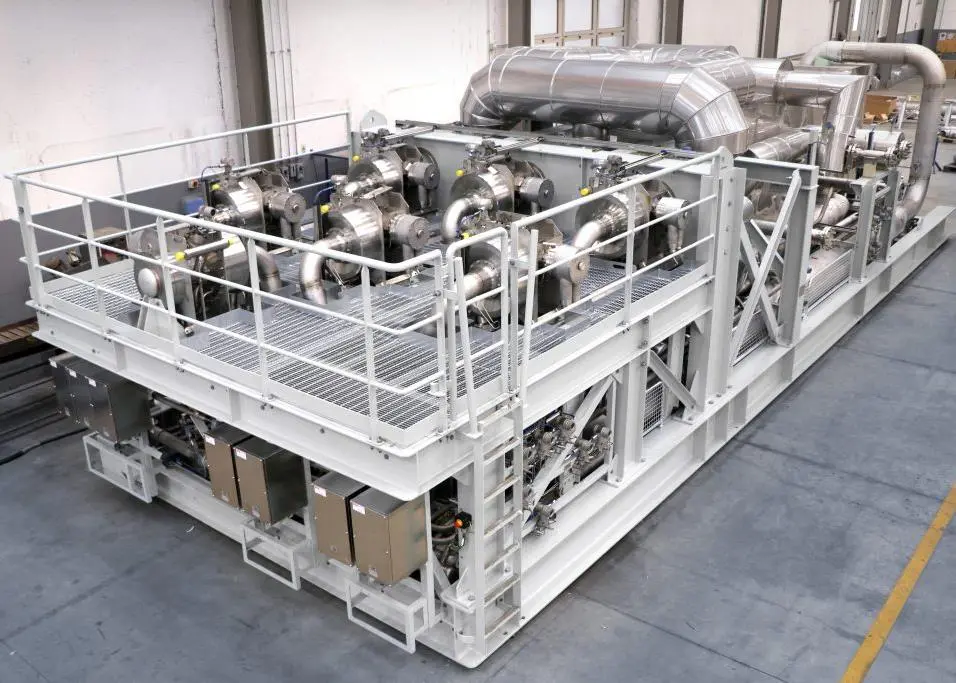
The study, published in Energy Reports, was conducted by researchers from the Seoul National University, SINTEF and the Norwegian University of Science and Technology. They performed a comparative theoretical analysis of using a single, mixed refrigerant (SMR) in the re-liquification system compared to the no external refrigerant (NER) approach, where instead the BOG acts as the refrigerant and is compressed and cooled. Several process alternatives were considered and optimised for energy efficiency.
The researchers note that previous studies were lacking detail regarding refrigerant options, CO2 emissions and the effect of CAPEX on the uptake of BOG systems onboard. To counter this, their economic analysis included installation cost, operational costs and the cost of lost cargo. A sensitivity analysis was conducted that included varying LNG prices. Their environmental analysis considered CO2 emissions from the main engine, auxiliaries, re-liquefaction plant and a gas combustion unit as an alternative to re-liquefaction.
The researchers found that while the NER case was around 10% cheaper, the SMR process offered 6% better energy efficiency and 15% less environmental impact in the form of emissions. The single mixed refrigerant option was able to recover 45% more LNG with 6% less specific power consumption than the no-refrigerant option, but it used 27% more power.
Overall, the single mixed refrigerant option was advantageous when LNG prices are high, and the no refrigerant option was advantageous when LNG prices are low.
The researchers note that methane slip from the propulsion engine could be included in future studies.
The paper is available here.