Bureau Veritas on navigating fuels and regulation
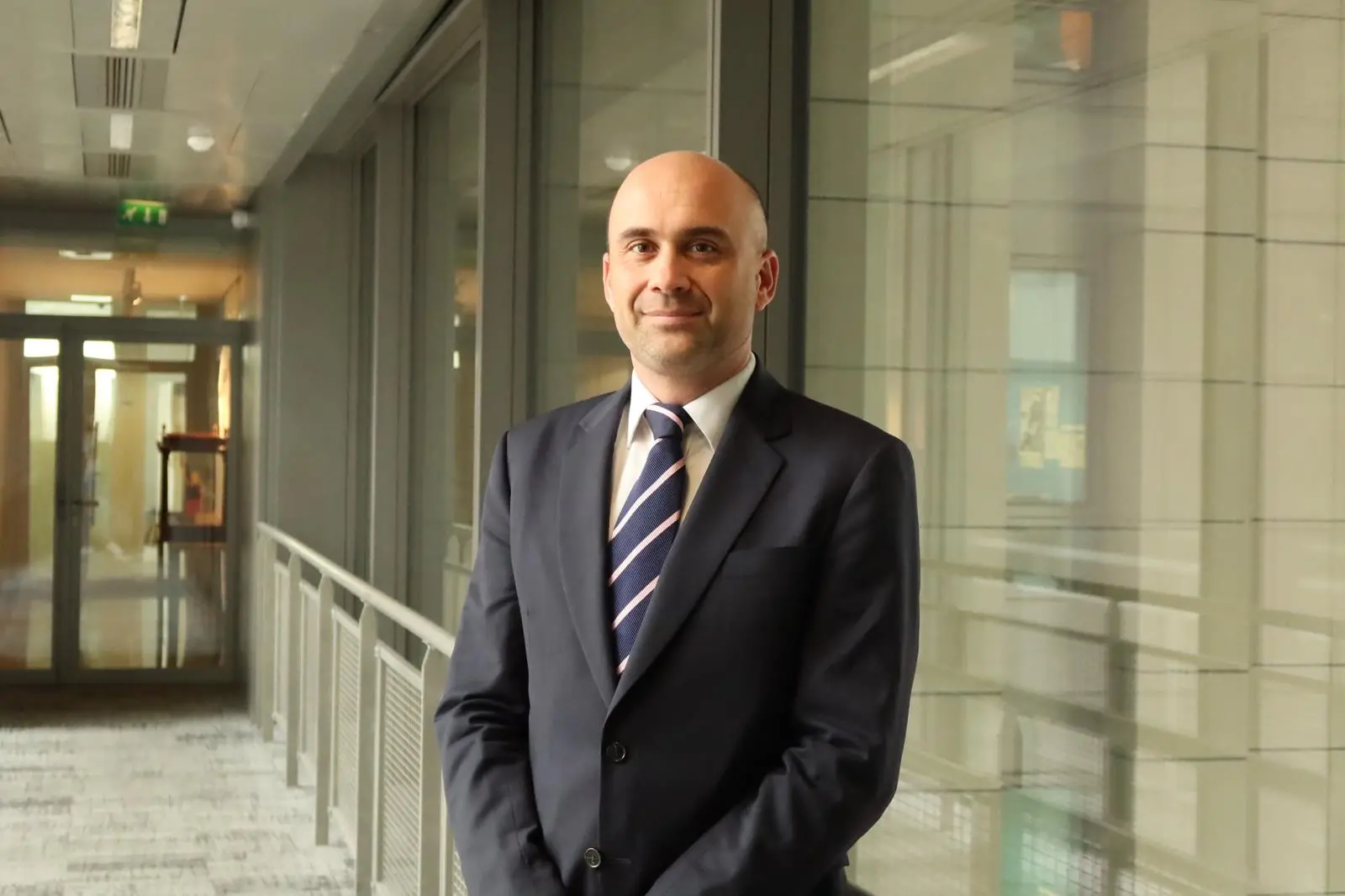
According to Boulland, recent data shows positive trends: “For the first year, we started to see a reduction in fuel consumption and also emissions, greenhouse gas emissions, when you multiply fuel that occur by the corresponding emission factor.” This reduction, he notes, comes even as the global shipping fleet has grown and travel distances have increased slightly.
Rather than a sudden shift to new fuels, Boulland credits this progress to strategies on operational excellence like slow steaming, efficient weather routing, and just-in-time arrival, which have immediate impacts on fuel consumption and emissions. “We think that an important element is operational excellence,” he emphasised. “Slow steaming, probably, most probably, because it has a huge impact on fuel consumption reduction.” He further noted that fuel shifts have played a marginal role, with LNG uptake progressing slowly but offering limited CO2 reductions.
Boulland is candid about the limited impact of LNG as a long-term compliance solution, especially as regulatory pressures increase. LNG may meet FuelEU Maritime requirements for now (but not in the future) and will likely fall short under the EU Emissions Trading System (EU ETS). “In one year shipping will have to pay for CH4, methane, in the EU ETS. For engines that are running on LNG, actually it may be more or less on par with HFO,” he explained, referring to LNG’s methane slip problem, which could negate its GHG benefits over conventional fuels although stressed it’s still more desirable than HFO.
To meet the growing demands of regulations like FuelEU Maritime, Bureau Veritas plays a role as an accredited verifier for fuels and pooling compliance, though Boulland acknowledges the challenge: “It’s a bit of a headache, but we are facing the challenge.” The pooling mechanism, a compliance tool under FuelEU, allows operators to balance surpluses and deficits across their fleets, a system Boulland defends as integral to regulatory compliance rather than exploitation: “It’s not cheating. It’s embedded in the regulation. It rewards overachievers and offers opportunities for ships with fewer compliance options”
While FuelEU Maritime and EU ETS regulations cover fuel use and emissions reporting, carbon insetting—a voluntary offsetting scheme for the carbon benefits of biofuels or other green actions—is also attracting attention. However, Boulland cautions against double-counting benefits, as operators must choose between claiming benefits under FuelEU or selling them as carbon credits: “An operator may be running a ship on biofuel but rather than claim that benefit they may want to sell it on as a carbon credit. You cannot use both.”
Green methanol, another emerging alternative, is receiving support from industry leaders such as Maersk, which Boulland sees as key in accelerating methanol’s adoption. “They used their powerful position… to kickstart green methanol which is good. Now it seems it may take more time than it was anticipated.”
Despite Maersk’s efforts, production and distribution infrastructure for green fuels remain limited, and the high costs of alternative fuels are likely to be passed on to customers, especially among high-profile clients in the liner segment. “The fact is today, green fuel does not really exist in sufficient quantity, the price is quite high…they might have large name clients like Amazon, IKEA who would pay the premium for green fuels.”
Amid this landscape, Bureau Veritas is actively involved in initiatives to advance renewable fuels and energy-saving technologies. “We are involved in this renewable and low-carbon fuel forum that is a part of the EU European Sustainable Ship Forum,” Boulland shared. He also highlighted joint industry projects exploring wind propulsion and alternative fuels like ammonia and methanol. “Wind is very critical for us. We see wind getting more and more interest from ship owners.”
Hydrogen, while an emerging fuel option, remains in the demonstration phase with several technical and economic obstacles. “Hydrogen is a very complicated market,” Boulland explained. “There is an element of cost involved with hydrogen and a technical challenge that make it difficult (energy density, temperature).” He sees hydrogen as more applicable to onshore industries such as steelmaking, mobility and production of synthetic fuels than to deep-sea shipping. “It’s much more difficult to see hydrogen use in deep-sea shipping.”
For Boulland and Bureau Veritas, the path to maritime decarbonisation will be one of adapting to both evolving fuels and complex regulations. Operational strategies, partnerships in innovation, and a careful approach to alternative fuels will be key for the industry to manage its compliance and environmental impact.