BWT and the complexity of retrofits
Despite a wealth of information available on the inherent benefits and drawbacks of the ever increasing number of ballast water treatment (BWT) systems available on the market today, there is still a distinctly grey area concerning the engineering requirements, and ultimately cost, required for retrofitting a BWT system. In many instances, the quoted cost of the system itself can represent as little as 50% of the overall retrofit cost, simply due to the complexity of the engineering required. Selection of the most appropriate BWT system is a complicated balancing act of cost, functionality and retrofit complexity.
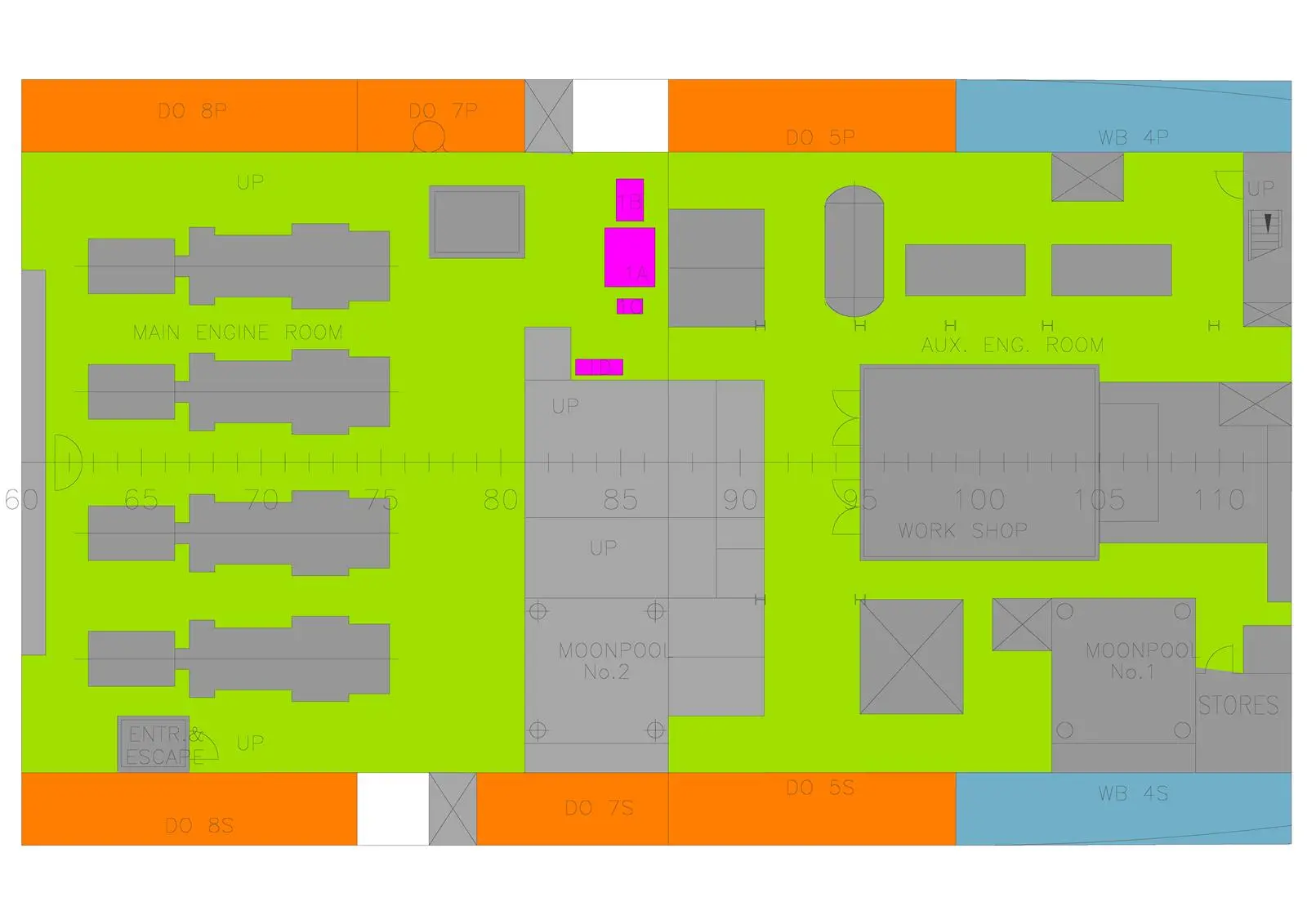
Despite it being an apparently simple concept, the ‘overall footprint’ of a BWT system is often the most complex to engineer. ‘Overall footprint’ is a term coined by BWT manufacturers, and does function well as an initially indicative measure of the free space required to locate the system in the machinery space. With many vessels having very limited free space in the machinery rooms, shipowners may find that they need to suffer a loss of cargo capacity, or conversion of a void space to accommodate the system. This not only adds to the overall cost of the retrofit, but would also require updates to the trim and stability booklet. To complicate matters further, the overall footprint does not take into account the maintenance envelope, and with some internal components, such as delicate UV lamps, often measuring over 1m in length, this can add substantially to the operational footprint.
On paper, BWT systems mainly come in block capacities, 250m3, 500m3 and so forth, and are typically designed to be assembled as one block piece of machinery. In-line BWT systems, where the ballast water is treated through the individual components in line with the existing ballast piping, often pose the benefit of being modular in construction, allowing for bespoke engineering to locate the individual components in small pockets of free machinery space. But while this approach can help squeeze a system into a tight machinery space, it does drastically complicate the piping requirement to link all of the components together – further increasing the costs.
Functionality is another critical aspect of a BWT system, and with no two commercial systems offering identical specifications, systems must be analysed on an individual basis. Even the grandeur of type approval does not guarantee that a system will be efficient for a specific vessel. For example, further analysis into the quoted pressure drop of a system shows that this is quoted for normal operation of the system. For many vessels the quoted pressure drop alone can constitute a requirement for larger ballast pumps to avoid a drop in capacity. If we also factor in a drop in system efficiency due to fouling in the system components, which is probable due to the inherent nature of the treatment technologies, owners may be unable to avoid the requirement for larger ballast pumps.
Similarly, further analysis of the quoted power consumption of a BWT system shows that many vessels may need to alter their generator setup in port, to account for the additional consumption. Switching from two generators on medium load to three on low load is ordinarily not a huge problem, however, with increasing fuel costs, and strict legislation on emissions, shipowners are more than keen to avoid running an extra generator in port. In more extreme cases, vessels may find they do not have the spare power capacity available, and could potentially require an additional generator to be installed, just to power the BWT system. The issue of power requirement is particularly apparent in very large vessels, such as tankers and gas carriers, where, based on current technologies available, the huge ballast flow rates require power capacity beyond what is both practical and economical for the operation of the vessel.
Perhaps the most critical aspect of the retrofit process is the planning and execution of installation. The first hurdle is encountered simply with the available access to the desired location in the machinery space for installation. Indeed, this can drastically affect the suitability of a system, as with no direct access to the machinery space from the main deck, the ability to load large components of a BWT system becomes complicated and expensive. In these cases, the vessel may need to be dry-docked, with access holes cut in the sideshell to facilitate loading of the system components to the desired location. This not only complicates the retrofit, but dramatically increases the cost. Conversely, utilising the modularity of many systems may allow bespoke loading via machinery space escape hatches, or through temporary access holes cut through bulkheads or decks. However, these bespoke ideas impose added complexity on the engineering and planning of the retrofit. All of these options are further complicated with the desire to minimise disruption to the vessel, its crew and its schedule, as down-time effectively increases the cost of retrofit. Pre-requisite work, such as piping and steelwork, could be carried out while the vessel is still in operation, however this can pose HSE and insurance problems, particularly for passenger vessels, with no guarantee of avoiding disruption, accidental or otherwise, to the vessel’s existing systems. Furthermore, many vessels do not offer enough spare beths to accommodate further personnel onboard.
The complexity of the retrofit process is certainly not one to be under-estimated, and more and more shipowners are investing their own time, or indeed commissioning external engineering consultancies, in conducting vessel-specific feasibility studies. This kind of preparation will indeed go a long way towards ensuring a smooth and cost efficient retrofit process, and with the countdown to the inevitable ‘big boom’ in the BWT system industry, where manufacturing, shipyard and engineering capacity begins to run out, such could indeed prove critical.