Charting a path to lower GHG emissions shipping

The International Maritime Organization’s (IMO) aim to reduce greenhouse gas (GHG) emissions from international shipping will require the development of new technologies and the introduction of lower GHG emission fuels. As a major marine fuel supplier, ExxonMobil supports the IMO with a plan to be part of the solution. To this end, ExxonMobil is working to develop GHG emission-reducing technologies and products, all underpinned by our continued investment in R&D.
A future of energy alternatives
ExxonMobil is already investigating several potentially viable alternatives to conventional fuel formulations including biofuels, “drop-in” alternatives that can be used in existing engines without the need for extensive modifications.
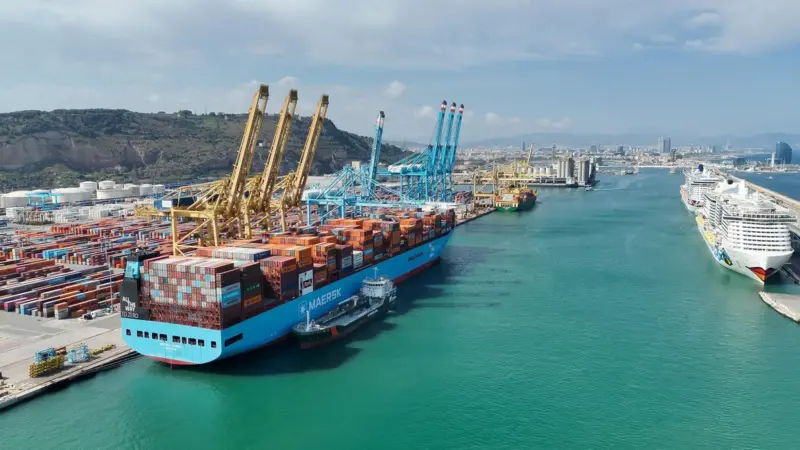
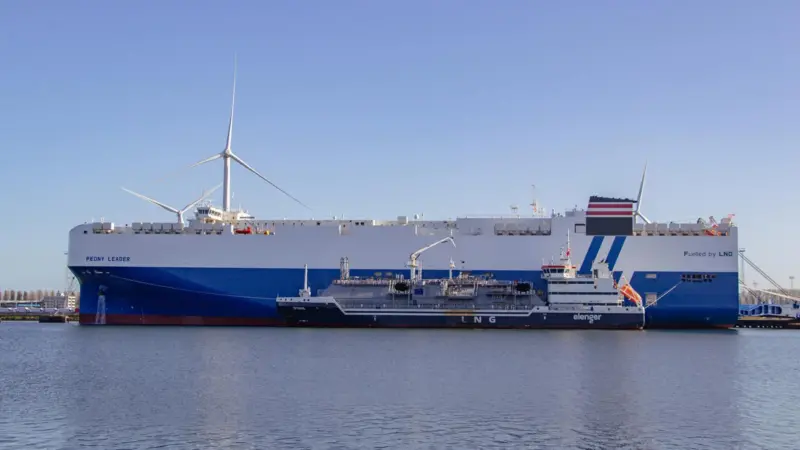
ExxonMobil signed agreements with both Hapag-Lloyd and Wallenius Wilhelmsen to supply B30 bio marine fuel oil in the Amsterdam-Rotterdam-Antwerp (ARA) region in 2023. These agreements followed successful bio-bunkers in Singapore in 2022 and 2023.
The marine biofuel that ExxonMobil is delivering in ARA is a 0.50% sulphur residual-based fuel (VLSFO) processed with waste-based fatty acid methyl esters (FAME). The resulting blend meets ISO 8217:20172 with the exception of the FAME content, which complies with EN 142143. The FAME components are made from certified sustainable material and therefore are not in competition with land for food production.4 The marine biofuel therefore offers vessel operators a workable solution when looking to reduce GHG emissions from their operations. 5
Methanol, ammonia and hydrogen also have the potential to reduce the carbon footprint of shipping. However, one of their challenges is their lower energy content. Ships designed for these fuels would either require additional storage to accommodate fuel-containment and gas-supply systems or more frequent bunkering.
Regulatory policy
ExxonMobil advocates for a low carbon fuel standard (LCFS) to provide a predictable long-term pathway of reductions in carbon intensity (CI) of the fuel pool in shipping. To enable this, policy should include the following attributes:
· Set declining annual targets for the Well-to-Wake CI of the consumed marine fuels (expressed in gCO2 equivalent/MJ)
· Be technology neutral to encourage multiple pathways and innovation
· Provide flexibility to manage investments in fleets and the growth of lower GHG emission emerging technologies and energy
· Support lower-carbon intensity fuels, as the life cycle assessment approach helps to provide an effective tool for comparing alternative fuels
· An alternate compliance mechanism in the form of a payment to provide revenues to an IMO global fund to support lower GHG emissions initiatives in the shipping sector
Collaboration for success
Shipping plays an indispensable role in the global economy and the industry is projected to further grow, making lower GHG emission fuels essential in this sector. Part of the answer will likely be industry-wide engagement and collaboration. As part of its participation in policy discussions, ExxonMobil is currently active in industry committees, as well as trade associations and standards committees, and encourages policies and standards that support the production of fuels with lower life-cycle greenhouse emissions.