Chemical free water treatment for offshore fleet
Volstad says that this has the potential to save large volumes of chemical waste, which aligns with the company’s desire to look after the environment. Volstad adds that saving money at the same time is of course a welcome bonus. Volstad regards itself as not only one of the majors in offshore shipping but also as a front runner in the use of novel environmentally proven technology.
Enwa points out that it is important, in order to preserve the function and reliability of onboard systems that use water, to treat that water in some way to avoid problems of corrosion, scaling and bacteria. The conventional method of treatment involves the addition of chemical mixtures. Enwa has developed its Norwegian patented EnwaMatic technology, which does the same job for engine cooling systems and onboard HVAC systems, but totally avoids the use of chemicals.
The EnwaMatic maritime water treatment unit is said to combines reproducible principles of water chemistry with standard water treatment technologies. The unit provides effective dirt and air separation with environmentally sound water conditioning. It creates changes in key water parameters, such as pH, alkalinity and hardness, to elicit corrosion inhibition, control of scale formation and a biocidal effect.
According to Enwa, the instant that water enters the system it causes flash corrosion, and during operation it will form scaling, bacterial contamination and fouling. This has a significant impact on energy consumption, the life of motor components and overall Life Cycle Cost (LCC). The company believes that as little as 2mm of rust can reduce heat transfer by 5% across component surfaces. Scale is said to have an even more significant effect on transfer efficiency with a 0.5mm layer generating as much as 4% in increased fuel consumption
The company adds that when specifying a water treatment regime consideration must be given to its efficiency, its whole life cycle cost, how easily it can be implemented and managed, and what potential risk it presents to personnel and the environment. A major worry for ship owners has been the fact that whenever an engine cooling system or an HVAC system is drained, the water has to be treated as special waste since chemicals are being used to avoid corrosion, scaling and bacteria.
Traditional treatment for HVAC and engine water involves adding different types of chemicals to balance the water quality and to avoid corrosion damage. Enwa believes that the use of some of these chemicals can, in itself, cause localised pitting and accelerate corrosion. To counter these problems, the EnwaMatic technology is based on filtering and treating the water with minerals, which helps to balance the composition, removing oxygen and neutralising the water. Enwa says that its unit is fully automatic, and thus protects the engine and HVAC system internals with a minimum of operator attention.
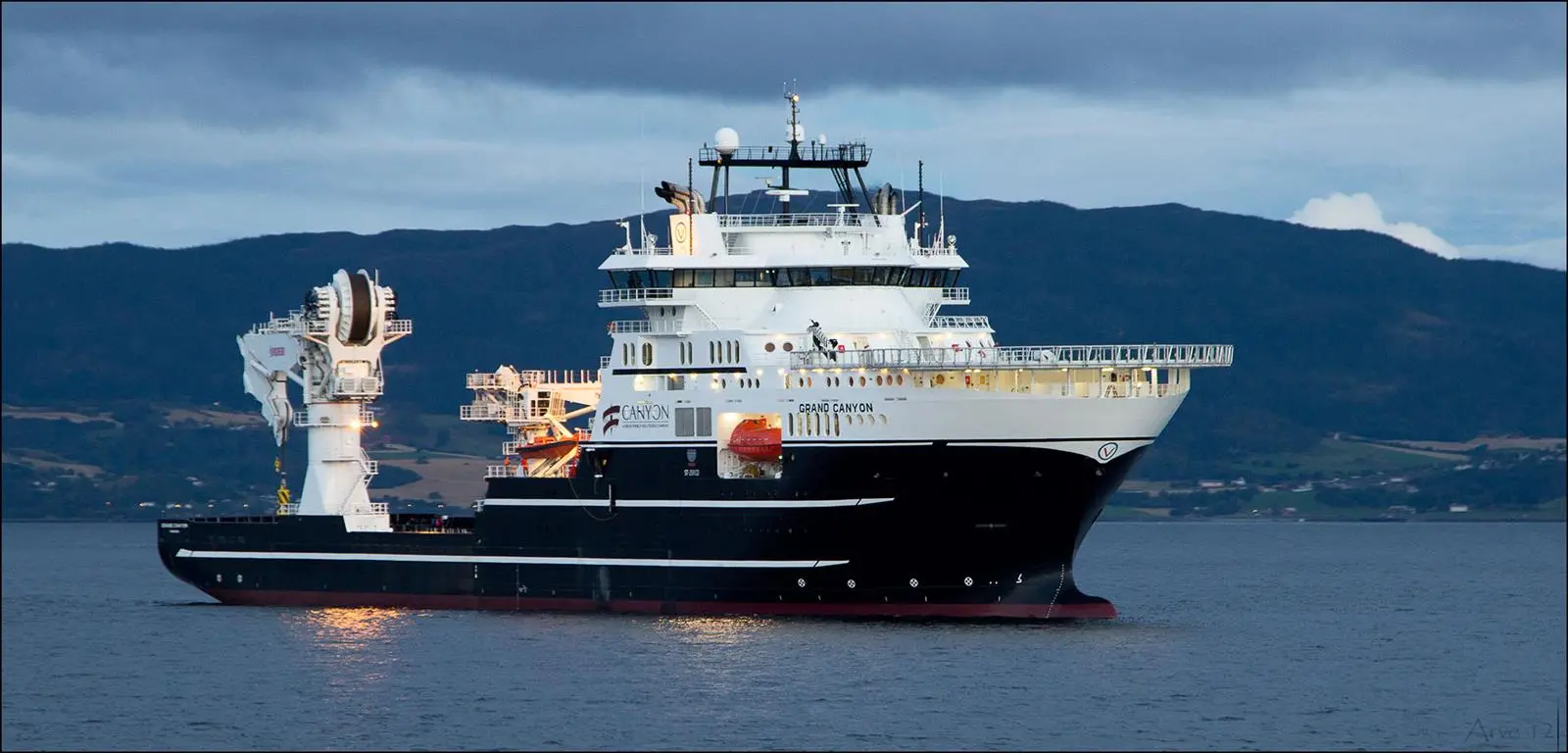
Volstad says that it has used EnwaMatics systems on its recently-delivered offshore construction vessel Grand Canyon. The company has been satisfied with the performance so far, and Enwa says that Volstad has great faith in the technology. This has led to an order for 11 EnwaMatic maritime water treatment units in each oft two new buildings contracted by Volstad at the Bergen Group Fosen yard.
“When we ordered our two new vessels at Bergen Group Fosen, the central requirement to reduce emission to air and sea as much as possible was quite clear to us,” sais a Volstad Maritime spokesman.
Enwa adds that protection of HVAC and engine cooling systems represents, for responsible ship operators, a proactive step towards safeguarding the environment. As an alternative to chemical dosing, the company’s continuous treatment and filtration based systems will help prolong the system and component lifespan without risking the environment.
Enwa sales manager Svenn Lorentzen said: “The EnwaMatic technology, treating heating and cooling water in closed loops, is already in use in more than 5,000 buildings in Europe alone. The recent move in to the maritime segment has already resulted in the delivery to more than 50 ships. EnwaMatic is also the recommended water treatment system by Wärtsilä, the world number one in ship engines. We see that the market demand for our EnwaMatic and EnwaMatic Maritime units is quite strong and promising, as more and more of both our existing and new customers order these environmentally friendly and energy effective water treatment systems. This technology is completely in line with the market trends and the future of both maritime and offshore related business, in addition to the land based market. We are very optimistic about the further development.”