



Clean Shipping Alliance Q&A on scrubbers
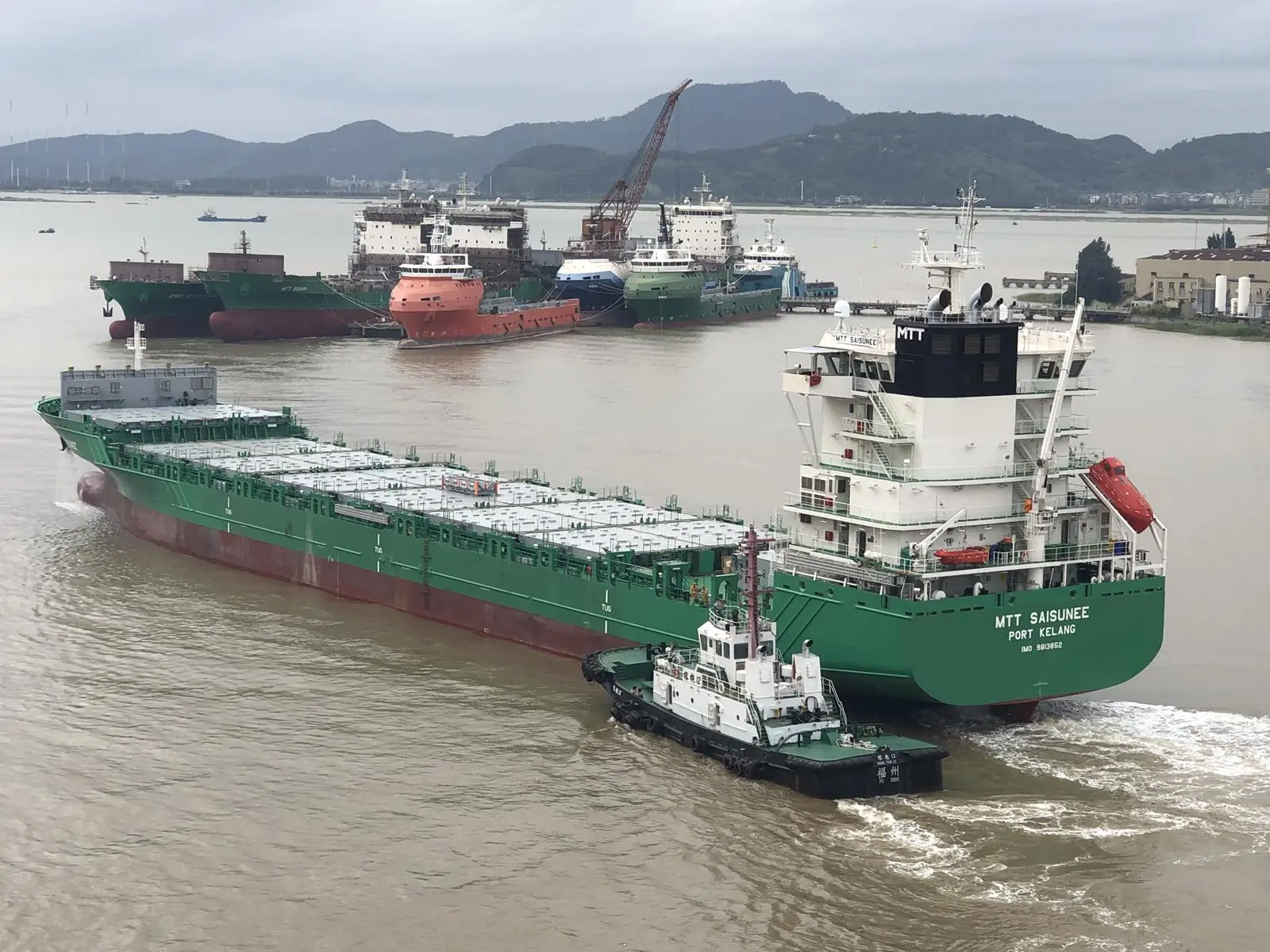
(Question) Can you elaborate on the CSA’s long-term vision for emissions abatement and its strategy to support member companies in achieving these goals?
The Clean Shipping Alliance (CSA) represents a group of leading shipping companies in emission control efforts through their investments in research, analysis and funding on the development and use of Exhaust Gas Cleaning Systems (EGCS) for the ongoing compliance with the IMO 2020 fuel requirements.
Comprising 25 members, the CSA represents over 3,000 ships from the commercial shipping and cruise industries, so as a diverse group of major shipping companies from across the maritime industry, there are different perspectives on future priorities. As a collective, however, we are aligned on the major role that energy savings/fuel efficiency must play in the general decarbonization effort, and the importance of biofuels and LNG, including bioLNG, in starting to replace current marine fuels in the near and mid-term.
EGCS play a critical role in meeting shipping’s decarbonisation goals. Today, the approximately 4,000 ships globally that are fitted with EGCS/scrubbers, about 8% of the global trading fleet, are providing a practical, transitional bridge to alternative fuel solutions which are not yet ready.
How do EGCS technologies align with the maritime industry’s decarbonisation targets, and what role do they play in the transition to alternative fuels?
As EGCS used with HFO have inherently higher quality air emissions than VLSFO – which is 60% of the marine fuel in use today – and have a smaller lifecycle carbon footprint than Marine Gasoil (MGO), they fit comfortably into the mix as a transition technology and support the IMO ambitions for lowering CO2 emissions by 2030.
The combination of EGCS + HFO also provides a significant local air emissions benefit, including lower SOx, NOx and PAH’s than when using VLSFO or MGO. And when we consider that exhaust cleaning by EGCS is a necessary step for onboard carbon capture, these systems will be seen as a required element in realizing a contribution from this promising CO2 reduction method.
What are your views on the necessity of risk assessments before implementing scrubber bans, and how do such bans impact global efforts to reduce maritime emissions?
Although the IMO has made it clear that risk assessments should be conducted before a member state or local authority progresses a restriction on the use of EGCS in their waters, very few states that have restrictions have done so. All current restrictions / bans in ports or even port states that we know of appear to be based on some form of the “precautionary principle”, which was originally designed to allow a temporary protective position until the science was available to make a proper evaluation. Today, the science for EGCS is fully available, the IMO has published guidelines on risk assessments, and these can be done affordably using local waters and the assistance of reputable technical experts.
Although Denmark, Sweden, and Finland have recently announced restrictions beginning in 2025, it is not clear that they have done any actual risk assessment themselves, using direct sampling in local waters, or are just looking at reports from others.
Interestingly, the few IMO member states we are aware of that had restrictions in place and actually did full risk assessments have removed the restrictions after completing the assessment, as they found little or no risk to the environment from EGCS operations.
There is a significant body of scientific research supported by actual data which concludes that the operation of scrubbers does not harm the marine environment. And, after 50 years of scrubbers in global maritime use, there is still no actual evidence anywhere of environmental harm. And since there are many competent testing labs/institutes and scientists (eg toxicologists) with experience in such risk assessments, it seems logical to do this. We would be happy to support anyone that is interested in finding out more.
Can you discuss the body of scientific research on scrubbers and address misconceptions or criticisms about their environmental impact?
There is a large body of research going back over 30 years for the current generation of marine scrubbers. This extends further back for EGCS on chemical tankers, and even further again for land-based scrubbers on power plants and factories that use seawater for scrubbing their exhausts. These studies, whether relating to water quality, accumulation in ports, or impact on marine life, have repeatedly shown little or no risk.
A well-studied land-based operation was Mongstad Refinery in Norway, where decades of annual benthic surveys showed consistently heathy flora and fauna around the discharge point. Studies from the 1990s for the evolving versions of today’s shipboard scrubbers also found low risks to the environment. And in 2012 we saw a milestone study by the Danish EPA, which considered the effect of EGCS discharges, especially from pH, on the waters of semi-enclosed areas of the Danish coast, which again found little or no risk.
More recently, from around 2019, approaching the start of the Global ECA, more studies started to appear, investigating three major areas of interest for EGCS discharges: water quality, compared to major national/international standards the potential for accumulation of discharge water constituents in ports water and sediments; and the impact on marine life and some studies covering two or three of these areas. Even more recent contributions to the research literature include an in-port risk assessment paper submitted to the IMO by Brazil, and a general risk study submitted by Liberia.
All the studies mentioned have one thing in common – water samples taken directly onboard ships, the use of standard accepted scientific methods for collecting and testing samples, and modern laboratory analysis. All of which are essential to ensure accurate and trustworthy results.
How do you anticipate the Swedish scrubber ban will affect CSA members and the broader shipping industry, particularly in operational and regulatory terms?
This action has the symbolic effect of a major state taking this unilateral action without any clear real evidence of environmental harm, or even a risk assessment. It will primarily impact ships homeported or trading in Sweden, rather than ships transiting Swedish waters en route to other destinations.
For those ships trading in Sweden, it can mean a requirement to change fuels before entering Swedish waters, in all weather conditions, day or night, which for a single engine ship can sometimes be an operational safety risk. For the broader shipping industry operating elsewhere, there will be limited effect. All vessels transiting the Danish Straits and not bound for Sweden should be able to continue operating EGCS during the passage.
That said, there is an underlying principle at stake here: if scrubbers are banned without even a risk assessment when already endorsed and supported by international (and most national) authorities, this jeopardises related decarbonization transitional technologies by increasing risk for early adopters and investors.
As an alternative means of reducing sulphur emissions and potentially harmful particulate matter, the use of scrubber technology was supported by all member states of the International Maritime Organization (IMO) as part of Marpol VI, and by the European Union and Commission in preparation for the IMO’s global sulphur cap, which came into force on 1st January 2020. It was included in the EU Sulphur Directive, which is still in force today, As a result, the shipping industry invested in it and should not now be penalised for acting in good faith and in line with regulation.
With the increasing focus on carbon capture systems, how do scrubbers complement these technologies, and what are the prospects for their combined adoption?
According to Clarksons, about 31 vessels in the fleet – plus 28 newbuilds – are now or will be testing onboard carbon capture technology. Early reports of onboard effectiveness appear promising, although there are still disposition issues to be worked on. For carbon capture utilisation and storage (CCUS) to be applicable for any vessel using carbon-based fuels, it will require pre-treatment in the form of an exhaust gas scrubber. As early CCS onboard testing shows potential for helping capture CO2, the EGCS/CCS combination is increasingly seen as a useful, even important technical path while waiting for e-fuels. General availability will encourage the wider uptake of CCS, which has the potential to make a significant technical contribution to meeting maritime climate goals.
Related Articles
 EXHAUST GAS CLEANING SYSTEMS
 EXHAUST GAS CLEANING SYSTEMS
 EXHAUST GAS CLEANING SYSTEMS