Desmi Ocean Guard to appeal MPN decision
On 14 December the US Coast Guard (USCG) confirmed that it had written to four suppliers of systems using UV, to notify them that the most probable number sampling would not be accepted as an alternative means of testing for the USCG type approval process.
In a statement the company said: “We are, like many other BWTS providers and ship-owners, surprised and disappointed with this preliminary decision, and after having carefully reviewed all available data and information together with our legal counsel, we have decided to file an appeal.
“We think that USCG’s decision is not right for many reasons, and supported by important legal and scientific facts, we are convinced that the MPN method, which is accepted in the rest of the world, will also become accepted in the US territory.”
The company warned that USCG’s preliminary decision would have serious consequences for ship-owners, their crew and the environment if not changed.
“Ship owners will have to use chemicals or much more UV power to treat ballast water, which leads to increased operating expenses, risk for increased corrosion and risk for chemical spills and explosions.
“The environment will be negatively impacted because USCG’s decision will promote chemical based ballast water treatment, which will lead to a significant increase in discharges of disinfection by-products into the world’s oceans, which is of increasing concern to scientists and regulators.”
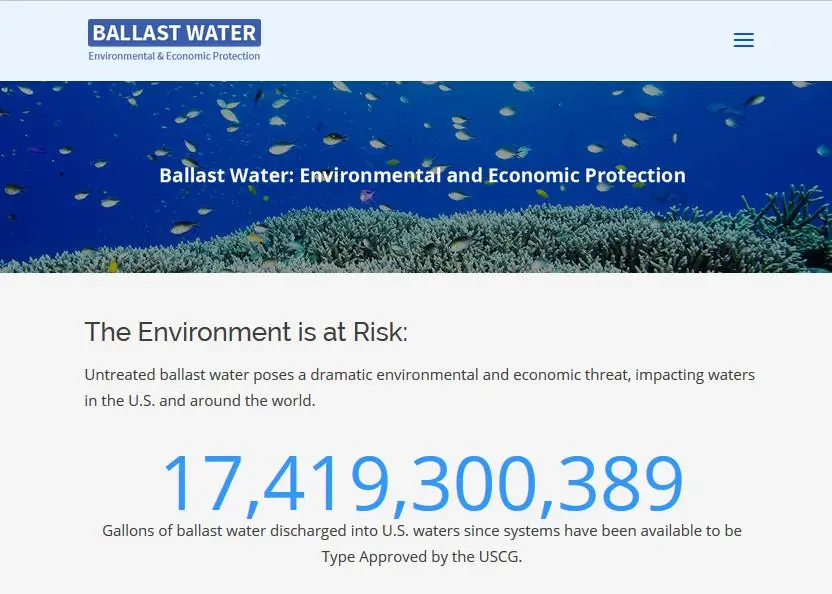
DESMI Ocean Guard referred to a new campaigning website launched after the decision, which argues that USCG’s analysis of what is allowable is incorrect. In particular, the company noted:
- The USCG rule does not include the word “living” in the discharge standard applicable to US waters;
- The USCG rule does not define the word “living”, but in relevant governmental documents a living organism is defined as “an organism that has the ability to pass genetic material on to the next generation.” This is in accordance with generally accepted definitions of “living” worldwide;
- United States Federal Aquatic Nuisance Species Task Force – 2012, define invasive species as: “Invasive species are any species or other viable biological material (including its seeds, eggs, spores) that is transported into an ecosystem beyond its historic range, either intentionally or accidentally, and reproduces and spreads rapidly into new locations…” (emphasis added);
- The USCG Rule defines a Ballast Water Management System as “any system which processes ballast water to kill, render harmless, or remove organisms” (emphasis added).
The website can be found at www.mpnballastwaterfacts.com