



DFDS eyes CO2-neutral cross-Channel ferries by 2030
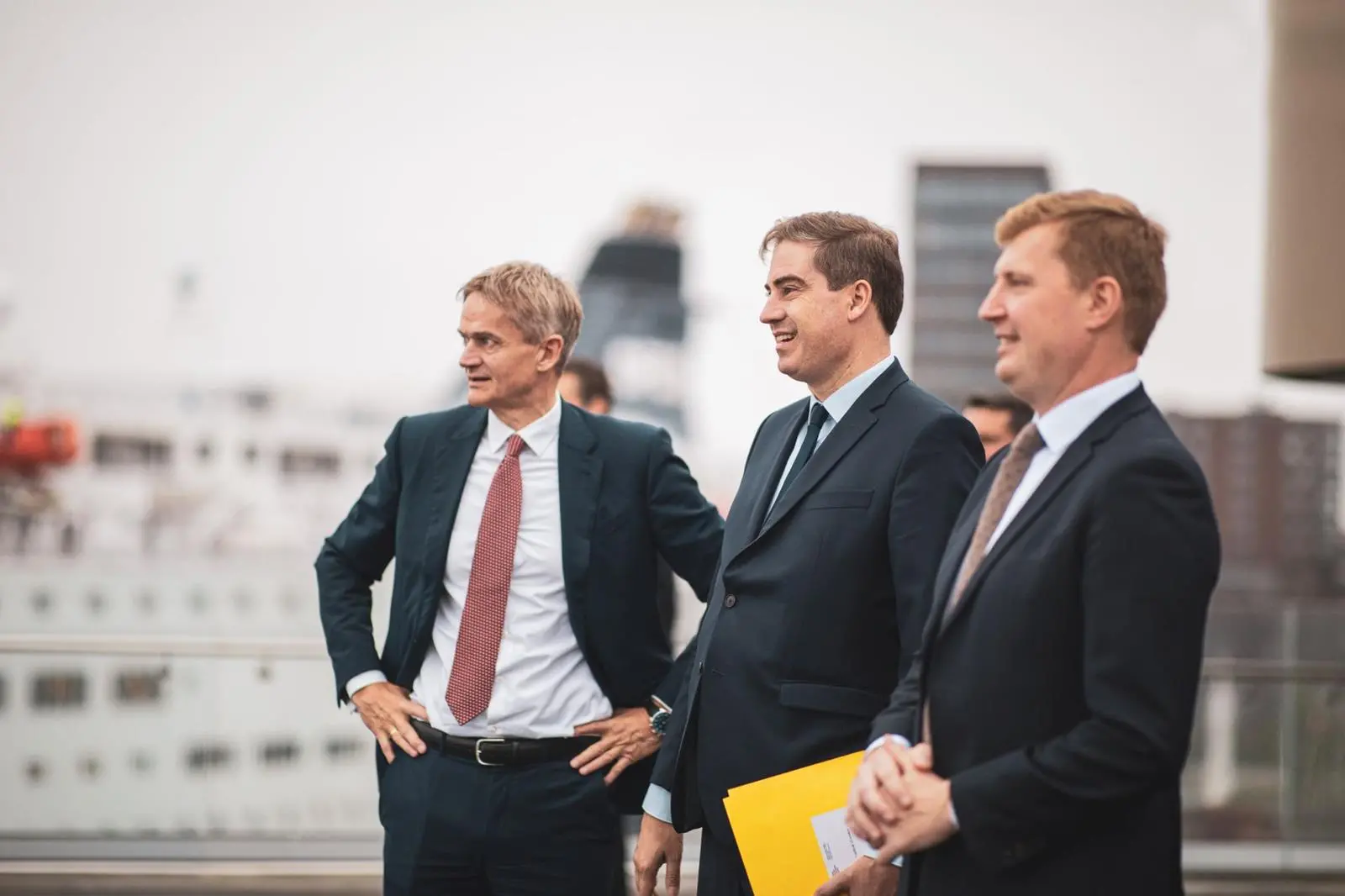
The commitment was made during a meeting between the ceo of DFDS, Torben Carlsen, and France’s Minister for Foreign Trade, Attractiveness and French Nationals Abroad, Olivier Becht, in mid October.
The meeting, which addressed the wider issue of the decarbonisation of the shipping sector, also focused on the electrification of maritime traffic across the English Channel. Mr Carlsen committed to invest in innovation and technology, and to deploy a fleet of battery-powered vessels in the Channel by 2030.
DFDS signed a memorandum of understanding with the Port of Dover, Port Boulogne Calais, and Dunkerque-Port to collaborate on the decarbonisation of maritime traffic across the Dover Straits earlier in 2023.
Torben Carlsen identified that the electrification of the short-sea connection was likely to require ”significant investments in innovation, technology and infrastructure, and collaboration and partnerships between the public and private sectors.”
“We will invest in green vessels and cooperate with ports and governments on both sides of the channel to decarbonise cross channel transportation,” says Carlsen concluded.
The Motorship notes that the details of the propulsion solution could not be confirmed, and the CO2-neutral formulation might permit a battery-hybrid solution operating on a renewable green fuel, such as methanol, rather than a more technologically challenging full-electric solution.
Maritime electrification experts have previously told The Motorship that it would be feasible for comparatively short crossings, such as the Dover-Calais run, to be serviced by full-electric vessels.
The rapid pace of technological progress in increasing the size of energy storage systems means that the 8.8MWh battery installations aboard P&O’s Fusion-class hybrid ro-pax vessels have been surpassed repeatedly. In August this year, South American ferry operator Buquebús ordered a full-electric large lightweight ferry to serve the River Plate crossing route with a 40MWh ESS.
The twice or potentially thrice daily frequency of crossings on the longer River Plate route is expected to permit a dockside recharging strategy, although the details have not yet been confirmed. By comparison, recharging a potentially larger installation on the much busier English Channel route is expected to pose greater technical difficulties. The English Channel is one of the busiest shipping corridors in the world, and carries 33% of the physical trade between the EU and the UK.
DFDS identified the installation of sufficient power supply connections linking ports and the wider national grids and the provision of infrastructure to accommodate recharging facilities in ports as prerequisites to be able to complete the fleet electrification.
The Motorship notes that the length of time to obtain approvals and install grid connections in the UK has been identified as a bottleneck for offshore wind developments, beyond acute portside space constraints at Dover.
“The green transition is a complex challenge that requires all hands on deck. We need support from public authorities, infrastructure parties, utility providers, customers, and suppliers. I am happy to continue our cooperation with the French government to accelerate the decarbonisation and enable green transport corridors across the English Channel,” Carlsen concluded.
Related Articles
 ELECTRIFICATION AND BATTERY HYBRIDS
 ELECTRIFICATION AND BATTERY HYBRIDS
 ELECTRIFICATION AND BATTERY HYBRIDS