



Diesel-electric transhipper for the salt trade
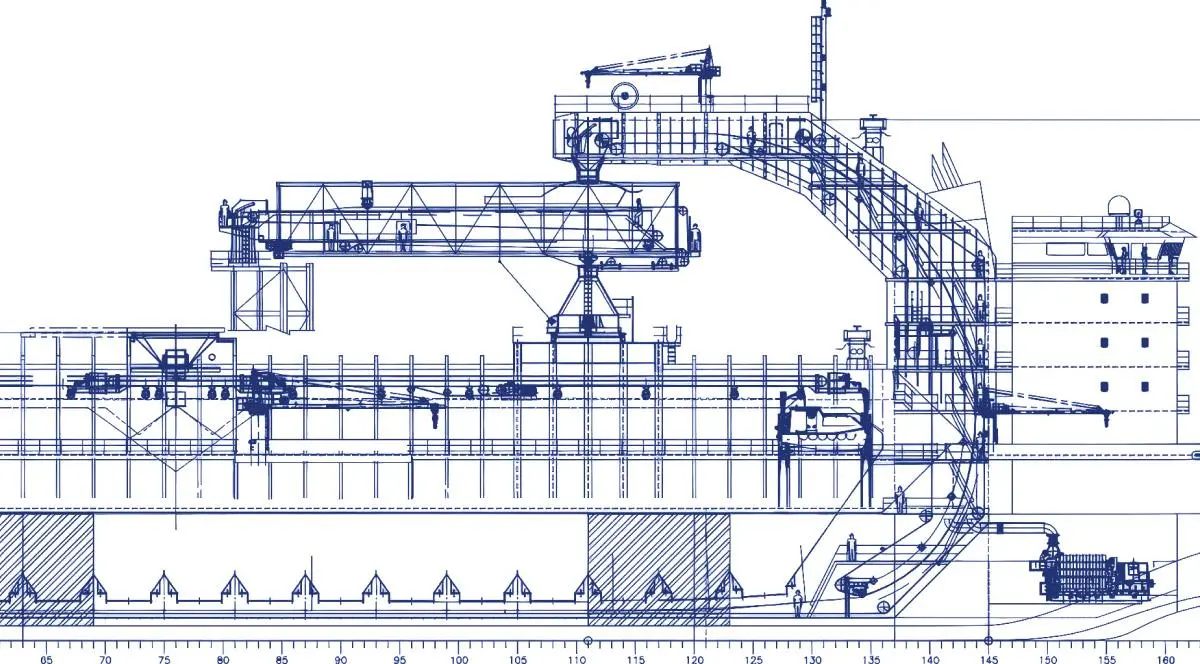
The custom-designed newbuild will serve the Mardie Project, loading salt and potash at BCI’s marine terminal in Cape Preston, Western Australia, for transfer to deep-sea bulkers anchored 12 to 15 nautical miles offshore.
Construction of the new vessel at an unnamed shipyard is to begin during the spring of 2026, with delivery scheduled for mid-2027. So as to undertake transhipment services in the interim, with effect from the second half of 2026, CSL will provide a self-unloader on timecharter to BCI. Overall, the strategic partnership between the Canadian group and the listed Australian company spans a 21-year period.
The nascent transhipper is expected to meet the logistic needs of Mardie’s planned annual production of 5.35m tonnes of high-purity salt and 140,000 tonnes of sulphate of potash. The ship will be of comparatively shallow draught, so as to maximise cargo lift within tidal and channel parameters, and the design will feature double-ended propulsion, using four azimuth drives and a diesel-electric plant, to meet both exacting manoeuvrability and efficiency criteria.
The cargo handling specification calls for a single-point loading system achieving 3,300 tonnes per hour and the self-unloading wherewithal for a discharge rate of 4,000 tonnes per hour.
CSL Group CEO Louis Martel said “Aligned with CSL and BCI’s commitment to environmental sustainability, the design of the new ship provides a pathway to achieve our decarbonisation targets. Its diesel-electric propulsion system is engineered for future conversion to clean fuels or electrification.”
The nature of the transhipper’s technology chimes with the particular characteristics of the Mardie Salt & Potash Project on the West Pilbara, wherein the production process will be driven mainly by solar and wind energy. BCI’s outloading point will be a jetty extending 2.4km from the shore, reached via a 4.6km dredged channel.
The transhipment vessel solution gives access to the use of ocean-going bulkers up to Capesize or Newcastlemax capacity, reducing overall freight costs through economies of scale compared with other salt export operations in Western Australia. The Asian market is key to the BCI Mardie enterprise. Sulphate of potash can be shipped direct either by small vessels or together with salt shipments, where the products have customers with a common or nearby port destination..
Towards the end of last year, CSL entered into a long-term agreement with another Australian firm, Adelaide Brighton Cement(Adbri), for an 11,000dwt self-unloading limestone carrier incorporating a hybrid diesel-electric propulsion system readied for full battery-electric operation. The Canadian organisation also has two 72,250dwt self-discharging bulkers on order from Jiangsu Yangzi-Mitsui Shipbuilding(YAMIC) in China.
Related Articles
 ELECTRIFICATION AND BATTERY HYBRIDS
 ELECTRIFICATION AND BATTERY HYBRIDS
 ELECTRIFICATION AND BATTERY HYBRIDS