



Digital twin aids electric vessel testing
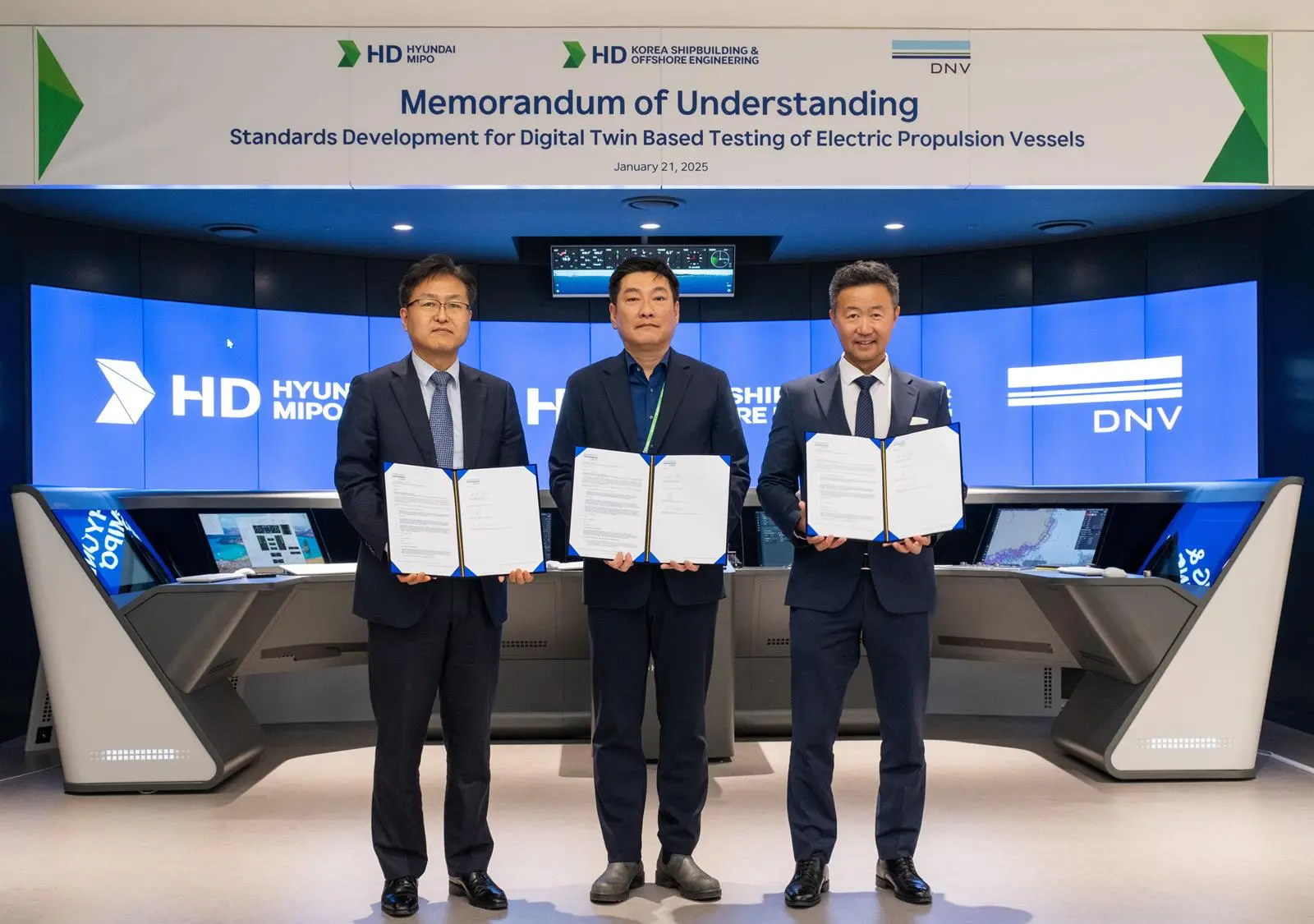
The initiative focuses on addressing the challenges associated with integrating complex vessel systems for electric propulsion and will use digital twins to run integration tests earlier in the development process, providing a more thorough evaluation of the vessel’s performance.
“Through this technical collaboration we aim to establish clear and practical digital twin-based testing procedures and standards,” said Kitae Kim, head of quality management, HD Hyundai Mipo.
“These can foster broader industry participation and ensure the reliability of results. In doing so, we hope to safeguard the performance and safety of ship systems and lead in building a digital twin ecosystem for the shipbuilding industry.”
A key component of the project will be the verification of digital assets. Hardware-in-the-loop (HiL) test procedures across systems from multiple suppliers will further ensure the reliability of the testing.
“We have proactively developed and implemented digital twin technology, including HiL, to safeguard the performance and quality of vessels, achieving world-class advancements in virtual commissioning technology,” said Byoung Hun Kwon, head of the Electrification Center/Digital Technology Research Lab, at HD KSOE.
The project will also focus on maintaining verified digital assets throughout the vessel’s lifecycle, supporting long-term value and enabling ‘plug-and-play’ functionality as systems are updated or replaced.
This initiative aligns with DNV’s Data-driven Verification notation, which ensures the reliable performance of complex systems.
“By adopting digital twin-based testing for complex systems, we are working together to shape the future of maritime operations and set new industry standards for safety and performance,” said Andreas Kristoffersen, head of Approval Centre Korea and DNV Maritime.
Related Articles
 ELECTRIFICATION AND BATTERY HYBRIDS
 ELECTRIFICATION AND BATTERY HYBRIDS
 ELECTRIFICATION AND BATTERY HYBRIDS