



Electrification advance at Pasir Panjang
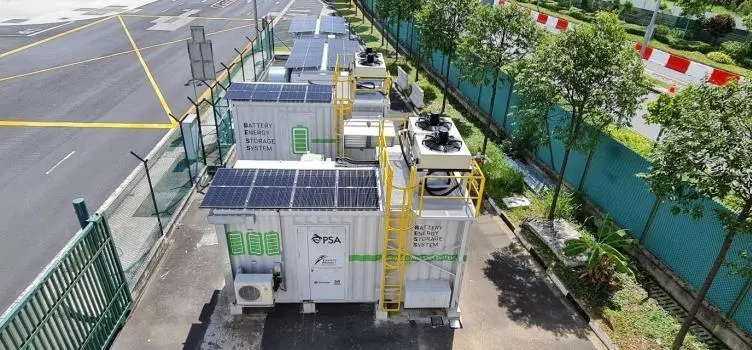
The energy storage system (ESS) is part of a smart grid management system (SGMS) which has the potential to improve energy efficiency by 2.5%, reducing the port’s carbon footprint by 1,000 tonnes of CO2 per year.
The project is part of the US$8 million partnership between the Energy Market Authority and PSA Corporation to reduce PSA’s energy usage in port operations through the use of smart grid technologies and energy management systems. EMA and PSA have awarded a consortium led by Envision Digital to develop an SGMS which includes an ESS and solar photovoltaic panels managed by Envision Digital’s EnOSTM.
“As a premier hub port driving innovation, digitalisation and sustainability, PSA can play an active role in contributing and co-creating Singapore’s smart grid architecture and energy systems,” said Alvin Foo, head of new technologies and sustainability at PSA.
The EnOSTM platform uses machine learning to provide real-time forecasts of the terminal’s energy demand, making planning, scheduling and energy management straightforward. Whenever there is a forecasted surge in energy needs, the 2 megawatt/2 megawatt-hour battery ESS is activated to supply more, meaning spikes in demand are minimised.
When not in use, the ESS will sell power back to Singapore’s national grid. Insights from the project may encourage others to adopt ESS, not least at Tuas Port which will be the world’s single largest fully automated terminal upon completion in the 2040s.
For even greater sustainability, retired batteries from port equipment such as automated guided vehicles can be repurposed into second-life ESS.
Related Articles
 ELECTRIFICATION AND BATTERY HYBRIDS
 ELECTRIFICATION AND BATTERY HYBRIDS
 ELECTRIFICATION AND BATTERY HYBRIDS