FGSS RECOVERS METHANE FROM HIGH-PRESSURE DUAL-FUEL ENGINES
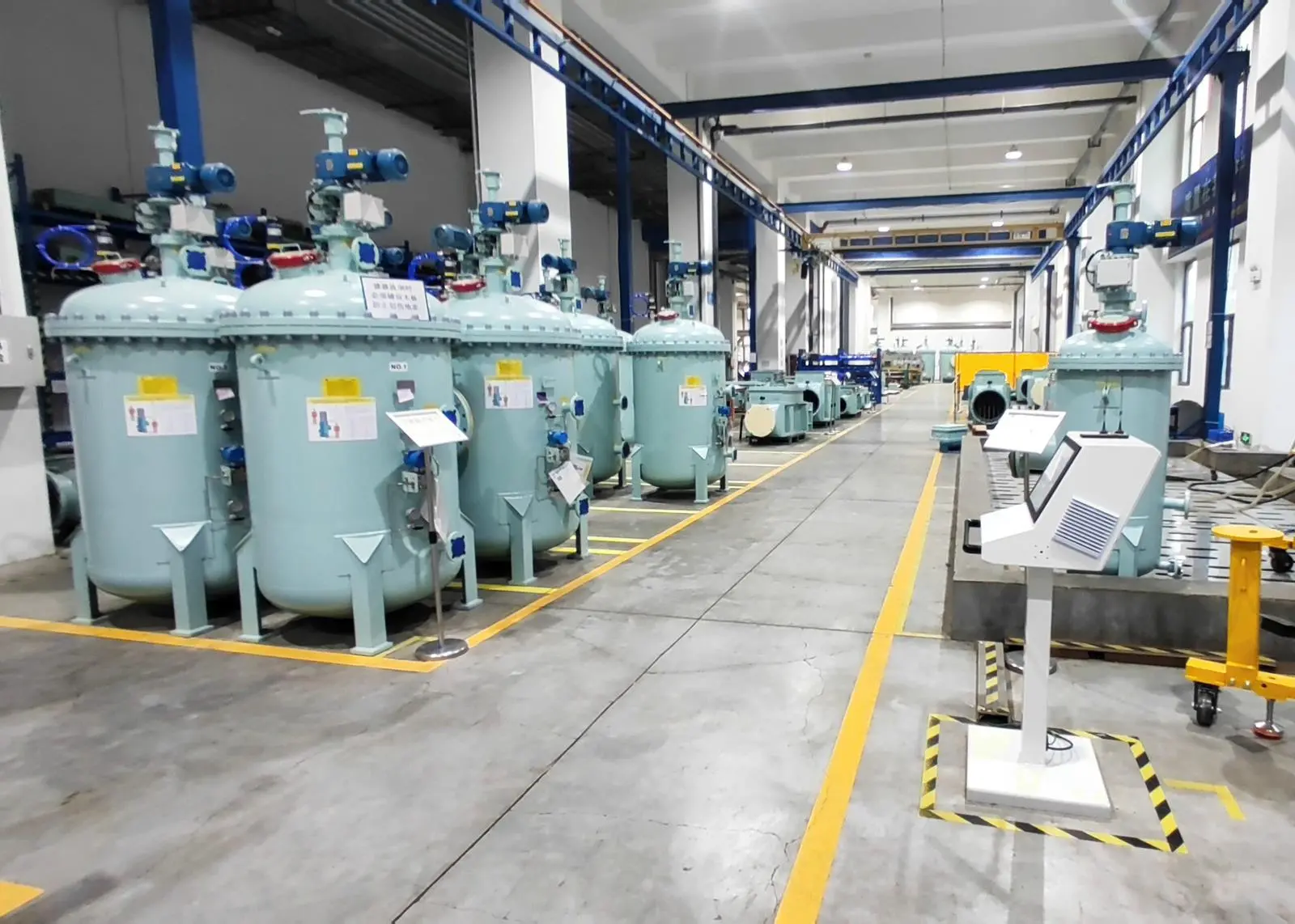
The OceanGuard® FGSS was developed in collaboration with China University of Petroleum, and Headway was awarded approval in principle (AiP) by classification society DNV GL on 6 October. The AiP award covers boil off gas (BOG) compressor systems, high-pressure gas supply to the main engine and low-pressure supply to auxiliary engines. The system also includes 2 x 3,000m3 Type C tanks, 4 x low pressure LNG feed pumps, 2 x high pressure LNG pump assemblies and high/low pressure heat ex-changers in a configuration targeted at 210,000dwt bulk carrier newbuildings. The EEDI for the design is up to 35% lower than baseline.
Two Type C LNG tanks, located in a hold space above the engine room, have enough capacity for one round trip between Australia and China, and Xuelei Cao, Director of the R&D Department at Headway, says this location protects the tanks and enhances fire resistance.
Two LNG bunkering stations are located on the main deck, and the system enables BOG to be returned to shore or other receiving facilities during bunkering operations. A single-wall bunkering pipeline with a polyurethane foam covering is used, and the storage tanks can be filled within seven hours.
A key innovation of the FGSS is the gas recovery system for the high-pressure gas supply system to the engine. Without the system, if the main engine experiences a sudden load change, such as emergency gas cut-off mode, the pressure in the gas feed line will increase, and the excess fuel gas will be released by the safety relief valve.
“We use the recovery tank and a precise adjustment scheme to achieve multi-stage depressurization of the natural gas which can be supplied for engine consumption via the BOG compressor or delivered back to the LNG fuel tank,” says Cao. “With the gradual improvement of regulations for low flash point fuel powered vessels, the control of natural gas escape will be increasingly strict. The availability of our option for recycling it means that we offer our customers a more comprehensive solution.”
The FGSS is configured for redundancy. “If the storage tanks or equipment on either side lose the operation ability, the standby side can still run to meet the requirements of the system,” says Cao. “The standard configuration has two submerged fuel feeding pumps installed in each tank. Although the initial cost increases slightly, this greatly reduces the risk of having to empty or gas-free the tank for pump maintenance.”
OceanGuard’s safety system features automated monitoring of high-risk alarms. It handles alarm conditions, such as tank overflow or tank connection space temperature changes, which could indicate leakage or component failure, and automatically triggers responses such as emergency shutdown of operations.
The safety system has independent signal acquisition and processing, to minimise the risk of cross interference with other control units, says Cao. All components in the safety system’s PLC feature a diverse redundancy structure, combining both hardware and software, which can also perform self-diagnostics to ensure reliability.
Headway designs and fabricates single and double-wall Type C tanks for the FGSS. The company has introduced automatic welding technology which improves production efficiency and welding qualification, says Cao.
The new FGSS is suitable for dual-fuel ships with a high-pressure gas main engine, including VLCCs, VLOCs and PCTCs. Depending on cargo capacity and operation, a large single-wall fuel storage tank, either Type B or Type C, may replace the two smaller tanks. “The design pressure of a large single wall tank should generally not be higher than 0.6Mpa, because the high design pressure will increase both the tank weight and fabrication cost and therefore reduce the economic performance of the system,” says Cao. “Therefore, a booster pump and compressor unit are necessary inclusions in the configuration.” For FGSS systems with small tank volume, tank design pressure may be increased and a BOG compressor included.
To date, Headway has secured a 5+5 order for a tailored version of OceanGuard from Zhejiang-based LNG transportation specialist Rui Neng Ocean Shipping. Rui Neng will install the system on a fleet of newbuildings that will transport LNG in containerised tanks between China, Japan and South-East Asia.
The vessels will have dual-fuel slow-speed engines and will be equipped with a double-wall vacuum insulated Type C fuel tank of nearly 200m3 capacity and a middle pressure fuel supply system with pressure built up by variable frequency drive pump. The combination of a double-wall fuel tank and low speed engine gives more flexibility in handling BOG and means that a high-pressure pump and BOG compressor unit are not required.