



First full-electric SOV project announced in London
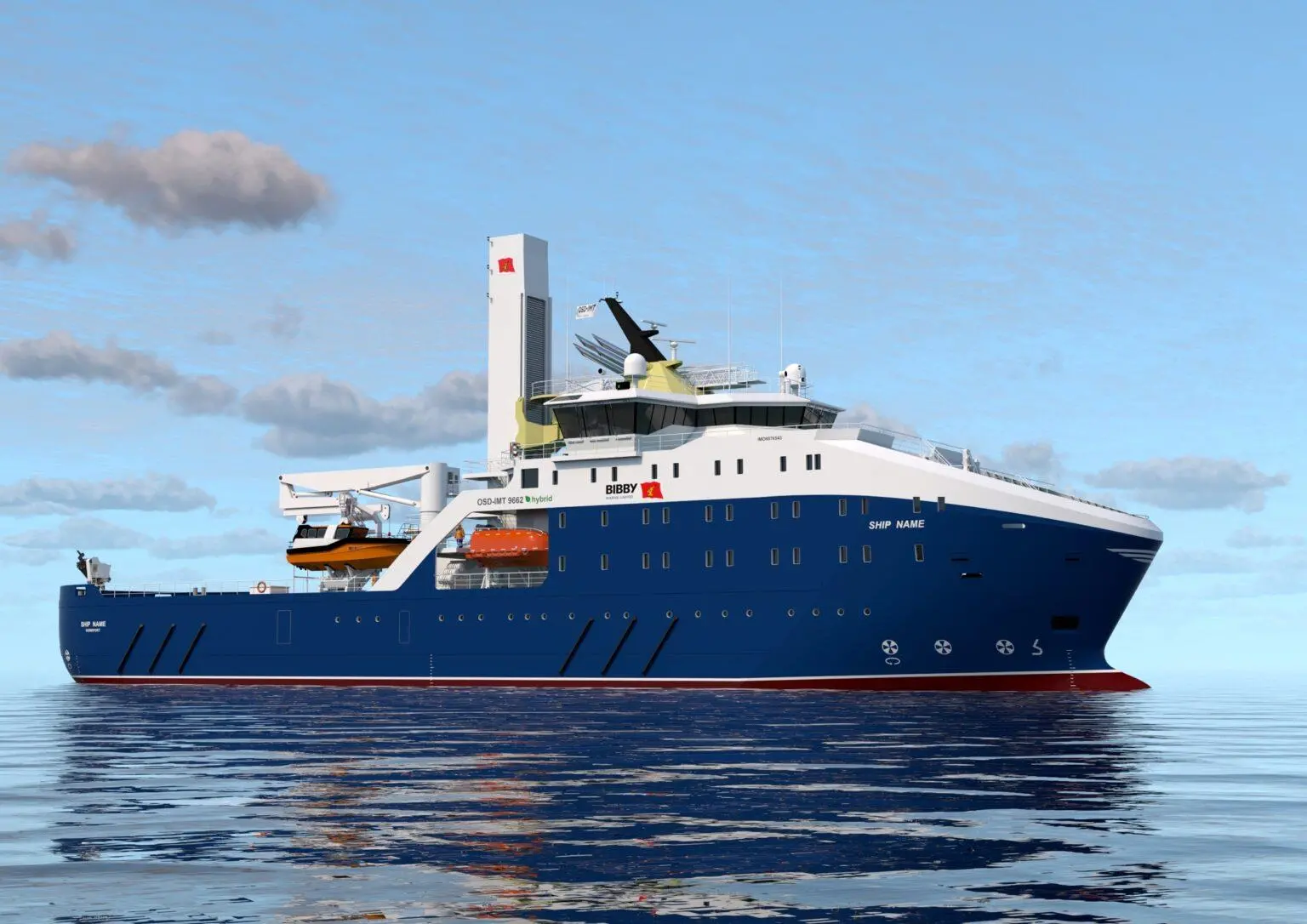
The eSOV design features a 20MWh capacity energy storage system (ESS) and an onshore power connection. The vessel is expected to operate fully on electric power but will have dual-fuel methanol engines installed for back up.
The project has received support from the UK government, including a £20 million award from the ZEVI – the Zero Emission Vessel Infrastructure competition funded by the UK taxpayer.
Lucas Ribeiro, Regional Manager, Region West Europe at DNV said: “At DNV we are very pleased to have been chosen as the preferred classification partner for the first zero-emission UK e-SOV. We look forward to working closely with Bibby Marine and the consortium partners on this innovative design.
“The number of fully electric and hybrid vessels will surge over the next few years and continuing development on these technologies will be a key part of the maritime industry’s transition to a zero-carbon future. DNV is looking forward to combining our extensive technical, offshore, renewable and battery experience, working in ensuring a successful fully compliant and future proof vessel delivery.”
Alexandra Ebbinghaus, GM Marine Decarbonisation Shell: “Shell is delighted to be part of this consortium, verifying the framework to manage maritime risk for the world’s first zero-emission e-SOV. This is an exciting project that will push the industry forward and help decarbonise short-sea shipping, whilst continuing to prioritise safe and efficient operations.”
“This is the world’s first eSOV and the first new vessel for Bibby Marine in five years,” said Bibby Marine CEO Nigel Quinn. “Designed in the UK, the vessel will be a game changer for our industry. The vessel also offers the opportunity for customers to increase local content and will shine a light on UK innovation.”
The ground-breaking project has far-reaching implications for the industry. With nearly 40GW of new offshore wind capacity to be added in the UK alone by 2030, equating to between 62 and 149 vessels, there is a clear need to develop and implement innovative solutions.
Andrew Macdonald, Director of Development and Operations at ORE Catapult, said: “We are delighted to be supporting Bibby and partners in a project to create the world’s first zero-emission e-SOV – delivering a vessel capable of operating solely on 20MWh of batteries.” He added that 300 such vessels would be needed in Europe by 2050.
Related Articles
 ELECTRIFICATION AND BATTERY HYBRIDS
 ELECTRIFICATION AND BATTERY HYBRIDS
 ELECTRIFICATION AND BATTERY HYBRIDS