Flow meters provide solution for LNG tanker ‘boil-off’ gas
Allison explains that to facilitate transportation of LNG, the natural gas is cooled to -163ºC at atmospheric pressure, at which point the gas condenses to a liquid suitable for transportation. The company likens the tanks onboard an LNG carrier to giant ‘thermoses’ (vacuum drink flasks) which keep the liquid gas cold during storage. However, Allison adds, no insulation is perfect and the liquid is often boiling during the voyage and the solution is for reliquefaction and boil-off.
With the growth in demand for LNG fuelling an expansion of specialist LNG carrier fleets in worldwide trade, while the high cost of fuel and stricter environmental legislation, it makes sense to use the boil-off gas to provide energy onboard. With many older LNG tankers powered by steam turbines with boilers which are dual-fuel so they can run on either methane or oil, and newer vessels using dual-fuel combustion engines which run on either gas or diesel fuels, the boil-off gas which is produced can be diverted and used as fuel for the vessel.
However, when operating in low emission zones such as ECAs, MARPOL Annex VI demands that LNG tanker operators accurately measure how much boil-off gas they are using in their engines. Therefore an accurate and reliable method of measurement, and specifically, in-line calibration and verification of boil-off gas, is crucial for compliance with current regulations.
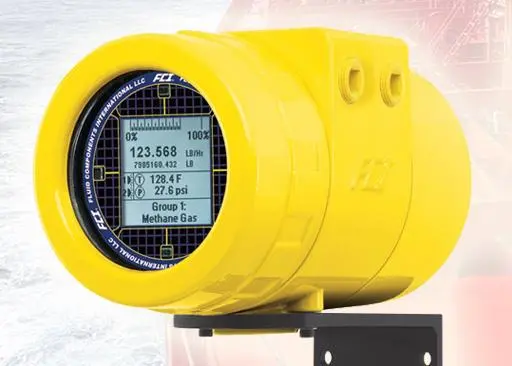
The ST110 is claimed to be unique in its ability to be functionally tested and calibrated without the need to remove the sensor from the pipeline. It features an internal purge tube that runs the length of the sensor and allows the operator to generate a known flow across the sensor element. The resulting signal output can then be compared to the factory baseline test certificate.
Allison says that the ST110 flow meter is ATEX certified and complies with the ETS phase ll requirements for carbon trading. It is constructed using 316 stainless steel for the housing and Hastelloy C for wetted parts, with control options via 4-20mA signal, HART, Profibus PA and Fieldbus H1 as required. It can operate at process temperatures up to +450ºC and offers a turndown ratio of 1000:1.