Fresh approach to integration from Imtech
Netherlands-based Imtech claims to offer a unique blend of maritime-specific ‘cable to data’ expertise, including hardware, software, connectivity, remote monitoring and servicing, to shipowners in many different markets, about how best to maximise returns from investment in technology. As new emissions regulations loom and fuel price uncertainties resurface, the company believes integration offers efficiency gains that will save money on a variable that can actually be controlled.
“As a maritime business built on technical knowhow, we have a contribution to make in terms of optimising the use of technology in pursuit of best returns from assets,” says André Meijer, MD of Imtech Marine. “We are a company focused on offering flexible total solutions, so our experience is that buying technology on a one-off basis to address an immediate operational or regulatory challenge often invites open-ended expense later.”
Imtech believes that greater vessel efficiencies are available by integrating technology onboard and data management ashore to create ‘smart’ infrastructure. Mr Meijer adds: ”With the complete package we can provide, we are uniquely able to connect hardware, processes, data and people and help to create smart operations and integrated fleet management.”
An illustration of the possible benefits of integration has been provided by performance results from Hallaig, the first diesel electric, hybrid ferry for Caledonian Maritime Assets Ltd (CMAL), which came in service in 2013. Imtech Marine’s hybrid DE plus rechargeable battery technology, its energy management system and onboard systems optimisation combined to cut the fuel bill by 38%, against a target of 20%.
The company says that its ability to deliver one-stop solutions saw it secure its first complete integrated bridge system retrofit for Holland America Line onboard cruise ship Westerdam, with all navigation and communications hardware and software installed in an eight-day time slot. Two more HAL cruise ships are set to follow.
Eric Clarke, director service Americas, says: “There are obvious reasons to upgrade to state-of-the-art technology, but some of the advantages only become available when systems fit together. Control settings can be customised to individual crew or corporate level needs, for example. More specifically, part of the Westerdam project involved optimising the interface between the autopilot and the podded propulsors to deliver fuel savings to the owner.”
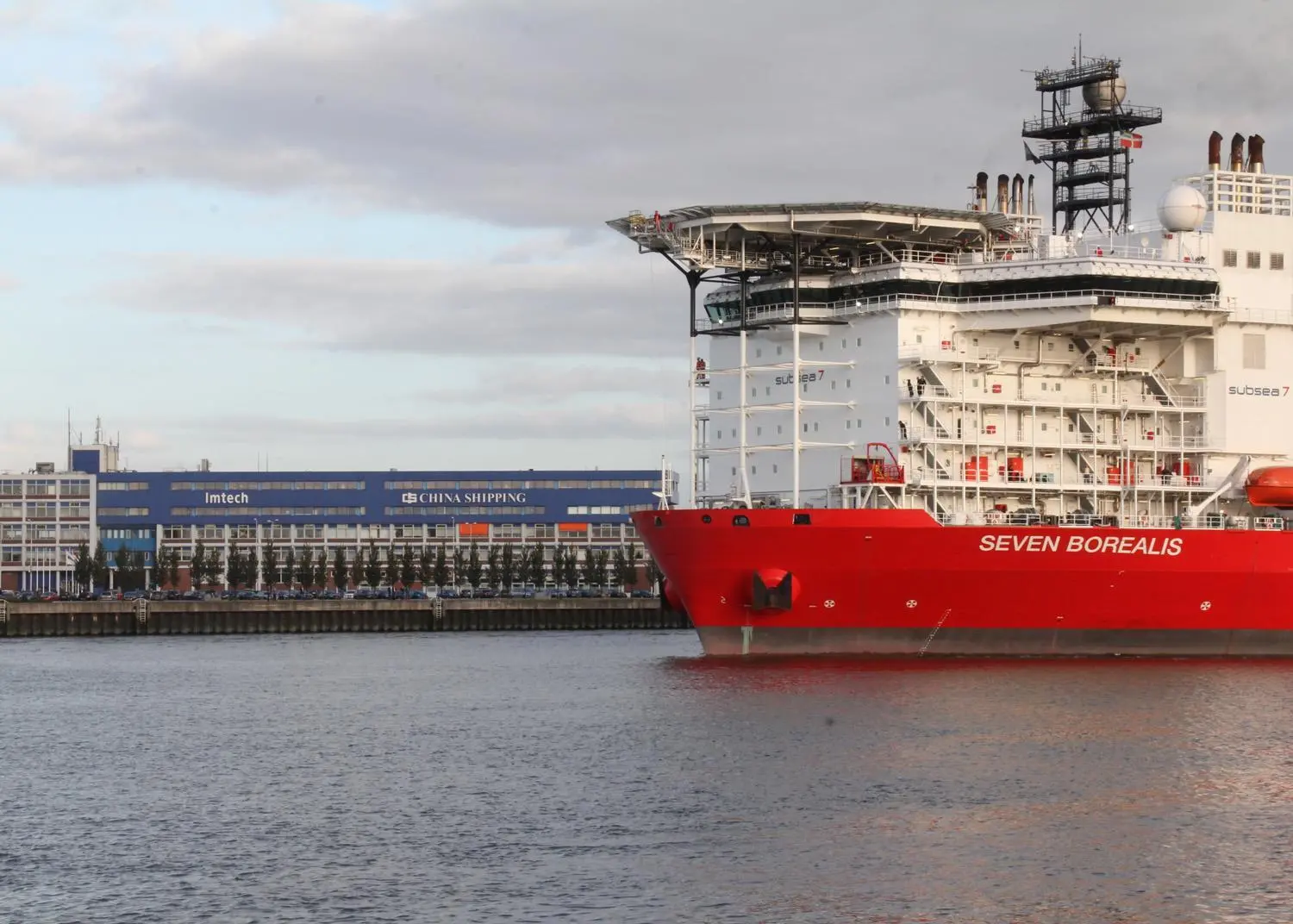
Imtech technical integration, as well as its global design and service support capability, was also a feature of complex offshore vessels built in Singapore and Korea, for interests owned by Royal Boskalis Westminster NV, DEME Group and Subsea 7. The supply packages included DP, diesel electric propulsion, electrical power systems, vessel management system, automation, navigation and communication, bringing integrated control to the complex balance of coordinated engine, DP-system and thruster operation.
Cumulatively, the power of integration is felt most keenly in vessel maintenance, says Nico van Leeuwen, Imtech Marine director global service sales. “Of course, when a ship needs immediate service, our global network of service locations based on the classic Radio Holland brand, now being relaunched, means qualified service engineers and spare parts are always close by to support maximum vessel ‘up time’. However, opportunities are growing to manage service and maintenance without setting foot on the vessel, with data accumulated via the onboard IM maintenance PC, and Imtech’s global technical assistance centers (GTAC) tuning technologies on individual vessels remotely.”
One direct beneficiary has been Seaway Heavy Lifting, where connectivity issues onboard the heavy lift vessel Oleg Strashnov threatened a contract to lift 23 platforms within six months. Here, an integrated approach between the Imtech GTAC and work onboard overcame a six-week delay facing service engineers seeking boarding permits.
Wider plant efficiency is critical for cruiseships, says Andre Gebken, head of cruise ship department, Imtech Marine Schiffbau-/Dockbautechnik. “To achieve ‘air in line with demand’, an approach is needed that squeezes every last percentage out of efficiency, with HVAC being controlled by timers, by cabin cards or by C02 sensors,” he says. “For example, recently we have measured efficiency gains yielded by absorption coatings optimising heat and moisture recovery.” In addition Imtech has been able to improve payload by using decentralised AC concepts and reducing newbuilding costs by enhancing engine ring and building processes, to deliver ‘slimmer and sharper’ unit designs for example.
The company has also recently applied its systems integration approach to projects such as production cooling systems for the North Sea HelWin Bèta offshore wind energy project and to the electrical distribution and HVAC systems for the UK’s Type 26 global combat ship programme, headed by BAE Systems.