Green synthetic LNG bunkering first in Germany
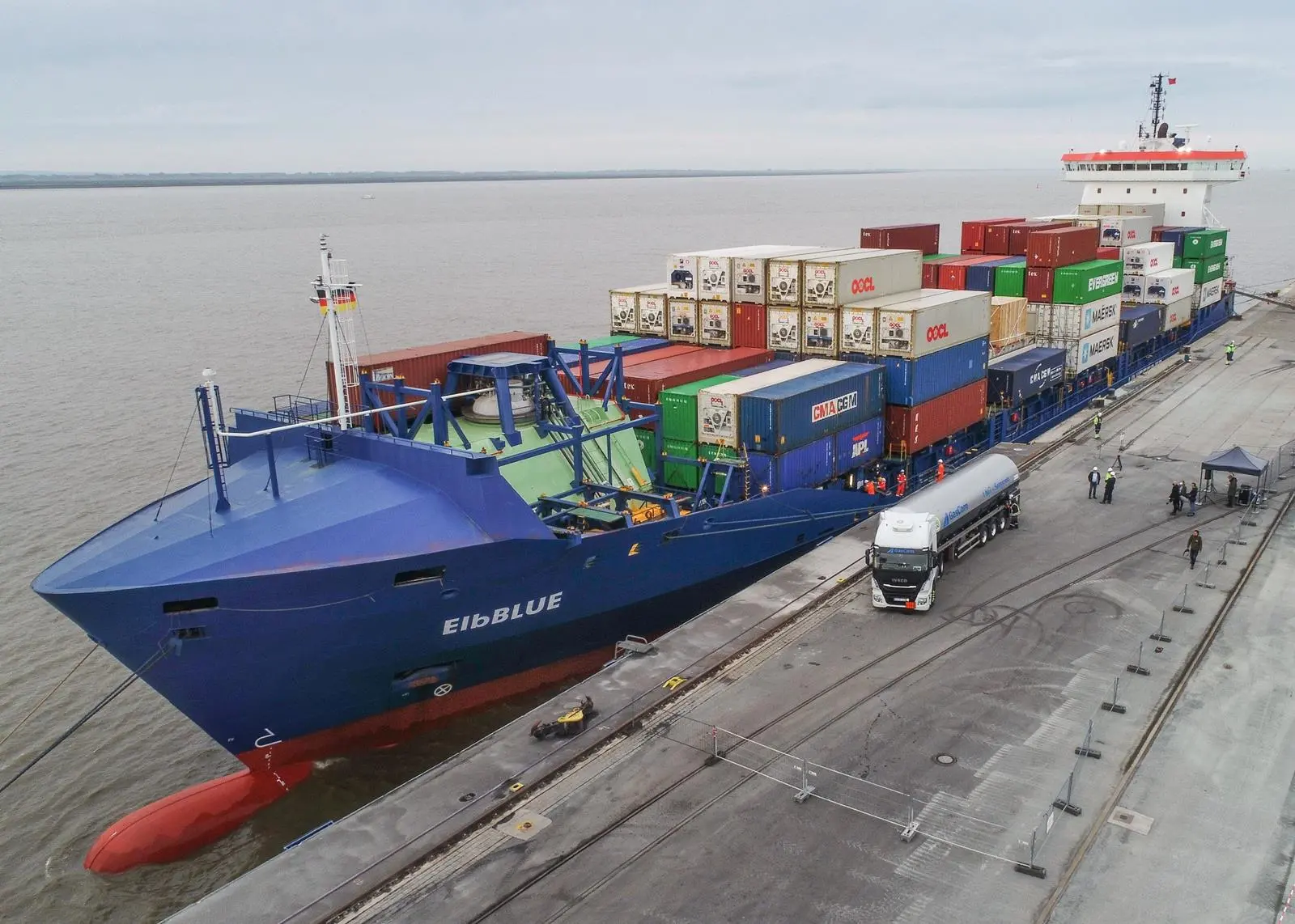
The vessel, ElbBLUE – owned by German shipowner Elbdeich Reederei and operated by charterer Unifeeder – was scheduled to sail to St. Petersburg in Russia, where the performance of the vessel would be monitored by a team of MAN PrimeServ, MAN Energy Solutions’ after-sales division.
The four-stroke main engine of the vessel, formerly known as the Wes Amelie, was converted to MAN 51/60DF unit, enabling dual-fuel operation in 2017, in the first such conversion of its type globally. The ElbBLUE sails in the North and Baltic Seas.
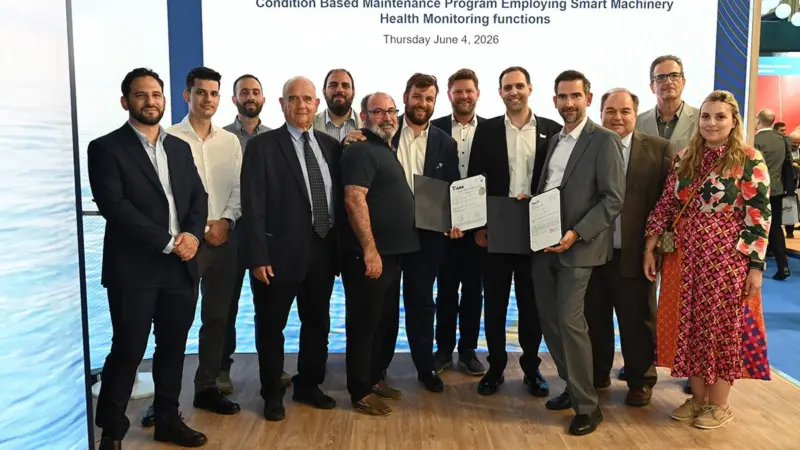
The bunkering was marked by an event attended by senior leaders from the project partners, including MAN Energy Solutions’ board members Dr. Lauber and Mr. Wayne Jones OBE, as well as Stefan Eefting, SVP and Head of MAN PrimeServ, Augsburg.
Wayne Jones emphasised that the project demonstrated that e-fuels represented a viable technology for the maritime energy transition. “At MAN Energy Solutions, we strongly believe in the synthetic-fuels roadmap but joint efforts across the industry are needed to make it happen. The fact is that the respective governments need to establish a framework to make synthetic fuels readily available, while power-to-X needs to be developed on an industrial scale in order to bring down costs and make truly sustainable fuels a reality.”
Timm Niebergall, Shortsea Director of Unifeeder and Jens Moje, Managing Director Elbdeich both commended the bunkering, both noting that they regarded the decarbonisation of the shipping industry as inevitable.
Liquefied SNG
The liquefied SNG was produced in a power-to-gas facility in Werlte, Germany, owned by kiwi AG. It is generated using 100% renewable energy, produced at a 6MW facility. The facility uses 2012-vintage atmospheric alkaline electrolysers to generate the SNG. The electrolysers themselves are robust, and have a “respectable” 65% efficiency level, Hermann Pengg-Buehrlen, CEO of kiwi AG told The Motorship.
The cost of the SNG, which was supplied on a commercial basis, could fall to a level “comparable with LBG” within a few years, as SNG production proceeds along the experience curve. Larger and more efficient electrolyser installations are expected to contribute to the reduction in costs, owing to their importance in SNG production.
Mr. Pengg-Buehrlen also noted that new developments, such as the recent introduction of a liquefaction unit in mid 2021, was also lowering the cost of producing SNG.
The bunkering occurred at a time of intense scrutiny of the decarbonisation agenda in Germany, and was also attended by regional political leaders, as well as Germany’s national maritime coordinator.
The Motorship notes that the scope of a German federal funding programme for eco-friendly propulsion systems on inland ships was extended to include funding for conventional diesel engine replacements or upgrades earlier in 2021.