GTT receives AiP for NO96 upgrade, cutting boil-off rate below 0.09%
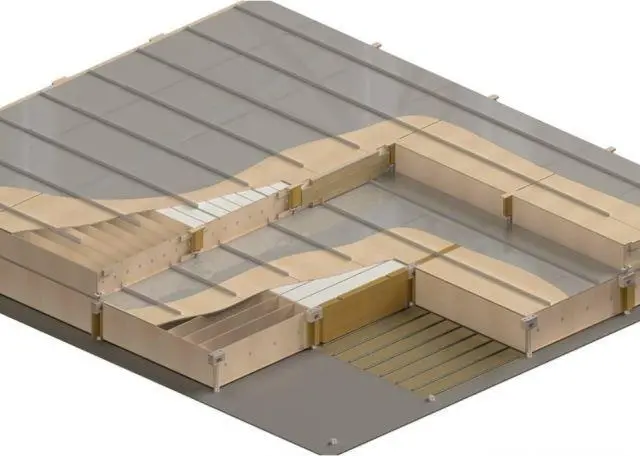
GTT has announced that it has succeeded in lowering the cargo boil-off rate (BOR) from its NO96 membrane containment system yet further, following the introduction of refinements to the insulation around the CCS.
The new NO96 Super+ technology integrates insulating Reinforced Polyurethane Foam (R-PUF) panels instead of plywood boxes, used for both the primary and secondary insulation spaces, to reduce the heat ingress inside the tank. Glass Wool flat joints are also inserted between adjacent foam panels to optimise the behaviour of the system and ensure it has the best thermal performance.
As a result, the company expects NO96 Super+ to offer a guaranteed Boil Off Rate (BOR) of 0.085%V/d for 174,000 m3 LNG carriers. Scale effects would allow the new system to achieve even greater reductions down to 0.08%V/d for larger capacity vessels, such as 200,000 m3 LNG carriers.
The NO96 Super+ membrane containment system retains key elements from the NO96 system, such as the principle of double Invar® metallic membranes and the mechanical anchors fixing the insulating panels to the inner hull.
Mr. Philippe Berterottière, Chairman and CEO of GTT declared: “With the introduction of NO96 Super+ technology, GTT demonstrates its ability to continuously innovate and upgrade its technologies to meet our customers’ requirements. Reducing the Boil Off Rate is key to the industry at a time when ship-owners and shipyards face increasing economic and regulatory challenges.”
The Motorship notes the improvement in the thermal performance of NO96 cargo containment systems is also likely to lower transport costs and CO2 emissions.
The first mock-up using the NO96 Super+ technology was erected in February 2021 and validated the satisfactory assembly of the CCS. GTT expects the NO96 Super+ to be awarded final class approval by mid-2021.