



Hot stuff: the big fuel cell come-back
Because it’s an electrochemical, not combustion energy conversion, fuel cell efficiency can far outstrip a typical four-stroke – and there are virtually no toxic emissions.
So, why hasn’t this tech gained greater market share before? The economic reality is that till just a few years ago, hydrogen fuel cell costs were prohibitive – but that’s changing rapidly: Ballard, for example, is ‘confident’ it will soon be pitching a per-kilowatt price competitive with diesel engines. However, it’s largely been driven by the car industry, points out Sami Kanerva, senior principal engineer at ABB Marine & Ports: to be pragmatic, a swathe of maritime development has to hang onto automotive’s coat-tails, “as mass production allows us a competitive price”.
But that’s not the whole story: it’s not a single solution, and neither, says Kanerva, “is there a simple, silver bullet”.
Most fuel cells work on roughly the same basis. Hydrogen and oxygen will always try to hook up, but they’re sat either side of an electrolyte ‘gateway’ which only passes positively charged particles. However, when either set of molecules are separated from their negatively-charged electrons by a catalyst, the (positively charged) ions rush straight through the electrolyte to party on the other side. That leaves the electrons running around the exterior circuit to join the fun, creating a current.
In Kanerva’s view, small to midsized vessels will likely go for Proton Exchange Membrane (PEM) cells. These have a ‘moderate’ 50% to 60% efficiency, “and can respond to load changes and acceleration very fast”, he says, although in crossing over from the automotive sector, “marine applications will want to slow that down a bit”. Cars for personal use have very different requirements, generally below 10,000 hours – but onboard the stack’s lifetime is critical. He adds: “As the cells can suffer from hydrogen and oxygen imbalance, especially with repeated dynamic load changes, it’s better to incorporate a battery as a protective buffer.”
It doesn’t, however, translate into a workable alternative for larger ships. The major drawback is that PEM cells are susceptible to fuel impurities: traces of carbon monoxide can bind to the expensive platinum catalyst, poisoning it. Therefore, “you are tied to using – and carrying – pure hydrogen” says Kanerva. This “makes it unlikely it will be the answer for long-distance shipping”.
Into this open arena steps a less well-known technology: Solid Oxide Fuel Cells (SOFCs). Already utilised in landside power generation these can also handle hydrocarbons along with ammonia and alternatives “such as ethanol, methanol, or almost any other compliant [gaseous] fuel” says principal approval engineer Mun Hwa Jung, DNV GL Korea.
THE GOAL: AN SOFC-POWERED AFRAMAX LNG CARRIER
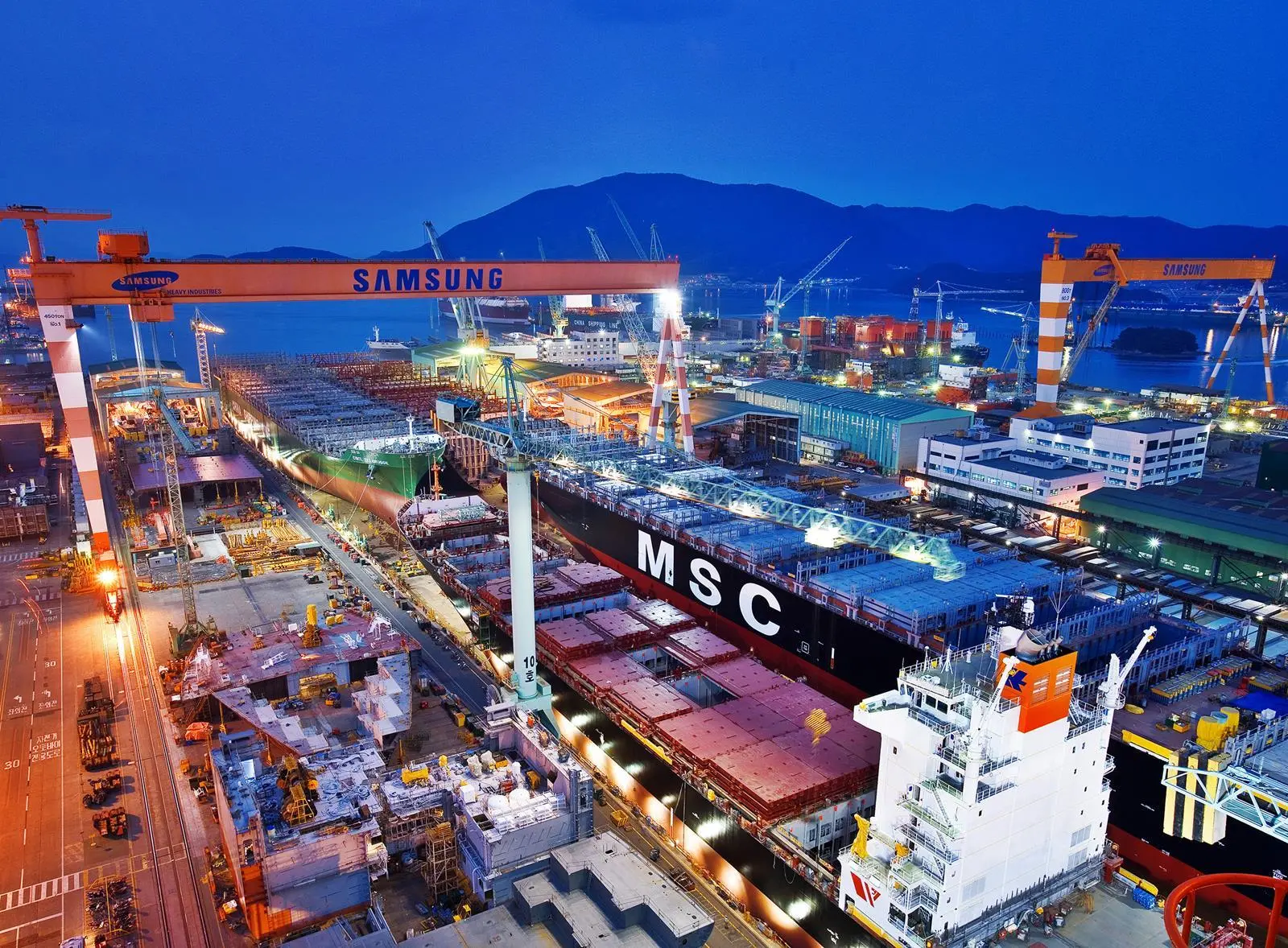
However, its power and heat characteristics make it ‘big ship’ technology, not one that can be easily incubated in cars or even onboard small vessels. Therefore, despite a couple of interesting pilots, it hasn’t gained traction in the marine market… till now. Samsung Heavy Industries has just declared it is set to run with a 174,000m3 LNGC new building: completion is planned “for the end of 2022” says SHI’s senior engineer Young-Seok Yang.
SHI’s plans are ambitious: most of these gas carriers are dual-fuel, but the yard’s alternative “aims to replace all the existing main engines and generators” explains Yang. Therefore the upgraded vessels will need to have a huge 30MWs of SOFCs onboard to cover both propulsion and hotel loads.
It’s a direct shot across the bows for manufacturers such as Wärtsilä which, it might be remembered, made its name from repowering LNG carriers with dual-fuel engines and continued to carve out a low-emission niche ever since.
The prominent shipbuilder is working with Bloom Energy, which is aggressively pitching its SOFC solutions to a number of industries and claiming a large slice of the pie. The technology has a lot going for it, typically returning 60% to 65% efficiency.
Like PEM cells, the solution has scalability, says Yang: “A power module can produce 75kW of electricity and four or six modules can be configured into an [interconnected] system,” multiples coming together to reach the desired output.
But most interestingly, the SOFC stacks operate at between 800℃ and 850℃: the temperature at which oxygen ions are conducted from the cathode, through the solid electrolyte, to react with the hydrogen. It also utilises carbon monoxide (CO) and handles other trace elements that would kill a PEM FC.
This heat has another use. A proportion is recycled inside the fuel cell, where it’s used to steam-reform the LNG at the anode. The process transforms the methane into a mixture that’s mostly H2 with a bit of CO, which reacts in the cell to create carbon dioxide. Admittedly, this joins the smattering of CO2 produced by the reformer, but SOFCs are a good candidate for carbon-capture techniques because the CO2 can be hived off in a containable stream, something also being considered by SHI.
Finally, the 300℃ exhaust gas exits at a little higher than atmospheric pressure, explains Yang. That makes for useful, high-grade thermal energy to be directed toward economisers, auxiliary boilers or possibly a steam power turbine. It’s all mature technology, but it stands increase that 60% efficiency to an impressive 85%.
HURDLES
Still, the utilisation of SOFC technology requires consideration.
“You have to think about how the cells themselves react to the heat,” says Kanerva. Fast cycling between different temperatures causes stress, fatiguing and sometimes cracking structures: as a result “you need to warm up these kinds of cells rather slowly”.
It’s not a natural solution for very dynamic loads and system longevity demands the fuel cells are paired with a battery pack to mitigate thermal cycling; although “the size of this will depend on the load profile of the ship”, explains Yang, adding that “power management will be developed during the JDA [with Bloom]”.
However, it would seem to suit tankers like these Aframax LNG carriers. In fact, these cells may be kept running throughout the entire journey, says Jung. Of course, “a remaining challenge is how to manage the constant power output in case the consumer load drops” he explains, which, if the excess energy is to be stored, will, in turn, affect the scale of the battery. He admits, “there are more details to be worked out” for this type of vessel.
Still, physical integration presents the most significant technical hurdle: splitting the plant into two rooms is being “considered”, says Yang. But given the extreme heat and explosive potential, there are further demands from both class and IMO regulations.
Therefore, “the fuel cell stacks are enclosed within a hot box as the primary barrier,” says Jung, but these, and the pipework, should also be enclosed within a secondary barrier with gas detection capability and continuous ventilation. That alone makes it rather different to present LNG or low flashpoint fuel installations, where double-layer protection is limited to the fuel supply lines and doesn’t extend to the plant itself.
It’s worth underlining, each of these stacks is separately enclosed. However, as Jung points out, while it may seem troublesome, that does avoid making every electrical component in the fuel cell room ATEX compliant.
Generally, “the challenges are space and price… currently, these come in at a higher cost than conventional four-stroke engines” says Jung. How much higher is still difficult to work out as even for landside applications, the prices are under wraps – although it appears they’ve come down a lot in the last couple of years.
It does help that unlike PEM cells, it ditches expensive platinum-coated anodes, Bloom’s tech uses inexpensive alloys – but there are other costs likely attributable to the electrolyte. Still, it seems more economies of scale will follow and possibly the SHI-Bloom partnership will explore investment easing approaches – but that remains to be seen.
Further, although “it needs more space [in the power plant room]” Jung points out: “There’s one more thing to say… If the SOFC is to replace the main engines entirely, you can remove many of the traditional propulsion components from the vessel.” Interestingly, Yang adds that a number of auxiliary arrangements can be eliminated “such as lubricating, compressed air, cooling water, and steam systems”.
Will this technology find further take up? Yang believes so: “Fuel cells are being “touted as a next-generation” marine power replacement as environmental issues ascend the agenda, adding that SHI’s FC system “will be the safest and the most reliable solution in the industry”.
The combination of efficiency, fuel flexibility and low-to-no emission running could prove very attractive to other segments, especially if paired with a ‘mop up’ carbon capture device. It might, eventually, even challenge the current two-stroke queens of long-haul shipping.
Engine manufacturers, the message is clear: you’d better hold onto your hats.
Related Articles
 BATTERIES, SUPERCAPACITORS, FUEL CELLS AND OTHER ENERGY STORAGE TECHNOLOGY
 BATTERIES, SUPERCAPACITORS, FUEL CELLS AND OTHER ENERGY STORAGE TECHNOLOGY
 BATTERIES, SUPERCAPACITORS, FUEL CELLS AND OTHER ENERGY STORAGE TECHNOLOGY