How long is it OK for people to keep dying?
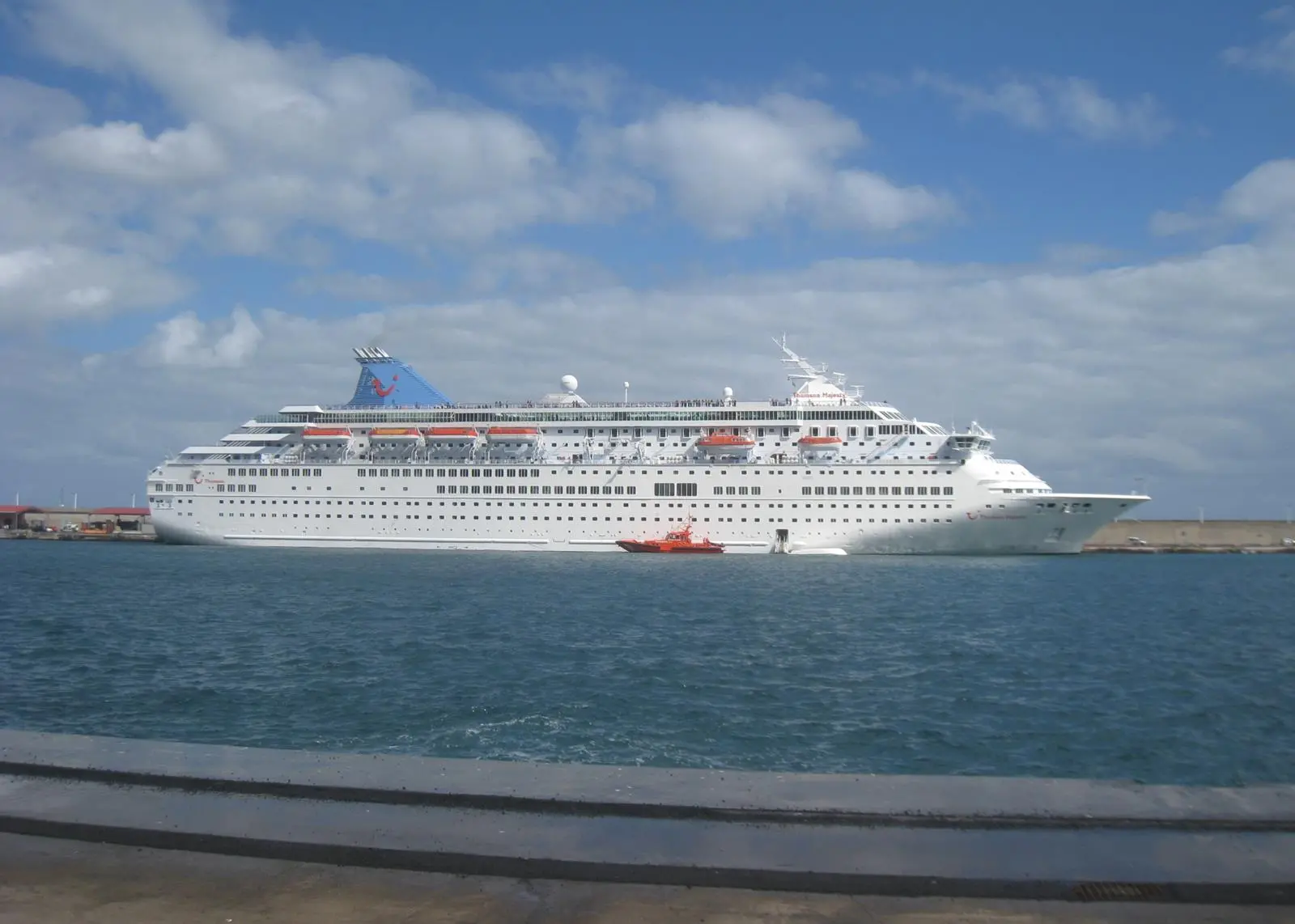
The tragedy where five seafarers died in a lifeboat drill on the cruise ship Thomson Majesty in January was the fifth lifeboat accident to occur in the last two years. A report by the UK Maritime Accident Investigation Branch in 2011 suggested that 16% of all lives lost on merchant ships have been in lifeboat accidents. Seafarers are losing confidence. They are being blamed for accidents when some believe it is the international legal system that should accept the blame for allowing problematic equipment to remain in use. If something like this happened in the airline industry, some say, planes would be grounded until the problem was solved, but in shipping it seems to be okay to continue.
Others counter with the argument that lots of people were saved by lifeboats on Costa Concordia. At an industry conference last year, Harry Klaverstijn, Chairman of the International Life-Saving Appliance Manufacturers’ Association (ILAMA)’s Technical Committee countered the perception that lifeboats kill more people than they save by citing the following statistics of people saved by the use of lifeboats:
2005 – 226 people
2006 – 224 people
2007 – 2702 people
2008 – 1279 people
2009 – 283 people
2010 – unknown
2011 – 1671 people
2012 > 3000 people
Some look to the changes to the LSA Code that came into effect this year to ensure that unsafe hooks are replaced. Additionally, IMO has also issued Circular 1206 Revision 1 on maintenance measures to prevent accidents on lifeboats. It was agreed at IMO meeting DE57 in March that these guidelines, with some amendments, should now be forwarded to MSC92 for adoption.
Most welcome the attention being paid to the problem of lifeboat safety at IMO. Cruise Lines International Association (CLIA) for instance has stated: “CLIA, together with other maritime industry associations, was a major proponent of the IMO effort in reviewing the existing technology and drafting the new requirements that govern lifeboat on-load release hooks. These new standards apply to all oceangoing CLIA members and as with any IMO regulation, CLIA members must be in compliance.”
The timetable for the fix to the hook design problem extends out to 2019. Shipowners must check and potentially upgrade, but off the record, some say that in some cases this may just be because it is to the financial advantage of manufacturers to only get their most recent hook model certified. Despite a common desire to fix the problem, the details of the new requirements were hotly debated at IMO. Some even want to go back to open or partially open lifeboats to avoid the need for complex hook designs. What was agreed on though is that certain designs that rely on the weight of the lifeboat to open the hook and require lock in place may be classified as unstable. Up to 40,000 vessels could be affected.
Kuba Szymanski, secretary general of InterManager, is dissatisfied with the changes to the LSA Code and believes that it may well have to be revisited in the future. He would prefer to see naval architects and seamen driving the new design solutions rather than hook manufacturers. “The code is so vague. It is not waterproof. IMO comes up with another regulation, more paperwork. The truth should be that if one regulation comes in the other one goes out. We never do that in shipping. We just say, oh there was an accident, we’ll have another regulation. People are inundated with all this paperwork and it doesn’t solve the problem. Meanwhile another 20 people will die. What we are missing big time in shipping is a mechanism where, when something goes wrong, an international, independent investigation takes place.”
He goes further: “I think we all are of the opinion that the new regulation does not change anything. It dresses the issue up in different words but will not stop accidents. Why we are having, and still producing, ineffective legislation?”
Jonathan Holloway, technical manager at Intertanko, believes 2019 is a long time for seafarers to feel unsafe. “It seems to me a long time until we get to a really satisfactory place and in that time, we are going to have to continue managing the risk of accidents.” In his opinion shipowners need to work with manufacturers to ensure they understand their equipment requirements and to get any replacements done sooner rather than later, in particular taking into account the length of time it may take to get the necessary approvals.
Meanwhile, and indeed even after 2019, Mr Holloway supports the continued use of fall protection devices (FPDs) to avoid having a single point of hook failure and to give seafarers a sense of security. “A concern that we have is that despite IMO guidelines and recommendations to use FPDs some manufacturers are saying we don’t support these FPDs on our equipment. There seems to be a mismatch here.”
David Torres, vice-president for sales at equipment manufacturer Schat-Harding and advisor to The Netherlands on the topic, says his company does not sell FPDs as the components such as shackles and a strop are readily available on the market. His position is that he would rather see shipowners act on installing the newly approved hook. Mr Torres is concerned that with the effort involved in meeting the new LSA Code there will be a backlog, particularly with class. Each replacement needs to be approved by class based on drawings and information provided by shipowner and hook manufacturer. Left until close to 2019, he believes shipowners will encounter delays.
The best hook on the market can still be dangerous if someone doesn’t know how to operate it, says Mr Torres, who believes crew familiarisation with new hooks is essential. “We as manufacturers have to understand that new equipment may be unfamiliar,” says Mr Torres. “We have to take off from the shipowner a part of the problem which is the familiarisation and training and the quality design.” Schat-Harding therefore provides training support material that includes an assessment component with the company’s hooks.
The 2012 incident involving cruise ship Saga Sapphire is a non-fatal example of the problem. During a drill, the forward crewman, who was a first cook, was unable to remove the drop-nosed pin securing the tricing pennant hook release lever in the closed position. The overseeing fourth officer went to assist. As he removed the pin and operated the release lever, the first cook stepped to one side and the forward bowsing rope came free from the bitts. Without tension on the bowsing tackle, the lifeboat swung violently away from the ship’s side and heeled to port. The fourth officer and first cook, who were not wearing any form of personal restraint, slipped from the smooth coach roof and fell into the water.
In the case of the recent tragedy on Thomson Majesty the wire rather than the hook itself appears to have been at fault. Dr Kevin Ghirxi, head of marine safety investigation for Malta, the ship’s flag state, has this to say: “It will be very premature to comment on any potential safety issue. The wire rope is at an accredited engineering lab and we are waiting for the results of the tests which have been carried out by the experts.” Still, at the time, Malta issued a safety alert recommending that ship owners and masters should inspect regularly, frequently and thoroughly all visible parts of wire falls in order to detect general deterioration and deformation, including corrosion, abrasion, and mechanical damage.
Bob Gray, vice-president for compliance at Survival Systems International, believes adherence to Circular 1206 would go a long way to catching such safety issues. The guidelines call for annual and five-yearly inspections by manufacturer or a suitable representative. This goes beyond the more routine inspections done by seafarers and class. “Class do check that the systems are operational. However, class are not lifeboat experts and they have to know an awful lot about a large number of systems on board a ship. They cannot be expected to go and start investigating hooks to make sure they haven’t exceeded the manufacturer’s tolerances and these types of things on every vessel they survey.”
The only potentially contentious issue that Mr Gray sees with the circular is the availability of service providers globally. “IMO are working towards the flexibility to allow the independent service providers to carry out these annual and five-yearly surveys and I think that it is extremely important,” he says. “Then all these ships can continue their operations unimpeded by trying to find people to carry out this periodic maintenance.”
Like Mr Torres, he believes in the value of educating seafarers and he sees this as an area where IMO action is still required. Launching a lifeboat is very simple, he says. It is the recovery that is the time when most accidents occur. “I don’t think there is enough emphasis on what training is in place and who is actually certified to launch and recover lifeboats because if we improve the design, if we improve the maintenance and it is still operated by somebody who doesn’t know how the system should operate, we stand the chance of still having these tragic accidents which have claimed so many lives in the past.”