



Incat to deliver first large lightweight full-electric ferry
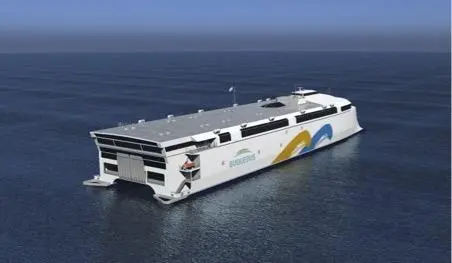
The order in question is for a 130-metre lightweight ferry that will carry 2100 passengers and 226 vehicles for Buquebús. The ferry, which is to be delivered in 2025, is intended to serve the River Plate crossing route.
This ship, the world’s largest battery-electric Ro-Pax ferry, will be 100% battery electric. The energy storage system (ESS) battery storage at over 40MWh will be four times larger than any battery installation that has been constructed and installed for a marine transport application. The batteries power a series of E-motors which drive the water jet propulsion system. The electrical system integration is by Wärtsilä and ESS by Corvus Energy.
The Motorship previously reported on the proposed conversion of lightweight ferry design into a battery-hybrid project. The project envisages that the vessel’s batteries will be recharged using high-speed onshore power supply (OPS) connections, but the details of the cold ironing arrangements, and the responsibility for delivering the underlying electricity grid connections to the port, were not released by the project partners, The Motorship notes.
The full Wärtsilä scope of supply includes Wärtsilä’s own energy management system, the power conversion system, DC shore charging system, the 40 MWh battery modules, the DC hub, the eight electric motors, eight Wärtsilä axial flow WXJ1100 waterjets, and the ProTouch propulsion control system. Delivery of the Wärtsilä equipment is scheduled for the latter part of 2024, and the vessel will be delivered in 2025.
Incat confirms that it is now working toward the construction of its second but smaller battery-electric vehicle/passenger ferry.
New Corvus ESS
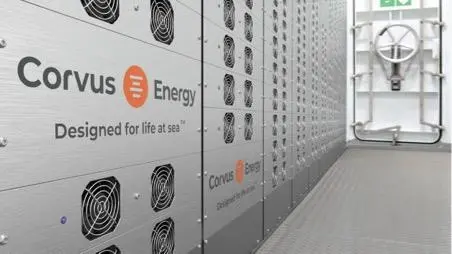
The full-electric solution was made possible by the introduction of a new energy storage system solution by Corvus Energy. The new lightweight ESS, Dolphin NextGen, is based on a new circular NMC battery (using nickel, manganese and cobalt, NMC). Production of the new system is expected to begin at Corvus’ automated production line in Norway in Q4 2023.
The design is based on the architecture of the 4-year, multi-million development program for the Corvus Blue Whale ESS, which included a ground-up redesign that reevaluated and improved every aspect of battery design, including battery chemistry, mechanical and electrical design, and software building blocks.
Corvus maintains that the Dolphin NextGen ESS is a game changer for marine battery projects due to its low weight and volumetric density, robustness, and unsurpassed flexibility.
“This groundbreaking project marks a turning point in the maritime industry’s effort to transition towards greener means of transportation. Combining cutting-edge technology, environmental consciousness, and innovative design, it redefines the future of ferry operations worldwide and paves the way for other large, zero-emission vessels,” says Halvard Hauso Commercial Director Europe, Corvus Energy.
“The ferry will also be the first fully electric vessel in South America, operating between Argentina and Uruguay.” Hauso cites the significance of this milestone as a positive indicator of the increasing adoption of maritime electrification. This project demonstrates that “maritime decarbonisation is now happening worldwide, not only in Europe.”
Hauso told The Motorship that the new cylindrical NMC cells offer a significantly lighter weight, lower C rate and higher power density than previous Li-Ion based solutions, and that this had significantly reduced the weight required by the battery installation.
Robert Clifford, the founder of Incat, noted that the reduction in the weight of the battery installation was such that the full-electric highspeed ferry design was expected to be lighter than the preceding dual-fuel LNG-burning design.
Related Articles
 ELECTRIFICATION AND BATTERY HYBRIDS
 ELECTRIFICATION AND BATTERY HYBRIDS
 ELECTRIFICATION AND BATTERY HYBRIDS