JIP delivers green LNG bulk carrier design
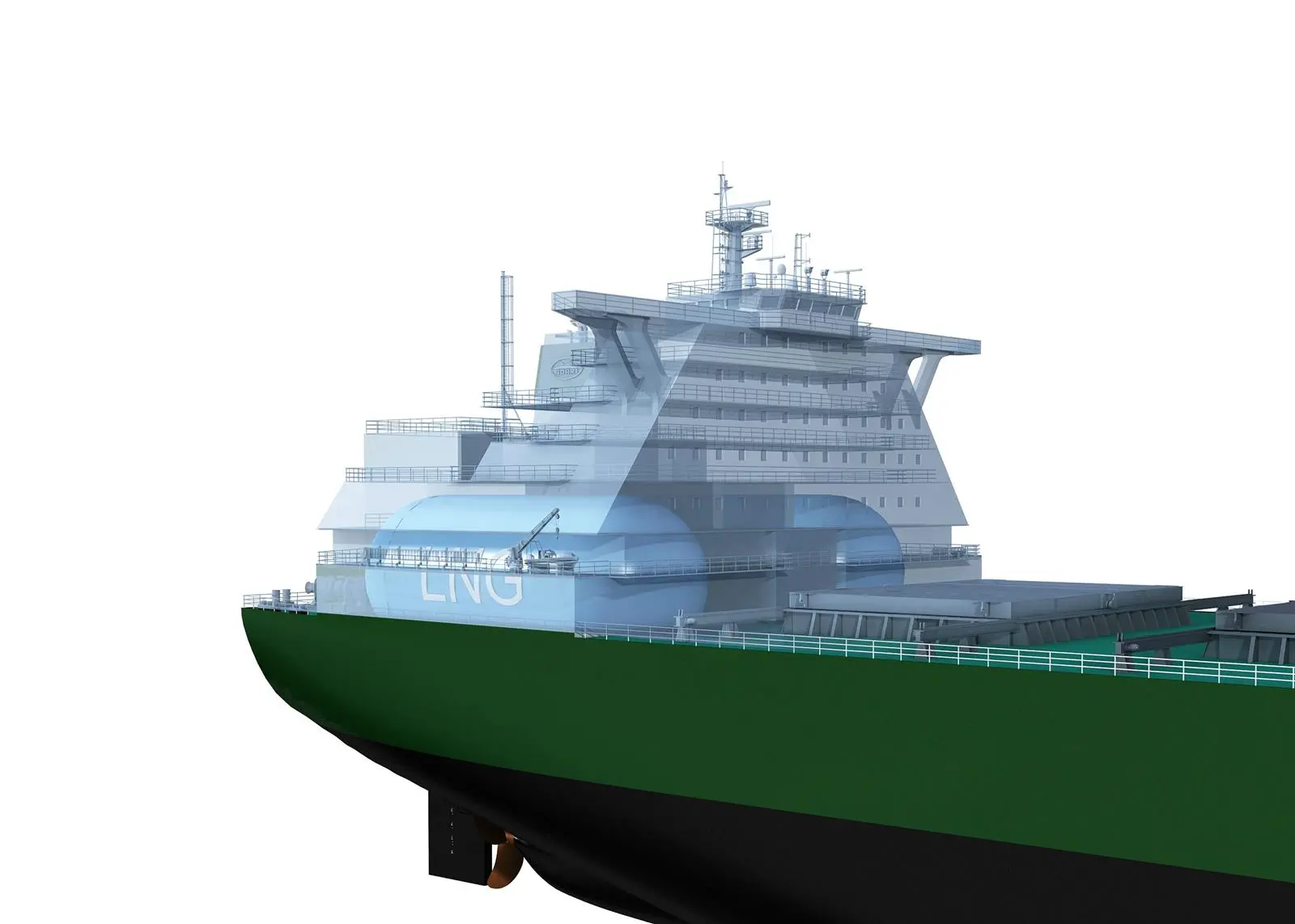
The Green Corridor Joint Industry Project (JIP) brought together key stakeholders in the iron ore and coal trades in order to make real progress in developing greener, more efficient and future-proof designs.
“Innovations delivered will not only benefit not only ore and coal carriers, but the entire bulk segment,” said Morten Løvstad, DNV GL’s Business Director for bulk carriers.
Green design
The project was initiated when the IMO confirmed the 2020 deadline for the 0.5% global sulphur cap back in 2016.
Project partners included Australian miner BHP, Fortescue Metals Group and Rio Tinto, ship owners MOL and U-Ming, together with LNG supplier Woodside, ship designer SDARI and class society DNV GL. China Merchant Energy Shipping and Shell Eastern Petroleum joined the project in a later phase.
The resulting 210,000 dwt LNG-fuelled bulk carrier Newcastlemax design from phase 1a was well received, and Approval in Principal (AiP) was issued by DNV GL in 2017. In Phase 1b, the project concluded work on a dual-fuel 260,000 dwt dedicated ore carrier design based on the same economical and technical principles.
A key accomplishment of Phase 2 was to promote the development of optimized LNG bunkering supply chains to support efficient bunkering of bulkers along the trading route in order to give the industry the confidence to invest in LNG-fuelled bulk carriers.
Woodside and Shell advised on LNG bunkering possibilities in Australia and the APAC region and the related supply chain costs.
Bunkering issues such as compatibility and safety studies for ship-to-ship bunkering were also addressed in order to demonstrate a more robust business case for LNG as fuel.