Let’s Talk About Bio-LNG

What is bio-LNG? Bio-LNG is liquefied biomethane (LBM) and is a net-zero marine fuel chemically identical to LNG. In North America biomethane is sometimes also known as renewable natural gas (RNG); and in Europe as synthetic natural gas (SNG).
Emissions reduction will depend on how the bio-LNG is produced and the engines in which it is used. Typically, bio LNG can reduce GHG emissions by up to 80% compared to marine diesel on a full well-to-wake basis. If avoided emissions are taken into account, when it is produced from anaerobic digestion of manure, bio-LNG can achieve net negative emissions of up to -190% compared with diesel.
Availability is improving
Biomethane is mainly produced from anaerobic digestion of agricultural and human waste streams such as animal manure, silage, wastewater and landfill. It can also be produced through gasification of cellulosic waste, such as sawmill and forest harvest residues.
Production from sustainable feedstocks means bio-LNG does not disrupt the production of food, fibre or fodder. Sustainable feedstocks are nationally or regionally defined, for example by the EU (RED II) in Europe and the EPA (Renewable Fuel Standards) in the USA.
Biomethane production is currently approximately 10% of shipping’s total energy demand, and is well supported by regulators. The European Parliament has outlined biomethane production targets of 35 bcm/year by 2030 in its updated REPowerEU plan, up from 18.4 bcm/year today.
Meanwhile in the USA, the Inflation Reduction Act supports biomethane supply by extending tax credits to all biogas sectors, including wastewater treatment, farming, the food sector, renewable energy, renewable natural gas, and renewable heat.
SEA-LNG recently commissioned an independent study conducted by the Maritime Energy and Sustainable Development Centre of Excellence (MESD CoE) at Nanyang Technological University, Singapore (NTU Singapore). This examined the role of bio-LNG in shipping’s decarbonisation and conservatively estimated that pure bio-LNG could cover up to 3% of the total energy demand for shipping fuels in 2030 and 13% in 2050. If it is considered as a drop-in fuel blended at a ratio of 20% with fossil LNG, bio-LNG could cover up to 16% and 63% respectively.
Recognising this opportunity, the European Parliament, for example, has already put money behind its ambitious targets, offering subsidies for major production plants.
Looking at only a few examples from SEA-LNG members, Titan has announced it will build the world’s largest biomethane liquefaction plant in the Port of Amsterdam. Bio LNG production is expected to commence in 2025 with the plant producing 200,000 tonnes-per-year once at full capacity. Titan has also started work on a plant located at the Attero facility in Wilp, Netherlands. The FirstBio2Shipping project will produce around 2,300 ton/year of bio-LNG for the shipping industry.
Gasum is consecutively constructing five large biogas plants in southern Sweden. The construction of the first will begin during 2023. The plants will use 1.8 million tons (750 GWh) of different kinds of waste streams for feedstock and produce 55,000 tons of liquified biogas per year. It has also announced a new plant in Vormstad, Norway which will treat up to 500,000 tons of organic waste per year and produce up to 150 GWh of biogas for the trucking and shipping sectors.
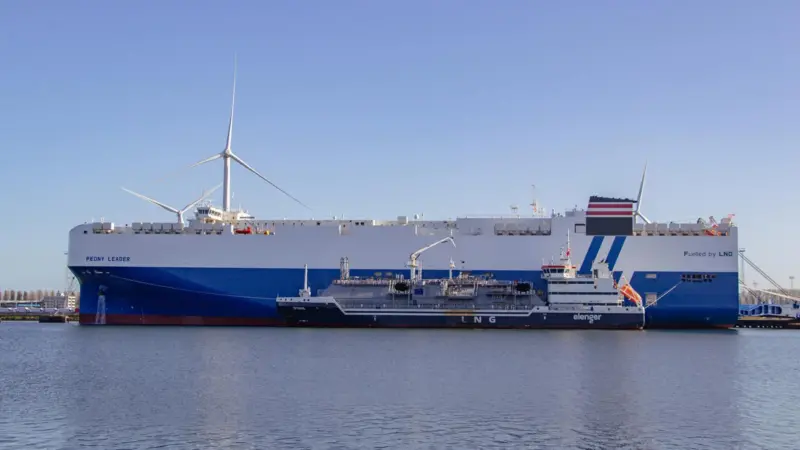
According to recent SEA-LNG analysis of LNG infrastructure, bio-LNG is bunkering is available in almost 70 locations in Europe, North America and Asia – including Singapore, Rotterdam and the US east-coast. The restructure is mapped on SEA-LNG’s Bunker Navigator tool.
Costs are falling
While shipping , like other industries, will have to bridge the cost gap between fossil and biogenic fuels, bio-LNG is expected to be among the cheapest biogenic fuels and can potentially offer significant cost advantage over e-fuels by 2050, according to the MESD CoE report.
The research forecasts that the average cost for delivered bio-LNG will fall by 30% by 2050, mainly driven by the reduced cost of producing biomethane in large-scale anaerobic digestion plants. Bio-LNG is expected to be cheaper than bio-methanol, e-ammonia and e-methanol.
Bio-LNG can also be used as a drop-in fuel in existing LNG-fuelled engines and can also be transported, stored and bunkered in ports using the existing global LNG infrastructure, significantly reducing the required infrastructure investment.
Bio-LNG is commercially available now and is being used as a drop-in marine fuel by ship operators, meanwhile supply is scaling up rapidly using sustainable feedstocks and backed by regulators. Bio-LNG – a key step on the practical, lower-cost and lower-risk LNG pathway – can make a significant contribution towards shipping’s decarbonisation today and in the future.