



LITHIUM TITANIUM OXIDE BATTERIES FOR MARINE USE
LTO batteries
An LTO battery is a modified lithium-ion battery that uses lithium titinate nanocrystals instead of carbon on the surface of the anode. This gives the anode a surface area of about 100 square metres per gram, compared with 3 square meters per gram for the carbon version which in turn allows the electrons to enter and leave the anode very quickly. This characteristic makes the fast recharging of LTO batteries possible, and provides high discharge currents when required. Lithium-titanate cells also last for 3000 to 7000 charge cycles, which is longer than other battery chemistries.
A disadvantage of LTO batteries is that they have a lower inherent voltage (2.4V), which leads to a lower specific energy (about 30–110 Wh/kg) than conventional lithium-ion batteries, which have an inherent voltage of 3.7V. LTO batteries have certain safety advantages, and are not susceptible to runaway overheating.
Early applications
An early marine application for LTO batteries was in an electrically powered research vessel in Japan. In Europe, the BB Green fast electric ferry was the first vessel to integrate LTO batteries. LTO batteries’ lower weight than conventional lithium ion batteries is a particular advantage in the high speed ferry segment, while the fast recharging rate for LTO batteries was another attraction.
LTO batteries were specified for use in the conversion of the ferry Movitz, which is scheduled for completion in summer 2019. Both BB Green and Movitz have their electric systems and batteries supplied by Enchandia Marine, a Swedish marine electric propulsion specialist.
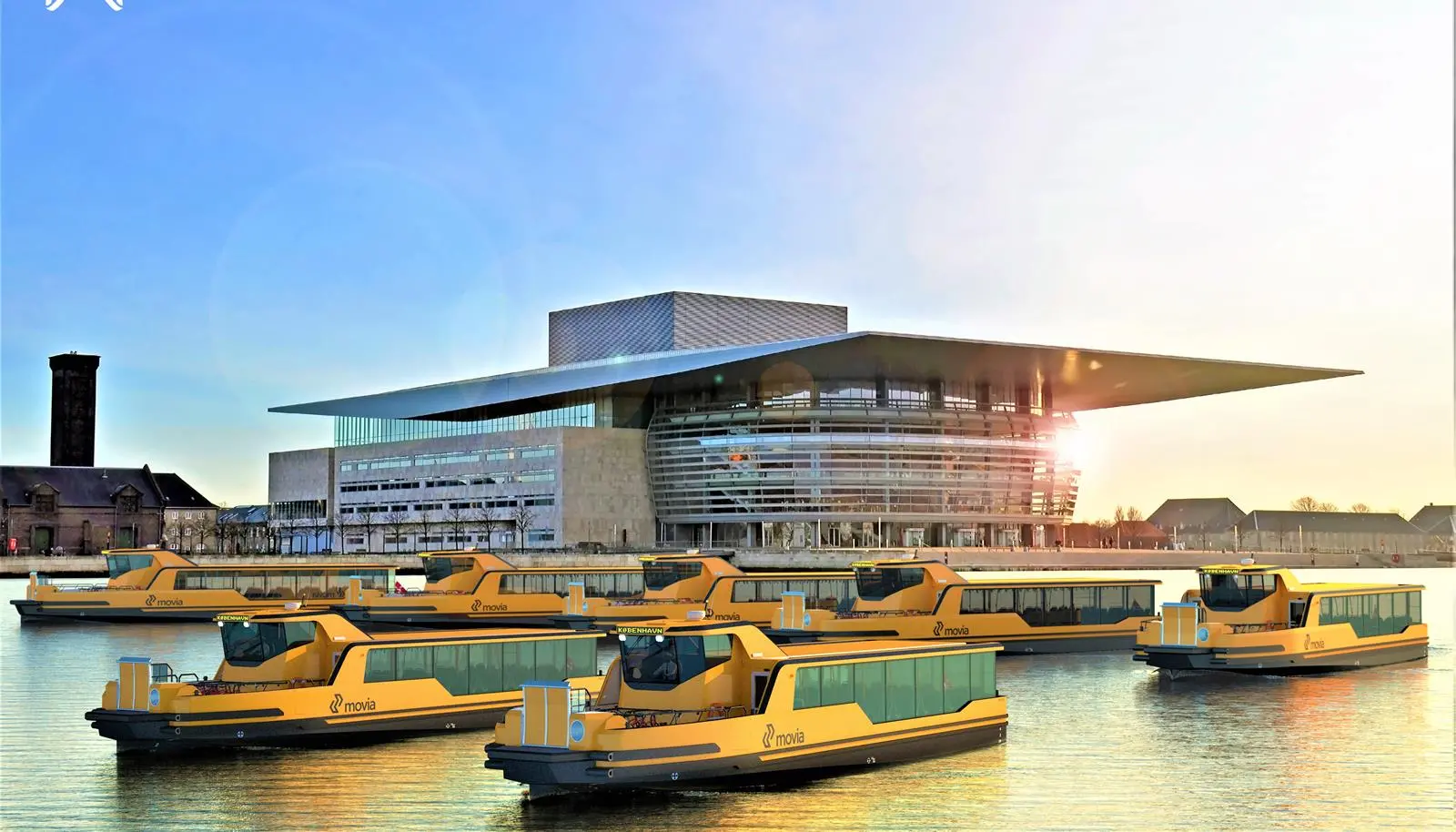
Enchandia has recently received an order from Damen to supply batteries for seven newbuild ferries for use in the Port of Copenhagen. The vessels will be based around Damen’s Ferry 2306 E3 design which features full electric propulsion. Damen has developed a design with a capacity for 80 passengers, tailored so that the vessels can dock bow first at the existing jetties. At these jetties, Damen will install fast charging points, also developed by Enchandia, with charging at the end of each leg taking just seven minutes.
The fast charging rate was an important factor in the decision to switch to LTO batteries. Other factors included the longer service life offered by these batteries and their resilient performance in very cold weather conditions, while the low noise levels were an attractive feature for operation in populated areas.
For vessels that are required to carry up to 80 passengers for 16 hours a day, reliability was of the utmost importance. Damen has a proven track record in fully electric solutions and to further ensure reliability, Damen has developed a robust, steel-hulled ferry with strong fenders. These features, combined with the electric propulsion, guarantee the lowest possible maintenance requirements.
“With Toshiba’s long experience of LTO batteries we can offer our customers a safe and cost effective battery system for a wide variety of applications and we plan to focus on LTO battery systems for the foreseeable future”, commented Magnus Eriksson, the CEO of Enchandia Marine
Related Articles
 BATTERIES, SUPERCAPACITORS, FUEL CELLS AND OTHER ENERGY STORAGE TECHNOLOGY
 BATTERIES, SUPERCAPACITORS, FUEL CELLS AND OTHER ENERGY STORAGE TECHNOLOGY
 BATTERIES, SUPERCAPACITORS, FUEL CELLS AND OTHER ENERGY STORAGE TECHNOLOGY