LNG Barge Deal Boosts German Yard
The contract has been backed by EUR62m ($66.3m) funding from the German Federal Government. The grant is predicated on the need to promote investments supportive of the shipping industry’s energy transition by way of a switch to alternative fuels, and has also been influenced by the extent of German technological involvement.
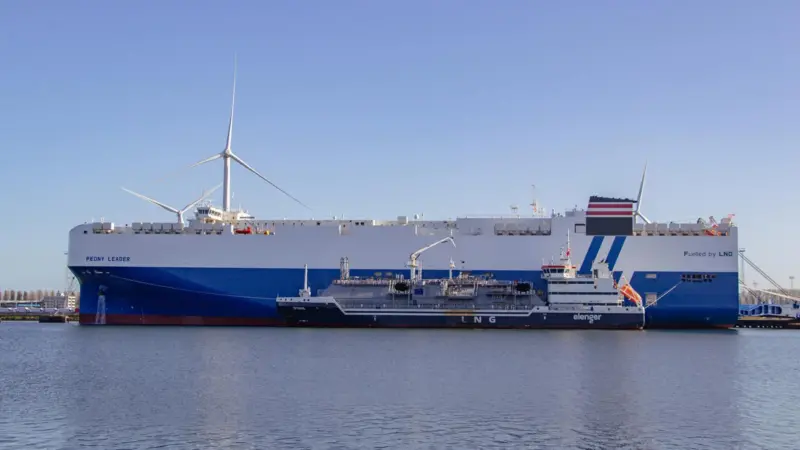
The nascent flotilla will strengthen the German and European bunkering infrastructure for LNG, liquefied bio-methane (LBM) and, further down the line, synthetic natural gas as low-carbon or carbon-neutral fuel for shipping. The bunker vessels have also been designed to facilitate future adaptation to an ammonia bunkering role. All three ships are expected to be in service by the end of 2025.
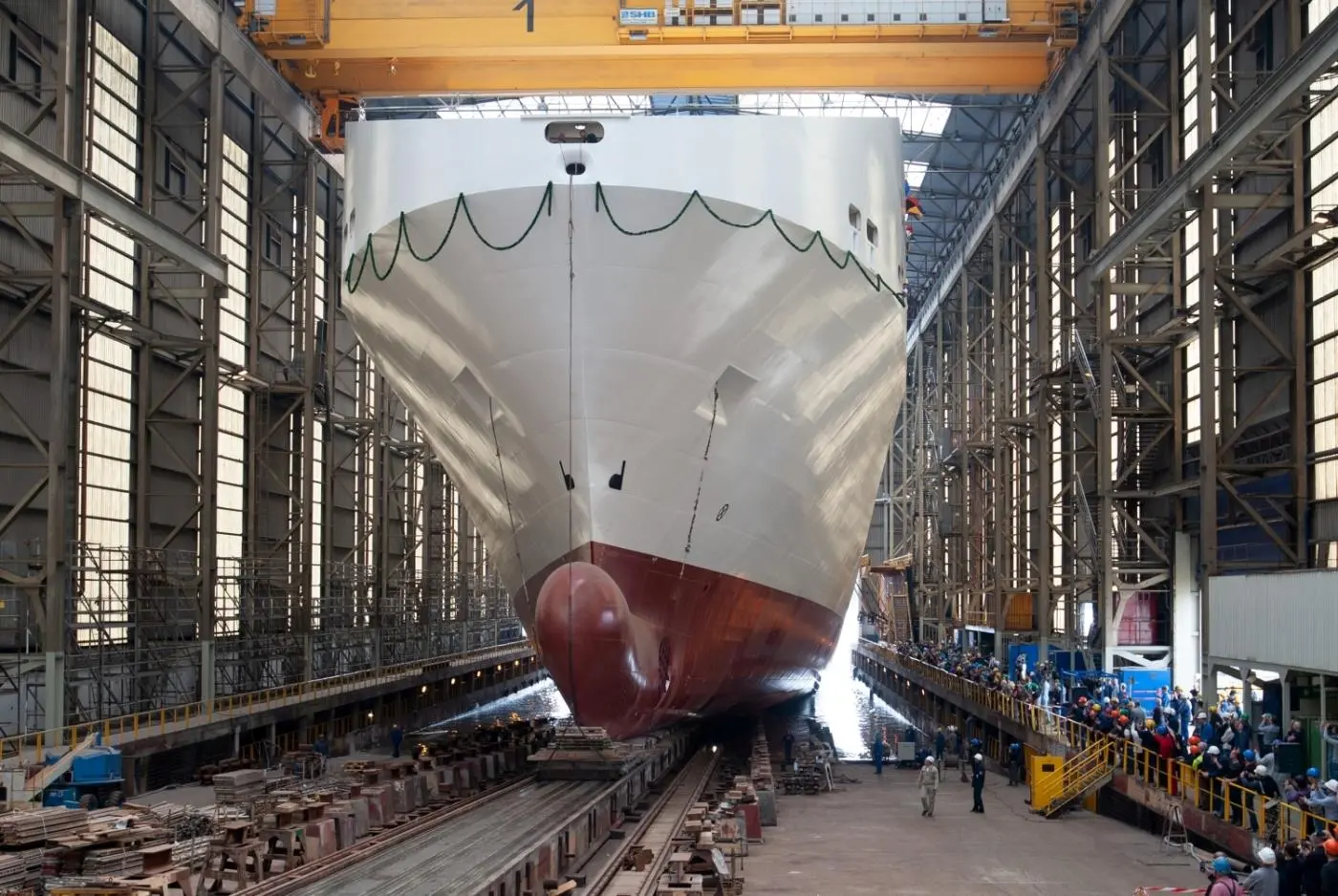
FSG’s latest completion is the 210m ro-ro freight vessel Tennor Ocean. Towards the end of January, the trailership sailed from Flensburg for final work at Lloyd Werft’s Dock 3 in Bremerhaven over a week-long sojourn prior to sea trials. The twin-engined vessel’s launching in June 2022 was the first since the yard’s re-start, following its purchase out of insolvency by the Lars Windhorst-headed company Tennor Holding in 2020.
Arranged for a 279-trailer intake, Tennor Ocean has been built to the group’s own account, and is based on FSG’s RoRo 4100 design, which had previously been produced in series for various owners. The vessel features a newly-developed folding mast section that meets the 40m air-draught condition needed for transit of the Kiel Canal. An option is held on a sister newbuild, also with a view to deployment in the charter market.
The subsequent project at the Flensburg yard is an LNG dual-fuel powered, 3,800 lane-metre ro-ro freight carrier ordered by the Australian operator SeaRoad.
For FSG, the latter provides an LNG engineering link to the new contract for bunker vessels. Meanwhile, Amsterdam-based Titan has this month also acquired two small-scale LNG carriers from Seapeak, the Canadian gas transportation company formerly known as Teekay LNG Partners. The 152m, 12,000m3-capacity vessels will be retrofitted so as to confer an LNG bunkering role, complementing the capability for coastwise distribution of LNG and LBM in European trade.