



Methanol a versatile option for fuel cells

Hydrogen’s application as a direct fuel could be many decades away. But faced with the problem of needing to cut emissions quickly ahead of 2023 and 2030, shipowners are examining and investing in hydrogen fuel cell technology, with methanol as the primary energy carrier, where it is either reformed alongside the fuel cell in a separate unit or integrated within the fuel cell itself.
Fuel cells can already meet the electrical demands of vessels in port and supply power for applications including refrigerated containers and port equipment. And a new generation of fuel cells can provide both vessel auxiliary and ultimately main propulsion power.
Methanol is an extremely efficient carrier of hydrogen atoms, with the highest hydrogen-to-carbon ratio of any liquid fuel. Liquid methanol at ambient temperature and pressure packs 40% more H2 by volume than hydrogen in a liquid state (-253C) and 140% more H2 than compressed hydrogen at 700bar. This makes methanol the ideal fuel to be re-formed onboard ship and consumed as hydrogen in fuel cells.
Compact and affordable processes are increasingly available for onboard reforming of methanol to hydrogen at qualities necessary to be used in fuel cells. In addition, using methanol as the hydrogen source reduces cost towards a competitive price with diesel for some generator applications.
Fuel cells are already in use in a number of maritime applications, notably onboard the ropax ferry Mariella. The vessel is equipped with a fuel cell stack powered by a methanol fuel supply system designed and installed by the Meyer Werft shipyard. Mariella’s methanol fuel tank is bunkered by truck using a standard hose arrangement and is reformed into hydrogen and transformed into 90kW of electrical power.
With the technology proven and accepted, the next stage of development is to further scale fuel cells to provide power for new applications and at higher loads.
Manufacturer Advent Technologies has announced its fourth generation of fuel cell units, SereneU, with claimed advantages including longer lifetime, decreased service and maintenance and lower total cost of ownership. These Methanol fuel cells have the option to interconnect with multiple units resulting in power systems and solutions for larger power demands.
Bergen-based system integrator Norwegian Electrical Systems intends to install a 3.2MW hydrogen fuel cell onto a large vessel currently being designed for the shipowner Havila. This will be the largest fuel cell ever installed on an ocean going vessel, replacing the more frequently used compressed gas. Batteries are planned to store additional energy to make the system fully emissions-free.
RIX Industries has licensed e1 Marine’s methanol-to-hydrogen reforming technology to create a mobile Methanol-to-Hydrogen generation system and provide green power in shipboard and marine environments. With the ability to generate hydrogen onboard and on demand, the RIX system offers users a safer and smaller shipboard volume requirement than high-pressure compressed hydrogen solutions.
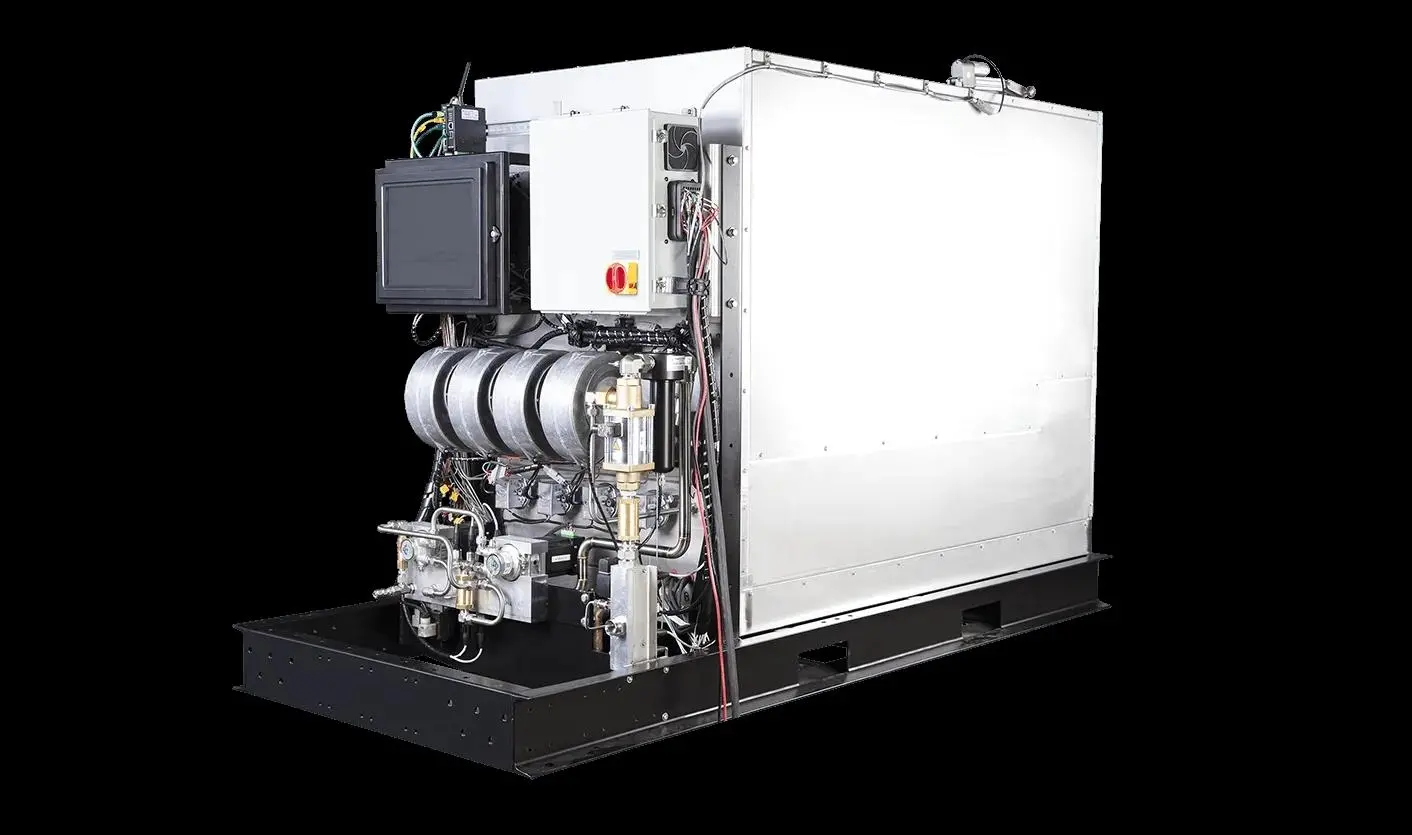
An innovative fuel cell system based on high-temperature proton exchange membrane (HTPEM) technology designed by fuel cell manufacturer Blue World Technologies is being constructed for testing by Alfa Laval. The test installation, which will use Methanol as fuel will explore the technology’s potential as a source of marine auxiliary power. Funded by Danish Energy Technology Development and Demonstration Program, the project is a joint effort between Blue World Technologies, Alfa Laval and shipowners including DFDS, Maersk Drilling and Hafnia.
The aim of the project is to establish a highly efficient and cost-effective HTPEM fuel cell, giving marine vessels a realistic alternative to combustion-based auxiliary power within the near future. The fuel cell test setup will have a power of 200kW, but the fully developed and modular design should be possible to scale up incrementally to a level of 5MW.
Powered by conventional Methanol, fuel cells can already provide significant emissions reductions at prices which are increasingly attractive to owners facing up to the prospect of higher fuel bills in future, by sidestepping the cost prohibitive, cryogenic or compressed gas infrastructure required for pure hydrogen.
As fuel cell projects scale up and larger volumes of renewable methanol become available, the ability to drive emissions even lower and meet regulatory targets ahead of time becomes a reality.
Related Articles
 BATTERIES, SUPERCAPACITORS, FUEL CELLS AND OTHER ENERGY STORAGE TECHNOLOGY
 BATTERIES, SUPERCAPACITORS, FUEL CELLS AND OTHER ENERGY STORAGE TECHNOLOGY
 BATTERIES, SUPERCAPACITORS, FUEL CELLS AND OTHER ENERGY STORAGE TECHNOLOGY