MOL car carrier first to use bio-LNG
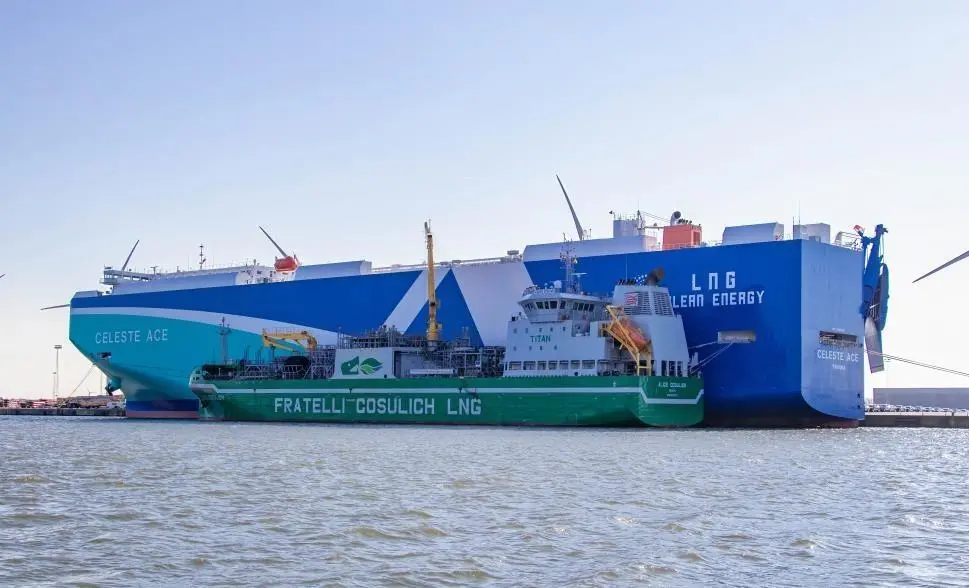
On 16 March, the Celeste Ace was supplied with around 500 tonnes of the fuel by Titan Supply at the Port of Zeebrugge, Belgium.
“This bunkering highlights the growing role of bio-LNG in decarbonising international shipping today,” said Caspar Gooren, commercial director of renewable fuels at Titan.
“With bio-LNG availability expanding, its deep decarbonisation potential and increasing commercial viability, the LNG pathway offers practical solutions for shipowners and operators. With a global maritime leader like MOL putting its commercial weight behind bio-LNG, this is an exciting time for the clean fuels transition.”
Bio-LNG, a more sustainable alternative to conventional LNG, has a carbon intensity of less than zero over its lifecycle, making it a carbon-neutral solution. The fuel was obtained with International Sustainability and Carbon Certification, a globally recognised standard for sustainable biofuels.
By using bio-LNG, Celeste Ace will reduce its CO2 emissions significantly compared to traditional fuel oils, with estimates showing a 25% reduction in CO2 emissions from LNG alone. As bio-LNG is derived from waste and residues it offers an even greater reduction in emissions.
This initiative aligns with MOL’s environmental strategy outlined in its BLUE ACTION 2035 management plan, which focuses on using low-carbon fuels like LNG and bio-LNG while advancing zero-emission technologies.
“We are exploring the use of ammonia and hydrogen fuels as part of our strategy to adopt clean alternative fuels, while moving to expand the use of LNG-fuelled vessels and more quickly achieve a low-carbon society,” said MOL Marine Fuel GX Division general manager, Yoshikazu Urushitani.
“Partnering with Titan, we will start using bio-LNG to lead the shipping industry in the transition to clean alternative fuels.”