



New Carbon Capture Technology Uses MCFC Tech To Generate Energy
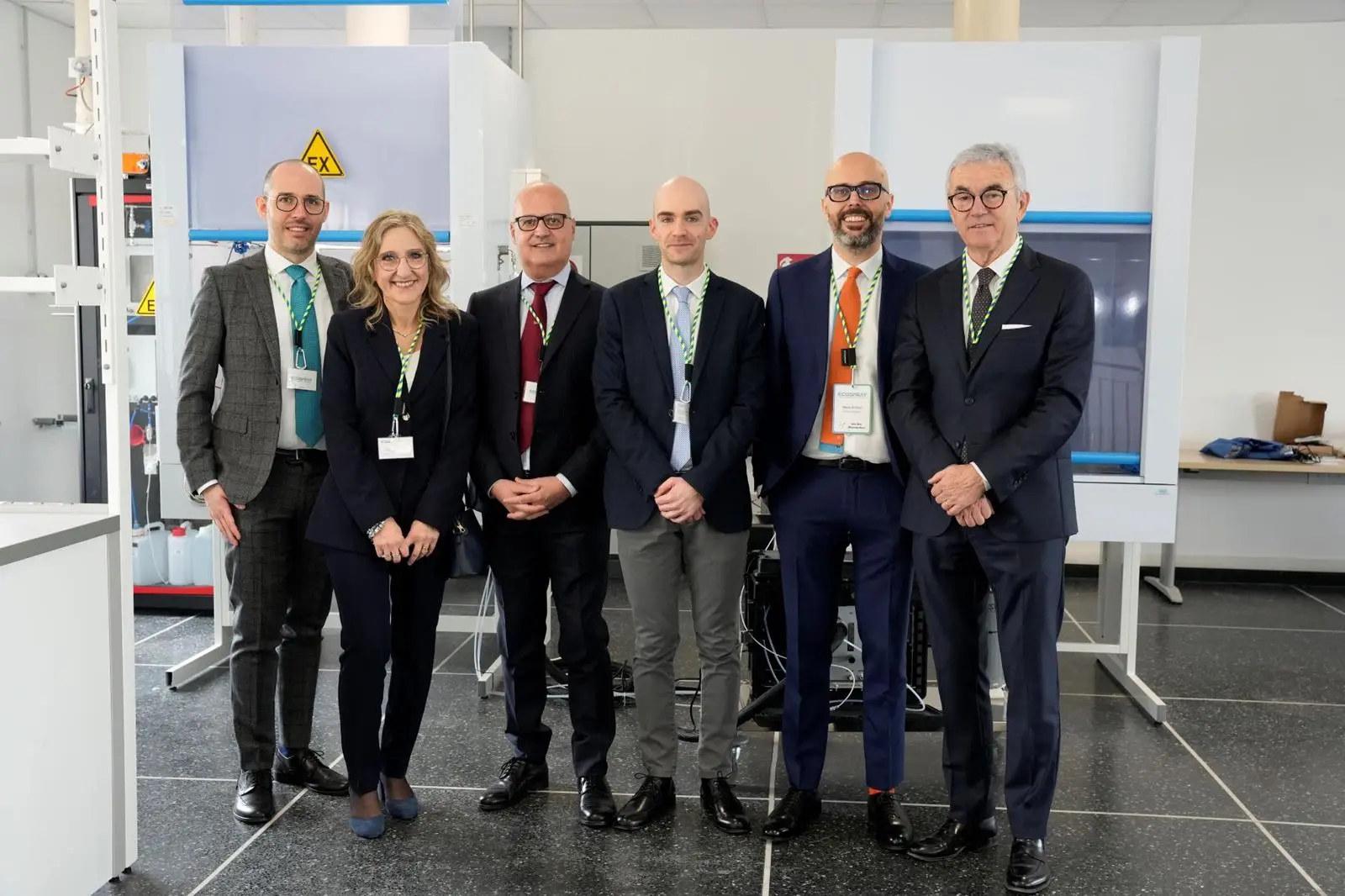
MCFCs are strategic in the context of the energy transition precisely due to their capacity to capture the CO2 in exhaust gases and generate additional clean energy, reducing the parasitic energy demand from the system, says Filippo Lossani, Marine Business Unit Director of Ecospray.
MCFCs can be powered by methane (LNG, bio-LNG), hydrogen, ammonia, syngas and other fuels providing they are reformed externally or directly inside the cell to produce hydrogen which is then fed to the fuel cell’s anode. In Ecospray’s marinised system, the CO2-rich exhaust gas coming from a power generation system is fed to the cathode, and up to 90% of the CO2 is then captured. At this point, the CO2 transferred at the anode outlet can be easily separated and liquefied for storage or further usage. The system’s only other outputs are water and air.
RINA recently confirmed that a 500kW MCFC, using carbon negative bio-LNG as feedstock for the anode, can cut the CO₂ equivalent emissions of a 10MW engine by 20%. The class society also conducted a feasibility assessment and confirmed the suitability of MCFC technologies on ships.
Engineers from the University of Genoa have collaborated with Ecospray on the MCFC technology since 2020. After completing this key stage in the validation process with RINA, Ecospray plans to start testing MCFC technologies at its new laboratory established in the Port of Genoa in partnership with the university. The lab is equipped to run testing activities, and research will include the factory processes needed for mass production of MCFCs. Ecospray expects to have a commercial product on the market in 2025.
This carbon capture technology was one of the three officially launched by Ecospray in June 2022, together with one based on the use of amines and one using calcium hydroxide. Both have been pilot tested are expected to be commercially available in 2024.
The absorption of CO2 with amines is based on an approach that is already well-established in other industrial sectors, but Ecospray has developed a new, more efficient and marinized system. In particular, Ecospray has managed to reduce the energy required for the regeneration of the amine to remove the captured CO2 from 140-160oC to 60-80oC. “We don’t need an additional burner or electrical power, we can use waste thermal power already available onboard to heat up the solution,” says Lossani. “This means saving a lot of energy for that part of the system that is one of the highest energy consumers overall.”
The third method in the company’s portfolio involves scrubbing exhaust gas with a calcium hydroxide suspension that has a solid content ranging from 10-30%. In this lime milk, the CO2 reacts with the calcium hydroxide and forms calcium carbonate in stable, mineral form. The suspension of calcium carbonate is harmless to the marine environment, says Lossani, and the possibility of discharging it overboard is currently under evaluation.

The lime milk solution has a smaller footprint that then amine solution, as it only requires an absorption tower and a tank – there’s no need for liquified CO2 production or storage. The amine solution involves installing an absorption tower, stripping tower and condensing tower along with two storage tanks: one for the amine and one for the liquified CO2. While the MCFC solution has the smallest footprint, it still does involve CO2 storage onboard.
Bulk carriers are the main target for the lime milk solution, because the storage of the powdered calcium hydroxide is easy to incorporate onboard. Additionally, as there’s no need to regenerate the reagent, the total energy consumption is lower than the amine plant. “Liquified CO2 storage is not likely to be well suited to ships like bulk carriers that are at sea for 40-50 days, because it implies a huge amount of CO2 to be stored onboard,” says Lossani. “Some ferries and cruise ships sailing fixed itineraries, touching port ever day or two, will require less storage space. It is also easier for their operators to organise the logistics and shoreside infrastructure to handle the offloading of the liquified CO2.”
It would not make sense to develop all three solutions if shipowners’ needs were all the same, he says. The three technologies can be also integrated with other Ecospray exhaust gas solutions such as DeSOx, particle filters, and oxidation catalysts.
Related Articles
 BATTERIES, SUPERCAPACITORS, FUEL CELLS AND OTHER ENERGY STORAGE TECHNOLOGY
 BATTERIES, SUPERCAPACITORS, FUEL CELLS AND OTHER ENERGY STORAGE TECHNOLOGY
 BATTERIES, SUPERCAPACITORS, FUEL CELLS AND OTHER ENERGY STORAGE TECHNOLOGY