Newport Shipping offers deferred finance as part of turnkey LNG retrofit package
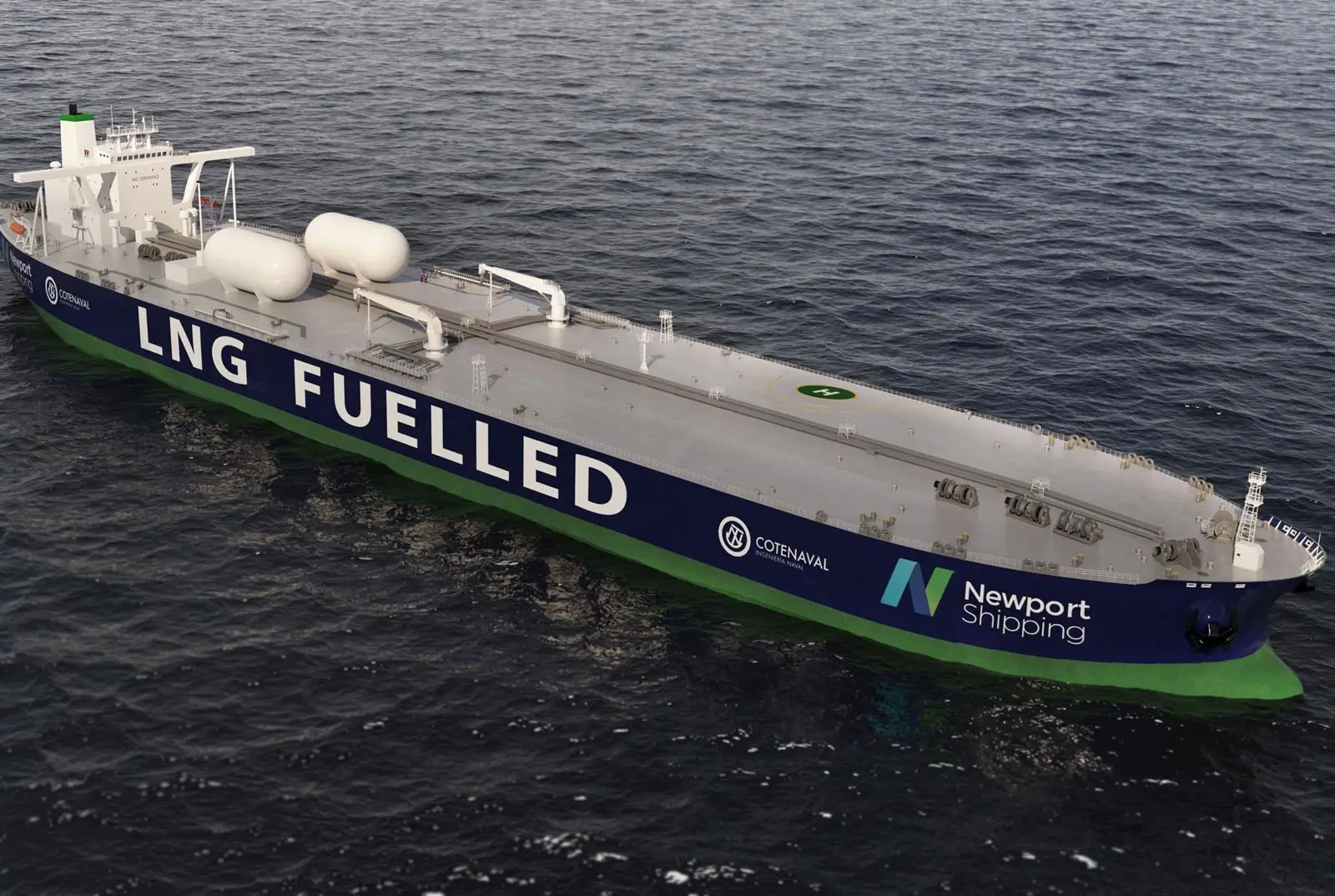
The LNG retrofit solution is targeted at tankers and dry bulk vessels, and is based around an IMO Type C fuel tank concept. The concept has received an approval in principle (AIP) from classification society DNV, confirming the feasibility of the concept for the VLCC and Capesize vessel classes.
As part of the solution, Newport Shipping will offer shipowners a long-term payment plan, permitting payments on up to 60% of the cost of the retrofit to be deferred for six years.
Newport Shipping will act as the system integrator for conversions undertaken at a number of participating shipyards in both hemispheres.
By directly overseeing the supply of components and acting as the project integrator, Newport Shipping claims to be able to shorten the overall project duration of conversions and mitigate the risk of unforeseen conversion project overruns. The retrofit and conversions provider expects the solution to appeal to shipowners considering converting existing tonnage to dual-fuel propulsion as a means of meeting upcoming Energy Efficiency Existing Ship Index (EEXI) and Carbon Intensity Index (CII) targets, or longer-term fleet level decarbonisation objectives.
IMO Type C-based design
Ozeker noted that the company was engaging with “the main engine suppliers” around the possibility of converting engines to either low-pressure or high-pressure two-stroke LNG-fuelled engines. The specific conversion of the engines to dual-fuel operation would be carried out by the engine designers’ service suppliers, Ozeker added.
Around three-quarters of the design and engineering tasks associated with a dual-fuel conversion were not directly connected with the retrofit of the engine. including the installation of an fuel gas supply system (FGSS), as well as the LNG bunkering modules and the LNG fuel tanks.
Newport Shipping would offer shipowners the choice of FGSS and fuel tank suppliers, including Germany-based collaborators TGE and Marine Service Gmbh, as well as LGM Engineering. The Motorship notes that LGM Engineering is familiar with the design requirements of supply FGSS for dual-fuel VLCC, having won the order to supply such as system for the newbuilding project at DSIC.
Serial conversion benefits
By acting as the system integrator, Newport Shipping expects to be able to offer customers assurances about the scheduling of the retrofit conversion work. The group has sufficient slot availability to handle around 1,000 retrofits annually.
While the establishment of project management controls at shipyards in Newport Shipping’s network, and the development of close relationships with component suppliers might mitigate the risk of unplanned project overruns, the advantages of introducing a pipeline of retrofit conversions extended further.
“We expect to shorten the duration for a retrofit project to 12-14 months, from the beginning of a project to completion, excluding the initial contractual negotiation phase,” Cenk Ozeker said.
Ozeker cited compressed design requirements for conversions of sister vessels built by a single shipyard based on a serial design as an example of the benefits of shifting from a bespoke to a serial production basis.
“We think we could shorten subsequent retrofit projects by up to three months after a first conversion design project,” Mr. Ozeker said, adding that Newport Shipping would leverage the group’s in-house design capabilities.
Green Finance
Perhaps the most intriguing aspect of Newport Shipping’s solution is the attractive financial terms that the group is able to offer shipowners. The group has reached an agreement with unspecified financial institutions to provide deferred finance to shipowners.
Ozeker declined to identify the financial institutions providing the long-term finance for the dual-fuel conversions to The Motorship. He noted that the environmental benefits of LNG-fuelled propulsion meant that the conversions met the institutions’ ESG criteria, and were eligible for Green Finance funding.
The economics of conversions to LNG-fuelled propulsion meant that the payback period ranged from 5 to 7 years, although the potential introduction of a carbon levy or other regulatory initiatives might make the economics of LNG conversions even more attractive in the future.
Ozeker also noted that shipowners might also be able to take advantage of emerging interest from beneficial cargo owners in paying a premium for environmentally-friendly tonnage, citing recent contractual terms offered by dry bulk charterers in Singapore, and also developments in the dual-fuel VLCC space. “This would allow ship owners to speak to charterers and identify their additional costs, while meeting demand from charterers for reduced supply chain emissions.”
Such a financial model also represented a potential model for funding conversions to other alternative fuels, Ozeker concluded.