Offshore owners struggle for LNG propulsion payback
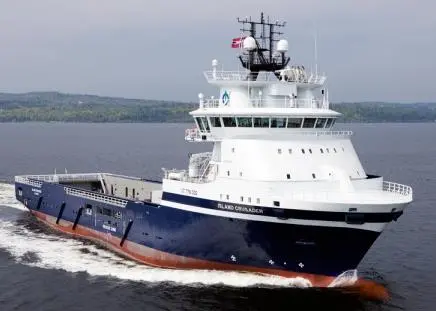
At a discussion hosted by Blue-C in Ulsteinvik, senior executives from Island Offshore, Remøy Shipping and Bourbon Offshore Norway spoke candidly about the pressures of increasingly onerous technical specifications for vessels required by chartering oil companies. Particularly challenging is the fact that owners’ investments in these technologies are not reflected in charter rates.
Håvard Ulstein, managing director of Island Offshore, reported that he had asked engine supplier Bergen for technical proposals to convert LNG engines to diesel engines for its two gas-fuelled platform supply vessels (PSV), Island Contender and Island Crusader. One of the vessels, both of which were delivered from STX Brevik in 2012, will be the next Island Offshore ship to be laid up as the owner continues to adapt to the dramatic overcapacity of vessels serving the depressed oil market.
“It is a big disappointment,” said Ulstein. “Our technical experience is fantastic – these vessels work well and the environmental performance of the engines is very good. But the problem is that they cost a lot of money to build, even with a significant refund from the NOx Fund Foundation, and you do not get any premium for chartering them.”
Ståle Kyrkjedelen, operations director, Bourbon Offshore Norway, added: “That goes for a lot of the demands from clients, not only for LNG but other requirements that they do not pay anything additional for, at least not these days. They pile up tenders with specifications they want, but there is nothing extra for supplying such vessels.”
Remøy Shipping has one LNG-fuelled PSV, Rem Eir, delivered in 2014 and currently serving in the North Sea under a three-year contract with Statoil. Karsten Sævik, CEO of Remøy, said: “Her dual-fuel engines are performing well and we are excited to see what happens when she finishes the contract, whether there is a need from the client for her to continue. But there was no premium for this installation.”
A similar stance could also hinder the uptake of other alternative power solutions, including batteries. Sævik noted: “The interest is primarily from an environment and fuel saving perspective. For us it is just another installation and another investment cost, so the only benefit would be in the contract [with the charterer].”
Oil companies can earn substantial tax breaks by employing environmentally friendly vessels. Safety and equipment standards above those demanded by flag states and class societies are also driven in part by public perception, as well as the need to protect themselves from legal liabilities.
NOTE: A full report on the discussion will appear in The Motorship’s offshore report in the December print edition.