On course for BWTS compliance
To date, discussion has largely centred around which type of treatment technology is most suited to the task. However, this has overshadowed two very important aspects of the new regulations which must form part of the overall treatment regime in order to be effective in ensuring environmental compliance: Point of Discharge measurement and Recording and reporting of treatment activities. A new joint development between PSM and The Chelsea Technologies Group aims to address these important issues.
A key requirement for any BWTS is to provide analysis of the ballast water at the point of discharge to prove correct treatment. Developed by the Chelsea Technologies Group, the FastBallast Fast Repetition Rate fluorometer allows operators to monitor ballast water in real time to the IMO D2 standard (10 to 50μm category).
To ensure that phytoplankton from all groups are detected, FastBallast uses three LED excitation channels. FastBallast is designed to operate within challenging marine environments, with data streamed to a graphic user interface for real time processing and simultaneous back-up logging.
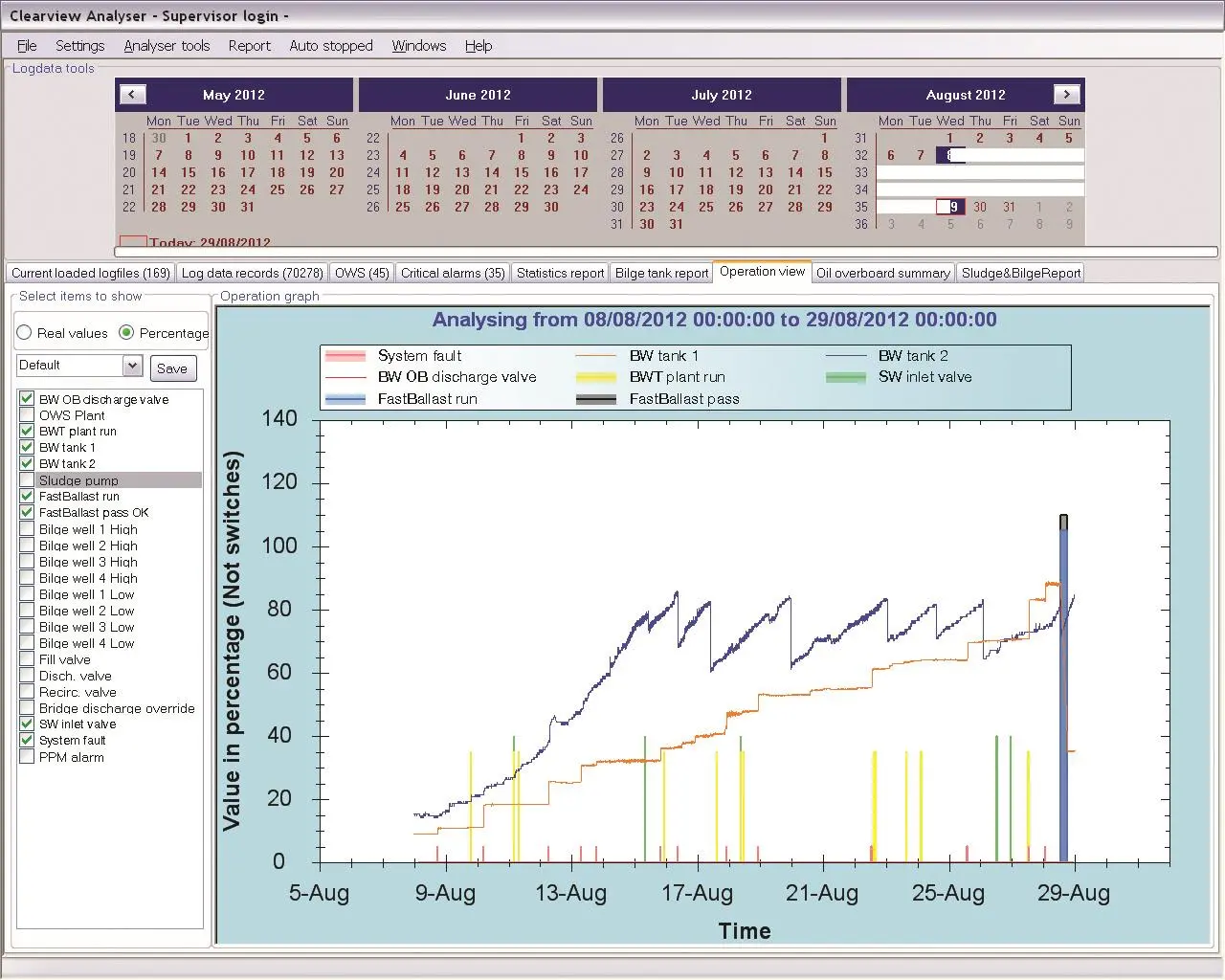
An equally critical stipulation is contained in Requirement B-2, which calls for vessels to hold data in a ballast water record book, which may be in an electronic format. The recorded data must include certain key information to prove correct operation. PSM’s latest ClearView system, comprising a suite of onboard and shoreside hardware and software elements, features recording capabilities which more than meet the reporting requirements.
The system’s Ballast Water Treatment module allows operators and onshore personnel to monitor the operation of ballast water treatment equipment. An encrypted recording capability electronically captures all key data and provides secure archive storage onboard or onshore, offering proof of correct operation for the three year period required.
The need to upgrade to emerging new legislative requirements presents operators with an opportunity to take positive measures to improve onboard control. An integrated system with the latest monitoring and measurement technology can prevent incidents which might otherwise lead to violations, incurring significant fines and the risk of prosecution.