Research targets integrated SCR for two-stroke engines
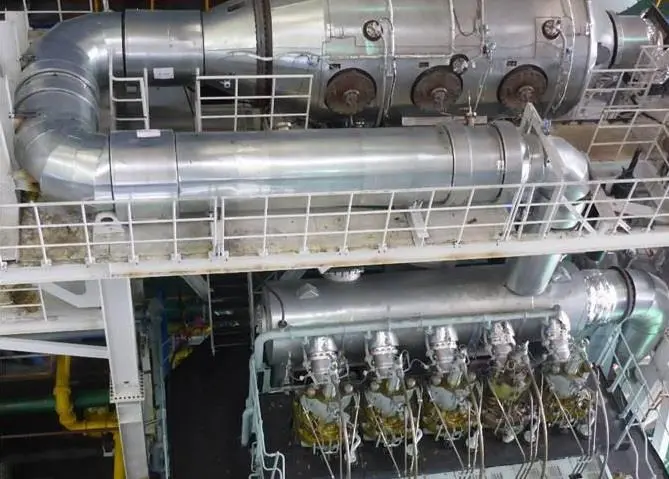
Work towards an after treatment unit integrated within very large engines is being carried out under the ‘near-zero emissions engine’ work package of the Hercules 2 project, which brings together 32 organisations – including a core group of MAN Diesel & Turbo, Wärtsilä Corp and Winterthur Gas & Diesel (WinGD) – in a three-year, €25 million cooperation.
If successful, the integration of SCR into two-stroke engines will offer major space and weight benefits for ship operators – many of whom have highlighted challenges concerning the increasing space needed in engine rooms to accommodate emissions abatement technology. An integrated system is also likely to enable simpler installation.
According to a paper presented by the project coordinators at CIMAC Congress in June this year, the integration of a high-pressure SCR unit into the engine structure will require particular investigation into the vibration resistance of SCR catalyst modules. The development of modules capable of withstanding engine vibrations will be undertaken with catalyst suppliers and followed by in-service prototype tests.
NOx emission sensors for accurate control of injection of ammonia/urea and for avoidance of ammonia slip, together with appropriate measurement methods, will also be developed and experimentally validated under the project.
The SCR unit development is just one component in a wide-ranging brief for the Hercules 2 teams. The project is focusing on developing fully fuel-flexible, near zero-emissions large engines with improved thermodynamic performance and longer lifespans.
The initial Hercules project was initiated in 2004 as the result of a joint vision between MAN Diesel & Turbo and Wärtsilä Corporation. After three successful phases – which resulted in 38 patent applications, 49 prototypes and 18 new commercial products – the second stage of the project, Hercules 2, was started in May 2015.