



Rising battery capacity at sea
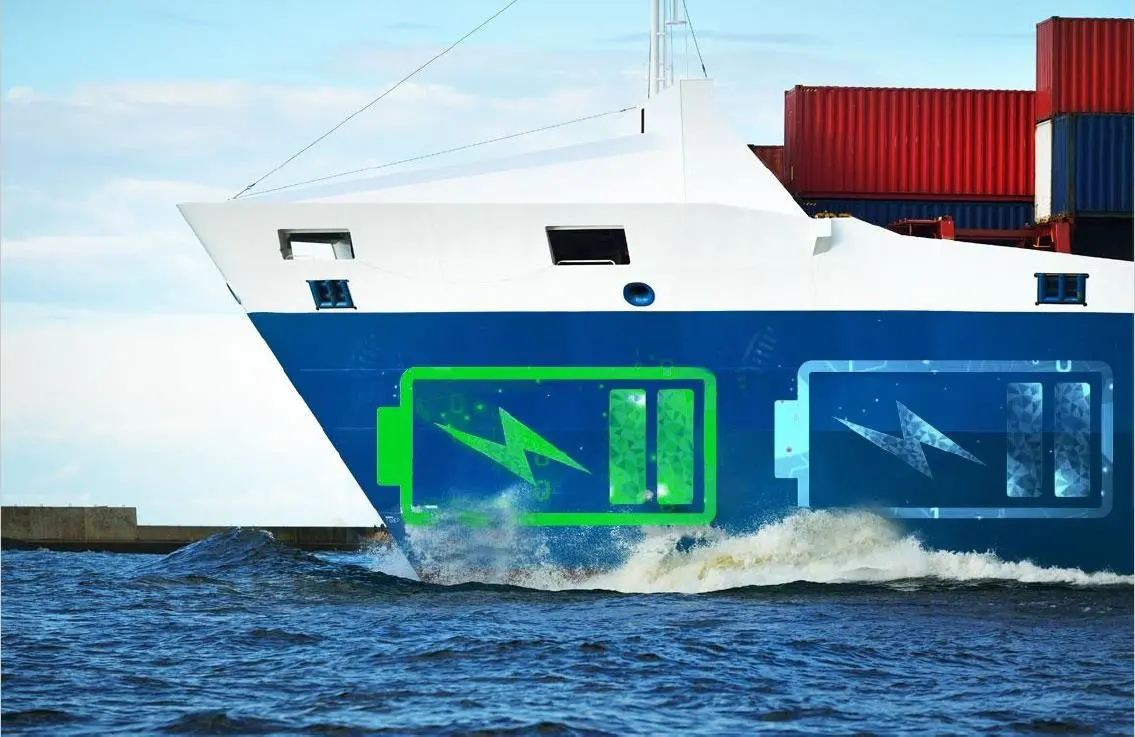
According to data from the Maritime Battery Forum(MBF), which maintains a register of ships featuring energy storage systems, battery power figured in a total 1,054 sea-going vessels in operation or under construction at the end of 2023. The combined output rating of the systems amounted to 883MWh.
The present listing, as of mid-April 2024, has seen the number rise to 1,284, comprising 902 vessels in service plus 382 newbuilds, for a total installation capacity of 1,334MWh.
The addition of the 1,000th battery-powered ship to the register denoted a new milestone for the industry, and the numerical development was accompanied by a widening range of vessel types involved together with a pronounced rise in the average capacity of battery installations commissioned in 2023 to 1,360kWh, up from 1,040kWh the year before.
However, while MBF statistics indicate that newbuild and retrofit projects followed a similar growth path up to 2018/2019, the retrofit share has subsequently decreased. Although the inclusion of energy storage systems in new ships is easier than adoption in existing vessels, retrofitting of batteries to ships already in service constitutes an important option if IMO decarbonisation goals are to be achieved.
The battery-powered designation encompasses fully battery-electric vessels, hybrids and ‘plug-in’ hybrids. An MBF tabulation spanning the 2010-2023 period shows that pure electric predominated early on, albeit soon followed by a shift towards hybrid ships in terms of annual installations. The growing availability of shore power is expected to reflect in future proportions of plug-in hybrid systems.
The initial growth in the population of shipboard battery systems was attributable to the car/passenger ferry sector. While ferries continue to provide most applications for the technology, the distribution of sea-going installations has become far more varied in recent years, including cruise ships, container vessels, cargo ships and offshore support vessels. The coastal/short-sea sector is showing increasing receptivity to the technology, and accounted for nearly two-thirds of the approximately 100 battery-fitted cargo ships recorded at the end of 2023.
Rising demand has sparked the interest of an increasing number of battery suppliers, and the widening product offering for different types of vessel applications coupled with improving battery performance, are contributing to further uptake. It is anticipated that the effect of higher volume influencing downward pressure on battery costs and measures addressing shipowner concerns over safety issues will give added impetus to investments in sea-going installations.
Batteries are also viewed by the MBF as an enabler or efficiency-advancer for other technologies. For instance, a shaft generator/motor in combination with a battery pack enables a ship to fulfil certain parts of its regular operating pattern with lower emissions and noise levels, and at reduced fuel consumption.
Headquartered in Bergen and with 75 members at present, MBF is the commercially-neutral advocate and knowledge-sharing body for maritime battery technology worldwide, with the key aim of accelerating the uptake of safe systems in the interests of achieving emission reductions.
Detailed market insights and maritime battery reports, together with seminars, working groups and collaborative projects, are among the benefits of MBF membership, which costs NOK 40,000(currently some $3,650 or EUR3,430) per year.
Although the MBF ship register, which does not include small leisure craft, is considered one of the most complete databases covering battery-equipped vessels worldwide, the organisation acknowledges that it is not 100% complete and is constantly working on updating and augmenting the information.
Related Articles
 BATTERIES, SUPERCAPACITORS, FUEL CELLS AND OTHER ENERGY STORAGE TECHNOLOGY
 BATTERIES, SUPERCAPACITORS, FUEL CELLS AND OTHER ENERGY STORAGE TECHNOLOGY
 BATTERIES, SUPERCAPACITORS, FUEL CELLS AND OTHER ENERGY STORAGE TECHNOLOGY