Rolls-Royce launches fibre rope crane range
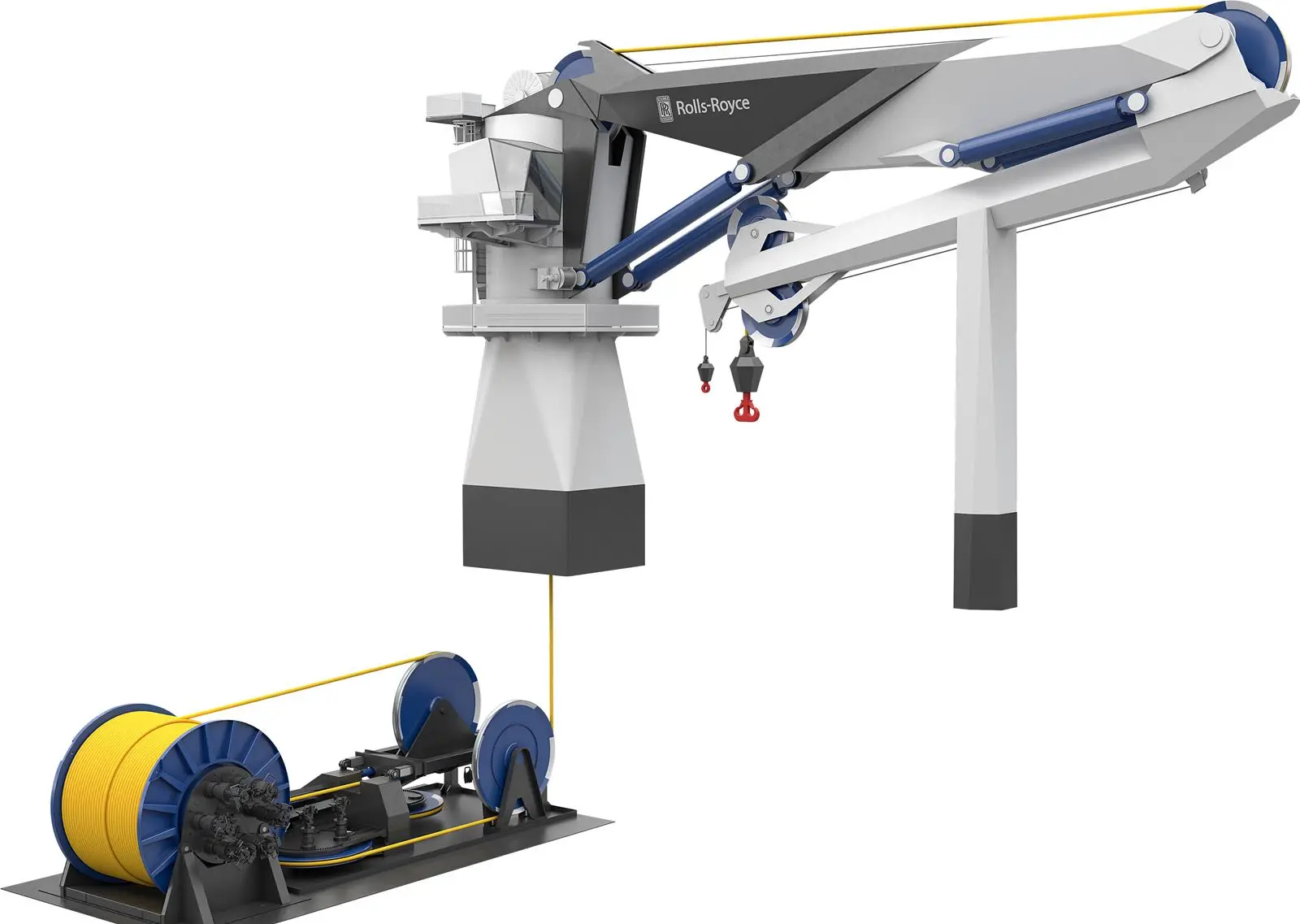
The fibre rope used in the new range, available up to 400 tonnes, retain their full lifting capacity to maximum working depth, while the weight of steel wire cranes means they must be derated at a certain depth.
Rolls-Royce noted that a 250 tonne fibre rope crane can do the same work as a 400 tonne steel wire crane at a depth of 2,500m. Reducing crane size assists vessel stability and means that a smaller vessel could be used to do heavier work.
The Rolls-Royce control cabin houses the operator chair with touch screens, a writing desk, master cabinet and redundant uninterruptible power supplies, as well as a co-pilot chair and, optionally, a toilet. Cabin heating and air conditioning systems are also included.
The modern design of the crane results in fewer sheaves, less weight and less ice load under icing conditions. The crane is classed according to the new DNV GL standard for ‘rope based deployment and recovery systems for designated services’.
Rolls-Royce’s cable traction control unit (CTCU) provides active heave compensation as well as hauling in and paying out the main rope. The proven system has been made more compact, with fewer traction sheaves and integrated spooling.
The Rolls-Royce fibre rope management system monitors rope condition and manages the replacement of worn sections, which is done by splicing in new rope – a much faster repair process than that used for steel wire cranes, with no out-of-service time needed. The management system can be integrated in the Rolls-Royce equipment health monitoring system (EHM) and information made available ashore for analysis.