Rugged computers – more than just ‘hard shells’
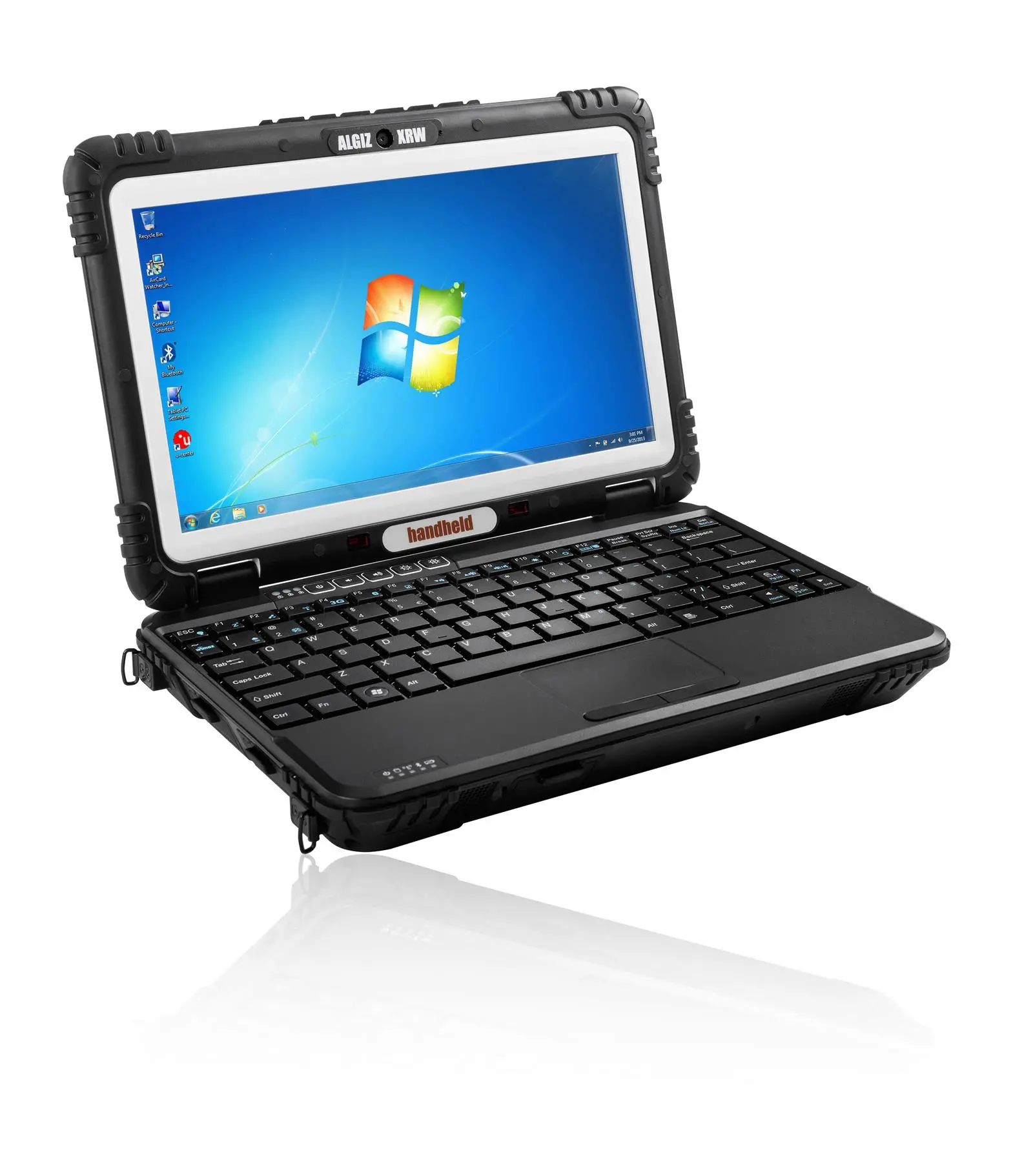
First of all, let us distinguish between a ‘rugged’ computer and a ‘ruggedised’ computer (or tablet or smartphone). A rugged computer is designed to operate reliably in very harsh environments and conditions. The term ‘ruggedised’ gives the sense that fragile internal components have been somehow protected. Truly rugged devices are not simply wrapped in a tough shell.
Tough and durable mobile computers and smartphones are gaining in popularity, because customers demand more durable products. There are actually some mainstream devices that could be described as ruggedised (and are often advertised as rugged), but they are not truly rugged. They might be waterproof but lack other aspects, like the ability to withstand vibrations/shocks and function well in extreme temperatures. A rugged mobile computer would be essential in any situation with inclement weather, drops, shocks, extreme temperatures, and where there is a need for an ergonomical tool that is readable in direct sunlight, just as required for many onboard applications.
To define ruggedness:
- The devices should have passed some of the MIL-STD tests, i. e. the American military standard for equipment.
- They must be highly rated on the ingress protection (IP) scale for protection against dust and liquids.
To ensure ruggedness, various tests must be carried out:
- Drop and shock testing. Drop a normal computer and you will easily break the display or the hard drive. Drop a rugged computer and nothing will happen – as long as it has passed all the relevant tests. MIL-STD-810G specifies eight different procedures, including the ‘transit drop test’ which requires items to survive a total of 26 drops from a height of 122cm, on each face, edge and corner, onto a hard surface like concrete.
- Liquid resistance testing. The second number of the IP code describes the liquid ingress protection, i.e. how well the unit is protected against water, ranging from dripping water to continuous immersion.
- Vibration testing. Ordinary mobile computers are not built to handle vibrations. Hard drives are especially vulnerable. Vibration tests are performed in accordance with MIL-STD-810G, laboratory shakers with variations in wave form, frequency and intensity depending on the type of device and the environment being simulated.
- Sand and dust testing. A rugged computer must be able to keep out particles. Flour and sand is projected onto the device at high wind speeds and high temperatures for several hours, rotating the device and varying the temperature and wind speed.
- Extreme temperature testing. Rugged mobile computers must be able to handle extreme temperatures and temperature swings. For example, Handheld’s recently launched Nautiz X1 is designed to function from -20°C to 60°C. Tests are conducted in accordance with MIL-STD-810G, under storage, standby and operational conditions.
- Humidity testing. MIL-STD-810G includes tests relevant to highly humid conditions a swell and the IP rating liquid resistance tests. Rugged computers can be exposed to humidity well over 90%s for long periods in high heat.
These are the most important tests. But how are rugged mobile computers actually made tough enough to pass these tests?
- Most rugged computers have no moving parts, like fans or rotating hard drives, employing more robust solid-state drives.
- Rugged computers contain stiffeners to prevent components and boards from flexing during an impact. The casing is designed to absorb the energy from a drop.
- Normal touchscreens are basically glass; in rugged computers the glass is chemically strengthened to guard against scratches and cracks. The display can also be positioned lower in the surround case to decrease vulnerability.
- Displays are backlit improve readability in bright light.
- Some rugged computers are fitted with internal heaters to warm components to an acceptable operating level and eliminate condensation.
Important points to consider include the ingress protection scale. The first of the two digit represents dust resistance, the second shows resistance to liquids. The higher the numbers, the tougher the device. It is also instrumental to check that the unit has undergone MIL-STD tests –devices may boast good IP numbers but without MIL-STD tests they are little more than normal computers with some dust and water resistance.
With a deeper understanding of the standards and the tests, it will be easier to choose the mobile device suited to the marine and engine room environment. And if you want a rugged computer –do not buy a ruggedised computer. Avoid fragile parts wrapped in a hard shell.