Safety of FGSS layouts evaluated using CFD
Accidental releases can result in cryogenic gas dispersion, jet fire, vapor cloud explosion, or in the worst case scenario, a boiling liquid expanding vapor explosion (BLEVE). These events can occur in sequence, but ensuring appropriate space between equipment can limit the risks which, apart from explosions, can include embrittlement of ship structures as a result of the cryogenic temperatures as well as asphyxia and cryogenic burns to the crew.
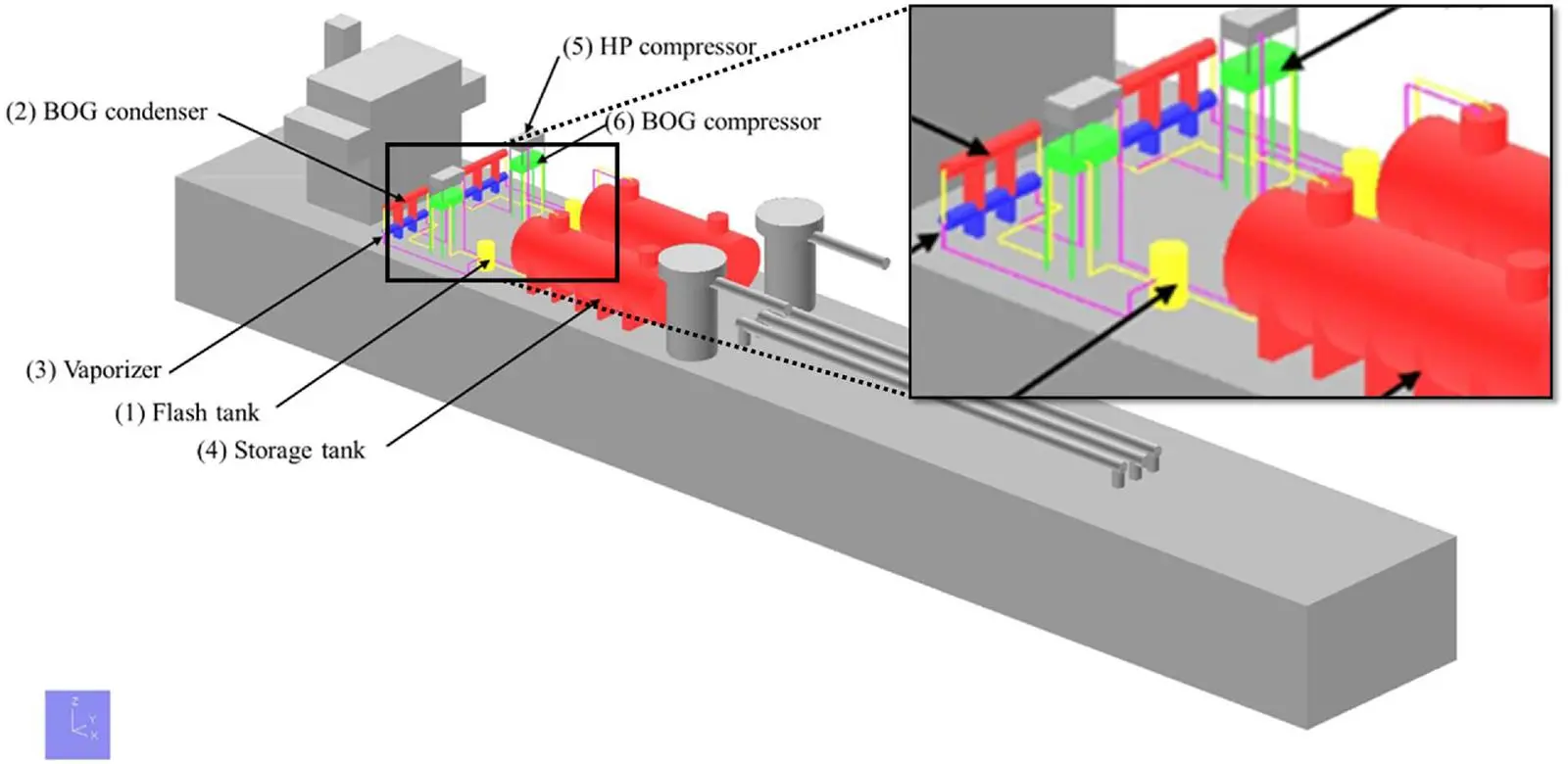
The researchers evaluated gas leak scenarios for different piping arrangements and used CFD analysis to evaluate which was optimal whilst also minimising total pipe length to reduce construction costs. They found wide variation between layouts for gas cloud accumulation, critical zone size, the maximum surface temperature, and blast overpressure.
The results indicate a distance of 4.6 metres between equipment such as flash tank, condenser, vaporisor and compressor, slightly less than the five metres described in guidelines from the American Institute of Chemical Engineers, satisfied the pipe cost and CFD analysis results.
The article is published in the International Journal of Naval Architecture and Ocean Engineering and is available here.