Schottel chosen for new LNG bunkering vessels
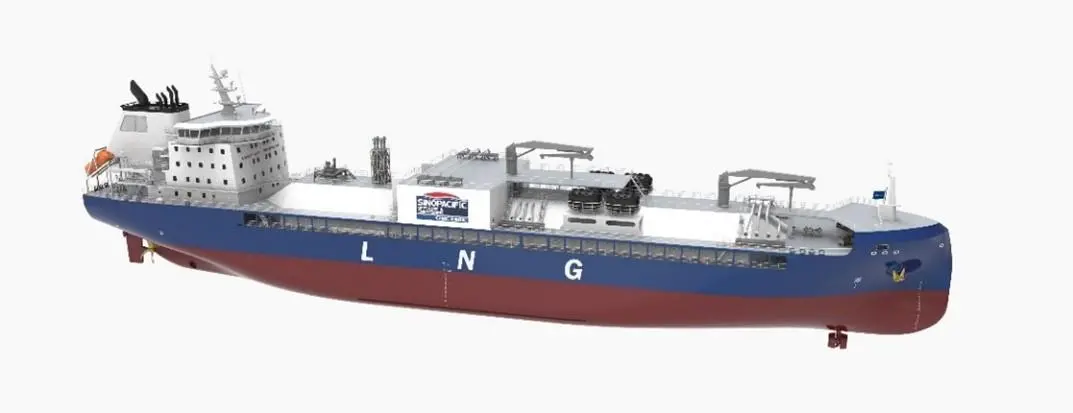
Each vessel will be equipped with a controllable pitch propeller, a retractable rudder propeller, and a transverse thruster.
The 20,000 cbm vessels are under construction at Nantong CIMC Sinopacific Offshore & Engineering, China, with delivery slated for 2026 and 2027. UK-based Avenir LNG has ordered two vessels, while Singapore’s Vitol International Shipping has commissioned the third. Vitol has also signed a seven-year time charter for one of Avenir’s vessels, commencing in Q4 2026, with an option to extend to ten years.
Each vessel will feature a Schottel ControllablePropeller SCP 119 4-X, delivering 5,800 kW of power through a 6,000 mm diameter propeller. This system enables the 159.9-metre-long, 25-metre-wide ships to reach speeds of up to 15.5 knots, with a full-feathering function to optimise efficiency and minimise resistance when required.
The propulsion packages also include a Schottel Retractable RudderPropeller SRP 380 R (1,300 kW, 2,200 mm propeller diameter), offering full 360-degree steerability for enhanced manoeuvrability, propulsion power, and precise positioning. The 8-degree tilted propeller shaft reduces hull interaction, increasing efficiency. When not in use, the SRP-R retracts to minimise drag and vessel draught during berthing.
Additionally, the vessels will be fitted with Schottel’s TransverseThruster STT 2 FP (750 kW, 1,540 mm propeller diameter) to ensure superior manoeuvrability during docking, casting-off, and demanding positioning operations. This is critical for the safe handling of LNG during ship-to-ship bunkering.
The SRP-R and STT will integrate Schottel’s LeaCon system, a DNV-certified seal monitoring technology that safeguards against seawater contamination. The system collects both incoming seawater and escaping gear oil in an intermediate chamber, allowing for early detection of wear and reducing unplanned maintenance. LeaCon-compliant propulsion units meet the highest environmental standards.
As demand for LNG continues to rise, these vessels will contribute to securing supply and driving the decarbonisation of global shipping markets.