



Shore power pulse quickens on Nordic shores
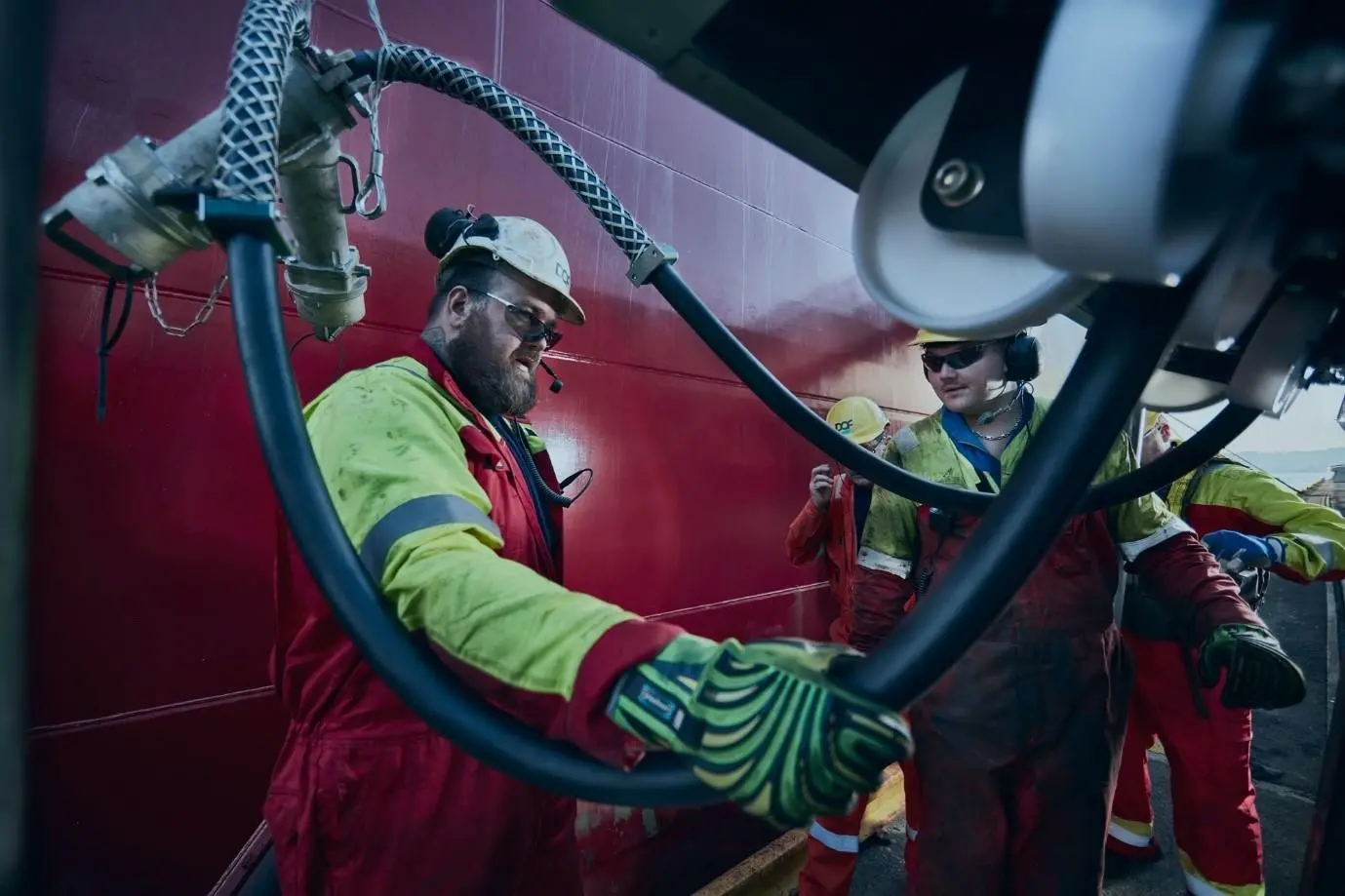
A quarter-century ago, the port of Gothenburg made it possible for sea-going vessels to draw electricity from the shoreside grid. Since then, major advances have taken place in the technology as regards scalability, accessibility, and scope for customisation, and the development and take-up of systems has accelerated in line with environmentally-led industry strategies and regulatory deadlines.
Nordic ports lead the charge
Along with Sweden, Norway is a prime mover in the roll-out of a shore power network embracing a continually expanding range of vessel types and sizes, often providing a catalyst and justification for systems to be incorporated in fleet newbuild schemes ahead of legislation imperatives.
The port of Oslo aims to cut emissions by 85% come 2030, towards the long-term objective of a zero-emission status. An early initiative saw the introduction of shore power at the Hjortnes terminal for Color Line ro-pax ferries back in 2011. The 224-metre sisters Color Fantasy and Color Magic, which maintain the service to Kiel in Germany, accordingly became the first large ships in Norway to switch off diesel generators when berthed, drawing on the 3MW Hjortnes installation.
A further building block for the adoption of onshore power by ro-pax vessels was commissioned in 2019 at Vippetangen, for DFDS and Stena Line ferries. The station is rated for 7.5MW of electrical power at 11kV/50Hz.
Shore power has been available for cruise ships at Revierkaia since May 2024. Sized at 16MW capacity, the plant supplies 11kV at either 50 or 60Hz frequency. The capital cost of the project amounted to some NOK65m ($6.3m), towards which NOK27.5m ($2.6m) was forthcoming from Enova, the state agency that makes allocations from the government’s Climate and Energy Fund. The port’s provision for the region’s growing cruise activity is receiving a further, considerable boost during 2025 through the development of a 16MW high-voltage connection for ships calling at the Filipstad terminal. The scheme has benefited from a NOK20m ($2m) grant through Enova.
Expanding reach: Beyond ferries and cruises
Within the past few years, shore power technology has been extended to other segments of the shipping traffic, notably cement carriers at Heidelberg Materials’ dedicated berth and container ships at the Yilport complex on the Sjursoya peninsula. Furthermore, in August 2023, the port of Oslo was awarded NOK10m ($1m) from Enova towards the provision of shore power interfaces for tankers and also the new series of Northern Lights liquefied CO2 carriers calling at Tankskipsutstikkeren from 2025 onwards.
When the port of Oslo had earlier, in 2023, been urging a then recalcitrant boxship sector to invest in hook-up equipment, it suggested that a shipowner’s outlay for vessel adaptation would be quickly recovered through lower port fees when using shore power. Conversely, in the future, shipping companies at large who choose not to connect to onshore power once the infrastructure is in place throughout Oslo Fjord will incur higher port charges.
The port of Bergen hosts Europe’s largest shore power facility for cruise ships, designed to enable three large vessels to connect simultaneously, drawing on a combined high-voltage capacity pool of some 48kVA. The installation has been developed and is overseen by Plug Bergen, a 50:50 joint venture of the port and Plug AS.
Plug, which was established in 2018 by Bergen port and western Norway’s largest power utility Eviny, proffers a guarantee of energy origin, 100% renewable from sources such as hydro and wind power. Through joint ventures with ports in various locations in Norway, the Plug Group operates facilities in a continually expanding network. Significantly, its reach increasingly goes beyond cruise vessels and ferries to other mercantile traders.
Among the most recent developments, the freight quays at the coastal port of Larvik, an important logistics hub just to seaward of Oslo Fjord, have been equipped with electrical connections to the grid. The programme advanced with Plug and backed by NOK3.8m ($360,000) in state funding via Enova encompasses provision for power supply to a maximum of three vessels simultaneously at Kanalen, used by bulkers and other cargo ships, together with a station for one boxship at a time alongside the container quay.
The port has calculated that for every unit of kWh delivered to a ship, CO2 emissions are reduced by approximately 0.8kg.
Onboard power receiving switchgear features in a new breed of 1,300TEU boxships introduced this year on the Norwegian coast by Haugesund-based short-sea operator North Sea Container Line (NCL). Secured under long-term charters from MPC Container Ships (MPCC) of Oslo, the Chinese-built NCL Vestland and NCL Nordland have the distinction of being powered by methanol-capable, dual-fuel two-stroke machinery.
With a cargo intake around 40% higher than preceding vessels in the assigned trade linking ports throughout Norway to the European market via Rotterdam, scale economies give added effect to the environmentally-beneficial attributes of the design, dubbed the Greenbox class.
Contractual owner MPCC’s nomination of MAN 6S50ME-C9.6-LGIM propulsion plant that can be run with equanimity on MGO or methanol, and the intended use of ‘green’ methanol from day one, complemented by a bank of batteries and provision for using shore power at berth, attests to the corporate environmental agenda. The project was developed with support from Enova and the NOx Fund, taking advantage of grant availability to first movers willing to explore next-generation technology in pursuit of ambitious decarbonisation goals.
While the abatement of emissions is the driver for the use of shore power, albeit with the degree of abatement dependent on the carbon footprint of the local electricity supply, grid energy fed to the vessel obviously incurs a cost. But the offsetting effect relative to running onboard generators is not insignificant, to which DNV attests in its calculation that around 7% of ships’ energy consumption is attributable to time in port.
Safety takes centre stage
From within the Norwegian maritime milieu, DNV has augmented its technical know-how offering to the global shipping community by introducing new class rules for electrical shore connections specifically tailored to tankers. The move has been in response to legislative developments affecting the sector, specifically the revision of the At Berth Regulation (ABR) for ocean-going vessels mandated by the California Air Resources Board (CARB).
ABR has been extended from the outset of 2025 to include tankers berthing at Los Angeles and Long Beach, and will encompass tankers calling at all Californian ports from 2027 onwards.
On behalf of the Western States Petroleum Association, DNV conducted a comprehensive assessment of the feasibility of meeting the new requirements, duly finding shortcomings in the existing regulatory framework for shore power on tankers. The gaps included a lack of standardisation for connection points, limited interface compatibility with terminal systems, and technological constraints. The study, which also identified a need for risk evaluation in handling hazardous cargo while hooked-up to shore power, highlighted the necessity of more robust rules.
“In theory, the best and safest location for a shore power connection onboard a tanker would be the aft section,” said Thomas Hartmann, DNV’s senior principal engineer for maritime electrical systems. “But that is a challenge because of the way oil terminal jetties are normally designed. This is why we had to define rules allowing safe shore power connections midships—right in the hazardous area of a tanker where the cargo manifolds are located.”
“The updated DNV Shore Power class notation rules describe the requirements a power cable connecting point must meet to ensure a safe electrical connection and prevent explosion or other hazards, along with protection for the cable in case it must be routed across deck,” explained Mr Hartmann. For example, a gas-safe area can be created and maintained by applying forced-air ventilation or, as an alternative by using nitrogen as a purging media, to the connecting point.
Salient to DNV’s exploration of the issue, it is interesting to note that, over in Sweden, where the port of Gothenburg is introducing shoreside power facilities for tankers berthed at the Energy Terminal, specific safety measures have been adopted. The Gothenburg solution is to incorporate overpressure in the quayside spaces where the power cable is housed, and in onboard spaces where the cable is connected, so as to shut out any explosive gases.
As is evident across-the-board in Norway and throughout Scandinavia, the concept of onshore power supply and the technology employed is playing an increasingly influential role in shaping the decarbonisation strategies of the port and shipping industries.
Related Articles
 ELECTRIFICATION AND BATTERY HYBRIDS
 ELECTRIFICATION AND BATTERY HYBRIDS
 ELECTRIFICATION AND BATTERY HYBRIDS