Shorepower clashes with LNG, says study
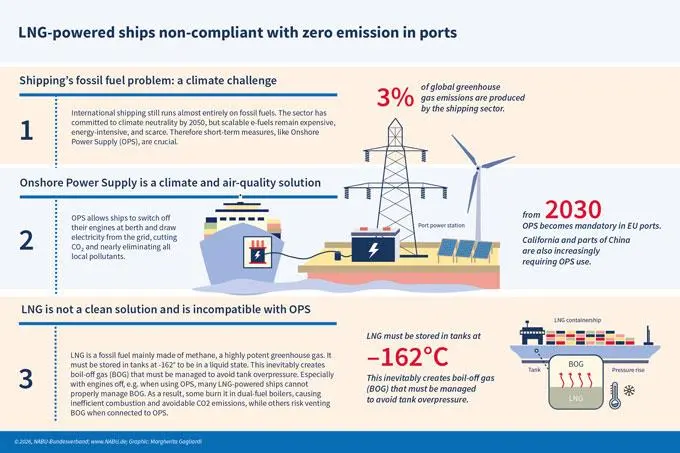
From 2030, many ship types operating in the EU will be required to use shorepower during port calls. However, a new study commissioned by NABU and conducted by research institute CE Delft suggests these two approaches may be fundamentally at odds.
“The results clearly show that LNG is not a viable transition technology for shipping,” said NABU shipping expert Sönke Diesener.
“Many LNG ships will only be able to implement the future mandatory use of onshore power to a limited extent for technical reasons.”
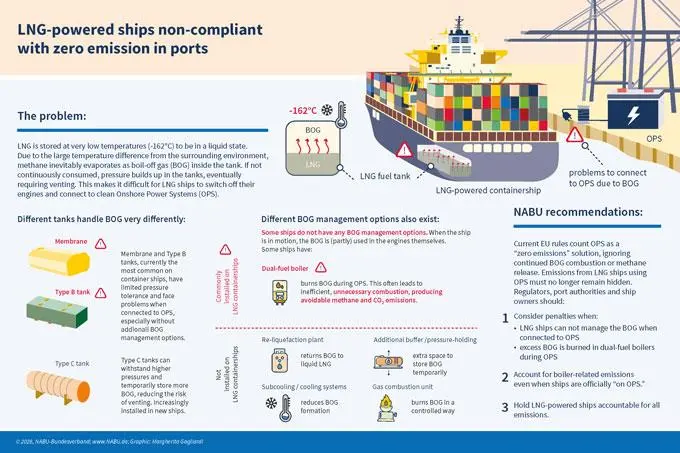
The study finds that many LNG-powered vessels are technically unable to fully switch off their engines while alongside without creating new emissions or safety risks. This challenge is linked to so-called boil-off gas, which is continuously generated during LNG storage. If this gas is not consumed by ship engines during layovers, it must still be managed, potentially leading to additional methane emissions or dangerous pressure build-up in fuel tanks.
Methane released during LNG operations has a short-term climate impact around 85 times greater than CO2, meaning LNG often delivers little or no overall climate benefit compared to conventional fuels.
READ MORE: Industry tackles methane slip issues with LNG engines
The study also highlights a lack of coordination between ship design and emerging regulatory requirements for emission-free port operations. LNG vessels may still need to discharge excess gas even when connected to shorepower, undermining the intended emissions reductions.
“The maritime energy transition needs solutions that are compatible with climate neutrality in the long term,” Diesener said. He warned that continued investment in LNG risks locking the sector into fossil fuel infrastructure for decades, calling instead for stronger support for truly climate-neutral fuels such as green ammonia and methanol.