Simplicity in a complex environment
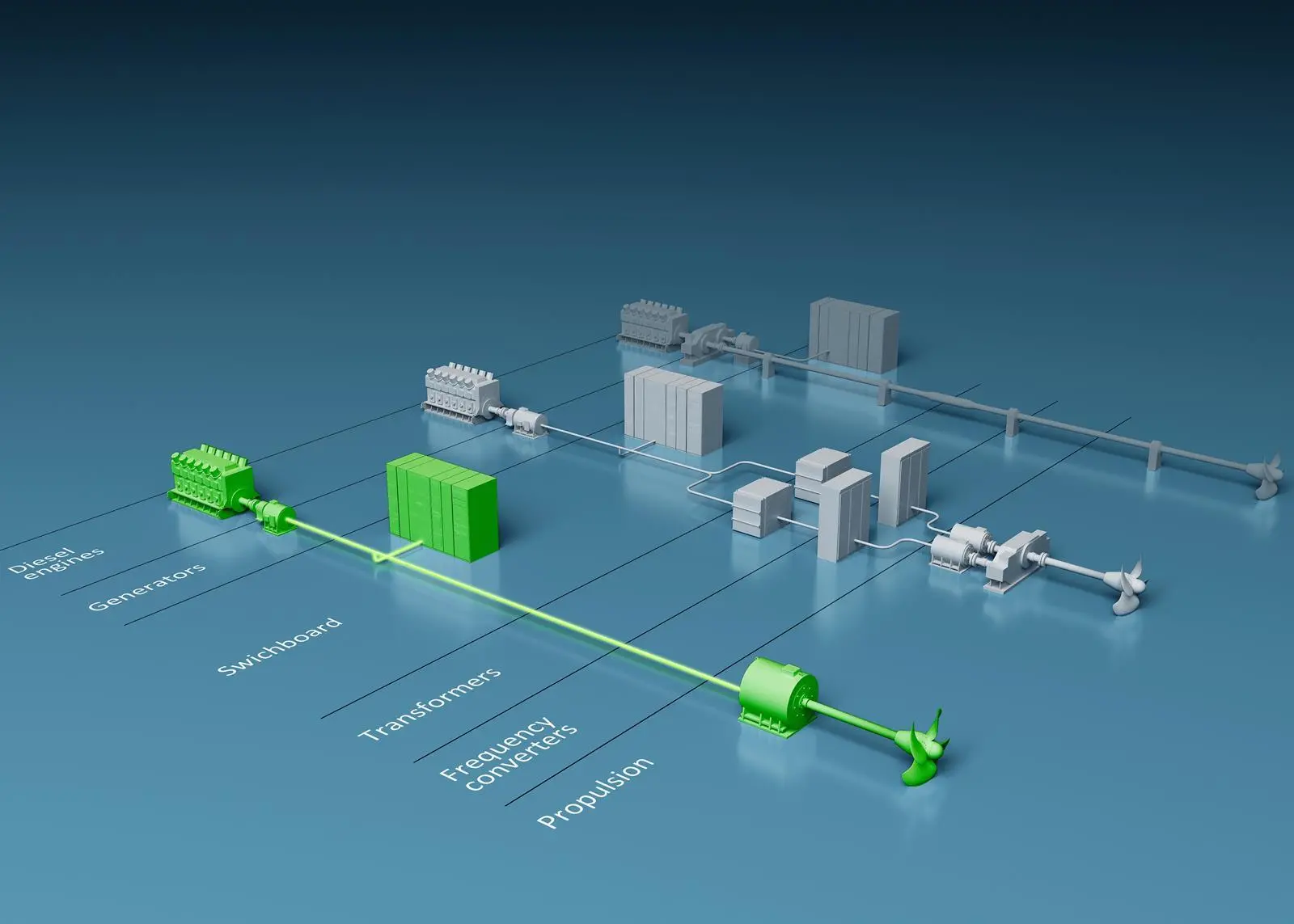
The drive, which utilises permanent magnets to give a higher power density with less weight – and a smaller footprint – also takes a lot of the complexity out of the drive chain and gains efficiency as a result, something very suited to the PSV market.
Most larger drives have evolved from a direct shaft-driven rotor to diesel electric systems. Although this provides a generally better diesel efficiency as the loading of the generators remains steady it still leaves a lot to be desired further down the shaft. The sheer complexity of the energy transfer between the steady push of the engines and the electric propulsion’s need for variable speeds leaves energy leaking through the gaps.
The Phi-Drive, on the other hand, misses out (the hefty and expensive) frequency converter and gearbox stages, going straight to the electrical motor and skipping on to the propeller.
There are interesting challenges that have been overcome, such a gaining enough torque to start the electrical shaft directly from zero rpm and torsional vibration factors. But, while these issues were mapped and worked around from the beginning, the other side of the equation, breaking into the platform supply market, is still ongoing.
Mr Larsen says he learned from Normann Sandoy, the founder and original innovator behind not just the Phi-Drive but also the Rim Driven Thruster, how much stubbornness is needed. “It’s a long, long way from idea to prototype, and possibly just as long from prototype to market. This propulsion market is very conservative, but if you want to get there you cannot give up, you have to keep on going.”
It has been a long road. Despite a demonstration fitting on a ferry which showed a number of savings, the supply vessel market remained unconvinced and frustration led InPower to show that the Phi-Drive is both ready and qualified for PSV installation.
“We have validated our conclusions on comparative fuel efficiency through third party processes”, Geir Larsen points out. Kongsberg, Scania, SINTEF and OSC were all involved in this ‘paper evaluation’ phase proving the drive is not just qualified, but actually better in many ways: the comparison between Phi-Drive and conventional diesel electric propulsion on, specifically, the ST-216L supply vessel shows a clear advantage for the permanent magnet Phi-Drive.
The efficiency, although running throughout the whole RPM range, including station keeping, is especially notable in the high-speed, high fuel consumption phase. “We’ve shown that over 40% of a PSV’s running time will have significant efficiency savings,” says Mr Larsen, adding that it is realistically going to me more than that “as one shipowner said he used 80% of his fuel simply getting to the site”.
“We can win on both simplicity of engineering and energy consumption,” says Mr Larsen, “Now, our message to the market is – why don’t you try opening up a dialogue with us to find out what we can do together?”
By Stevie Knight