Singapore accelerates digitalisation of its bunkering supply chain
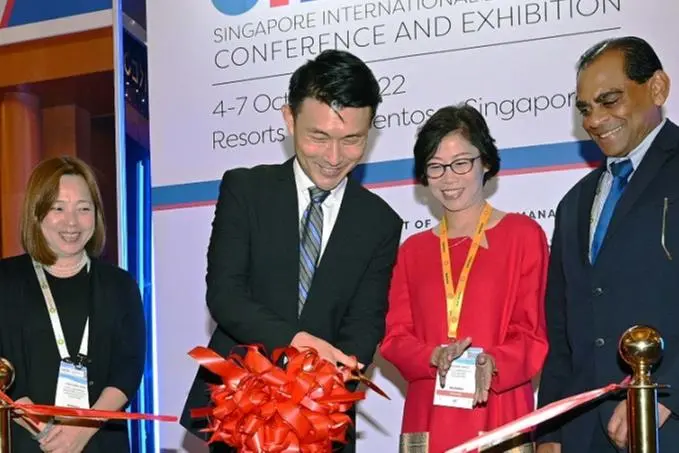
The MoU, signed at the 22nd Singapore International Bunkering Conference and Exhibition (SIBCON) this week, seeks to promote the integration of the SGTraDex with solution providers to enable efficient data flows and systems interoperability across the bunker supply chain.
SGTraDex is a digital utility that facilitates the sharing of data between supply chain ecosystem partners, streamlining information flows through a common data highway where data can be shared in a trusted, secure and inclusive manner. The six industry solution providers are ADP Clear, Angsana Technology, Brightree, BTS, Bunkerchain, and PSA Marine.
Themed ‘Driving the Transformation of Marine Fuels’, SIBCON 2022 has welcomed 1,800 attendees from over 45 countries.
Speaking at the opening address, Senior Minister of State for Finance and Transport, Chee Hong Tat, shared that the Port of Singapore remained the top bunkering port in 2021 during the COVID-19 pandemic. Looking ahead, the global environment has become more uncertain and Maritime Singapore needs to continue transforming to remain relevant as a global hub port and international maritime centre. Chee outlined three key areas – taking steps to kick start its decarbonisation journey, enhancing services through digitalisation, and providing quality assurance – to guide Singapore’s efforts to tackle the near-term challenges for the bunkering sector.
The National Climate Change Secretariat is leading public consultation for the potential raising of Singapore’s level of ambition to achieve net-zero emissions by 2050. The push for the full electrification of local harbour craft and the use of biofuels will contribute to this national effort. At the port-to-port level, MPA is working with like-minded ports such as the Port of Rotterdam to establish green and digital corridors and develop a global network.
Singapore continues to make progress on the bunkering of biofuel. Approximately 70,000 tonnes of biofuel have been supplied in Singapore to ocean-going vessels across more than 40 biofuel bunkering operations.
Currently, there is no international quality standard for biofuel as a marine fuel. As part of efforts to support the multi-fuel transition towards decarbonisation, MPA together with the industry, academia, and relevant government organisations under the national standardisation programme overseen by Enterprise Singapore, have developed a provisional national quality standard for marine biofuel to support the development of biofuel bunkering. MPA has also developed a framework setting out conditions under which licensed bunker suppliers may supply biofuel within the Port of Singapore to support trials conducted by vessels.
On quantity assurance, MPA is working with the Technical Committee for Bunkering to study the impact of biofuel on the metrological accuracy of mass flow meters and is working with stakeholders to amend the SS 648: 2019 Code of Practice for Bunker Mass Flow Metering to include biofuels within its scope.
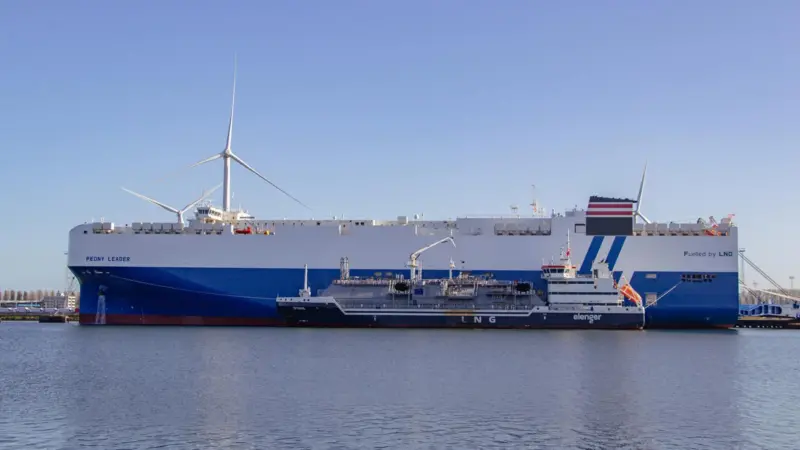
MPA is also actively looking into the reduction of energy demand which can be pursued regardless of the choice of new marine fuels. Singapore is ready to supply LNG bunker, with a total of 24 ship-to-ship transfer operations in 2021. Singapore’s second LNG bunker vessel, Brassavola, was christened this week.
As part of a multi-fuel future, MPA will continue to accelerate trials and the adoption of methanol, ammonia and hydrogen.
MPA announced in May 2022 that it will co-chair an Industry Expert Group (IEG) with the Singapore Shipping Association (SSA) to strengthen quality assurance of bunkers supplied in Singapore and establish a list of chemicals to be tested and their corresponding concentration limits. The IEG includes relevant professional bodies, including the Chemical Metrology Division from Singapore’s Health Sciences Authority, International Council on Combustion Engines, and International Bunker Industry Association. The IEG is expected to provide their recommendations by Q1 2023. MPA, SSA and the IEG will also share information with the IMO and International Organization for Standardization as appropriate.